An A&P — Airframe and Powerplant — is the FAA mechanic certificate most U.S. hangars treat as the price of admission. You get there two legal ways: graduate from an FAA-certificated Part 147 aviation maintenance technician school, or document practical experience under 14 CFR 65.77 (18 months for one rating, or 30 months of concurrent airframe and powerplant work for both). Then you sit knowledge tests and an oral and practical with a DME. There is no third door that turns a summer camp into a certificate.
People search “how to get an A&P license” because schools sell a calendar and forums sell a shortcut. The FAA’s own become-a-mechanic page is the checklist. This desk is the hangar translation: money, months, paperwork, and why the ticket is a door rather than a 737 bid. If you already hold military hours, skip to military to A&P. If you only wanted the paycheck, start at aircraft mechanic salary and come back when you are ready to sit still for 65.77.
Two legal doors — pick with money and calendar
Part 147 is structured: you enroll, you attend, the school authenticates you to test. The experience path is unstructured: you work, you log, a FSDO (or the current authorization path) decides whether the hours look like constructing, maintaining, or altering airframes or powerplants. Both end at the same tests. They do not end at the same debt, and they do not end on the same Tuesday.
The Instagram version of 147 is a hoodie and a 12-month promise. Real programs run about 12–24 months depending on full-time vs part-time and whether the school pads the calendar. The Instagram version of 65.77 is “just work at a field.” Real 65.77 is 18 months of full-time practical experience for one rating, or 30 months concurrent for both, in a form a FSDO will actually read. Part-time stretching of those months is how people get sent home.
| Path | Calendar | Money (planning) | Tradeoff |
|---|---|---|---|
| Part 147 school | ~12–24 months | Often $20k–$50k+ | Faster, structured, debt risk |
| Experience (65.77) | 18 / 30 months typical talk | Earn while you learn | Paperwork discipline, slower ticket |
| Military experience | Evaluated, not automatic | You already worked | Logs, 8610-2, still the tests |
65.71 first: you have to be allowed to hold it
Before experience and before school graduation, 14 CFR 65.71 is the general eligibility rule. You must be at least 18, able to read, write, speak, and understand English, and you must meet the knowledge, experience, and skill requirements that follow. People skip this paragraph because it looks obvious. It is the paragraph an ASI starts with when a file is sloppy.
English is not a vibe. The work is English: manuals, ADs, cards, and the person on the radio. If you cannot work in that language, the certificate is not the problem you think it is. Age is not negotiable. The rest of this page assumes you clear 65.71 and you are choosing a door, not asking the FAA to invent a third one.
65.77 in hangar English
The experience rule is short and people still misquote it. For a single rating you show at least 18 months of practical experience with the procedures, practices, materials, tools, machines, and equipment generally used in constructing, maintaining, or altering airframes or powerplants — whichever rating you want. For both ratings you show at least 30 months of concurrent practical experience across both. Or you present graduation from a certificated AMTS. That is the whole fork.
- One rating: ≥ 18 months practical experience on that side of the airplane.
- Both A&P: ≥ 30 months concurrent airframe and powerplant work.
- Or: graduate of an FAA-certificated Part 147 school, with the school’s paper.
- Military hours count when they look like that work, documented — not because of the uniform.
- A log that cannot name tasks, aircraft, and hours is not a log.
Concurrent does not mean “I did airframe in 2019 and engines in 2023 and I added them.” It means the 30 months cover both kinds of work in the same period. If you are building an experience file, read 65.77 again the night before the appointment. Then read the FAA mechanic FAQ. Then put the file in a binder a stranger can audit in ten minutes.
Written, oral, practical
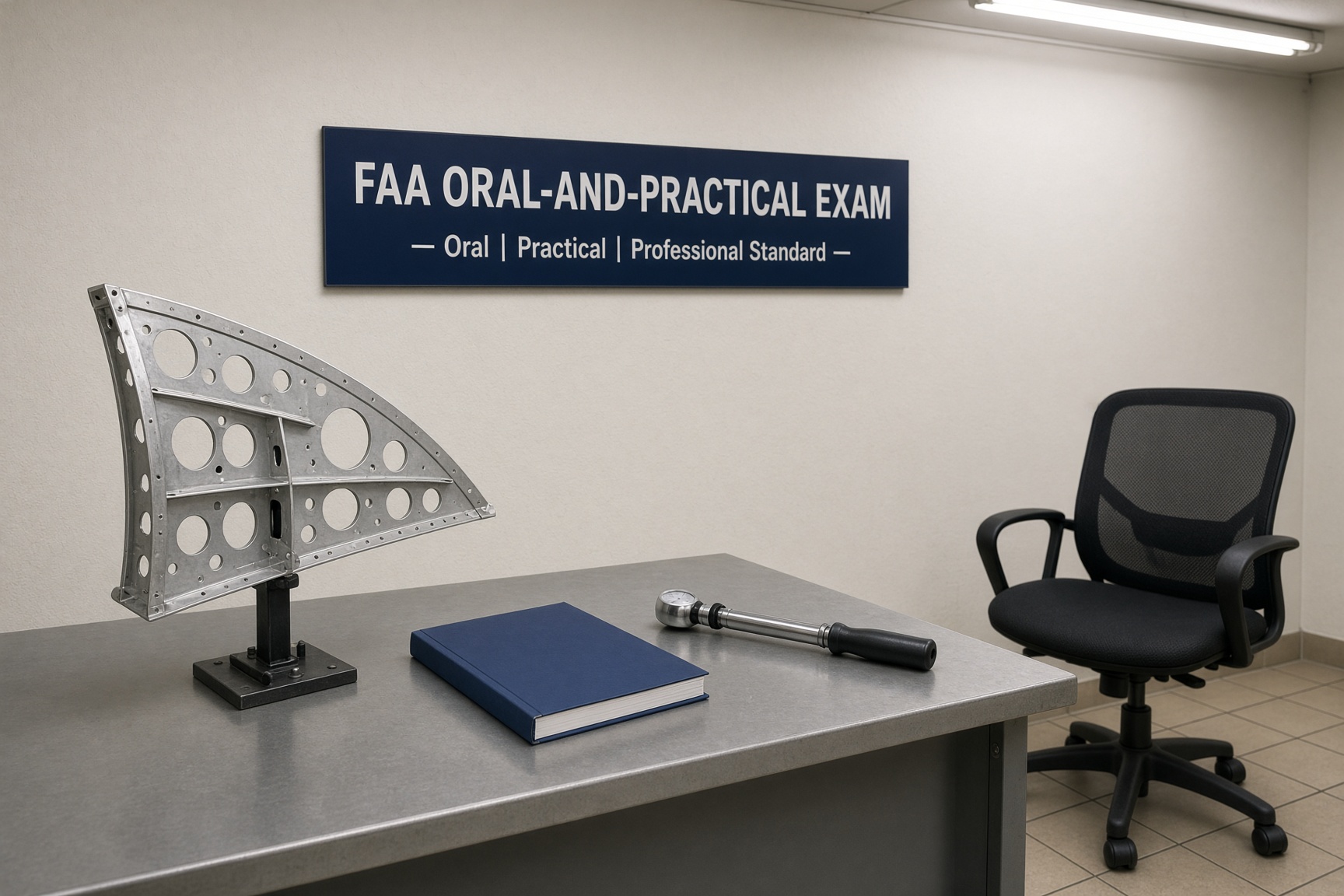
Three knowledge tests — general, airframe, powerplant — at an FAA testing center, typically 70 percent or better. Then oral and practical with a designated mechanic examiner. People fail the practical on paperwork, safety, and “I have seen this but I have not done it,” not on trivia night. Bring the habits you will need on a 145 floor: torque you can explain, a card you can close, and the honesty to say you do not know.
Authorization to test is not a pass. A temporary certificate after a pass is not a shift bid. Budget the weeks between a failed O&P and the retake, and budget the tool box you should have started before the practical. The tools desk is not a shopping essay. It is the difference between looking like a student and looking like someone a DME can let work.
Cost of an A&P — tuition is the billboard
School tuition is the number on the landing page. Tools, housing, the retake, testing fees, and the months you are not on a full shop rate are the real cost. A municipal or state Part 147 can undercut a national brand by tens of thousands. Compare clock hours and first-time pass rates, not gym equipment. We will not invent a 2026 sticker for a named school. Those quotes move. Get a dated written quote and a 12-month completion rate.
The experience path is not free. It is cheaper in tuition and more expensive in calendar. You earn something while you learn if the shop is honest. You also spend 18 or 30 months in a junior role that may not look like the brochure starting pay. Run a year of rent plus tools against the 147 invoice. The cheaper door is the one that gets you a shop that will hire you without a second mortgage.
After you pass: the ticket is the door
A new A&P still has to get hired. Airlines and busy 145s want a type, a city, or a night that hurts. Count 6–18 months after the ticket before the paycheck looks like the school’s placement slide. Median pay in the trade was $79,870 in May 2025. That is not week one. Week one is the starting-pay conversation and the outlook conversation in the same sitting.
If you later want the stamp that signs annuals, that is Inspection Authorization, and it is not year one. If you want the bench, that is often FCC GROL next to the A&P, not instead of it. Do not collect paper you will not use. Do collect the paper the job posting on the cork board actually names.
Mistakes that cost a year
- Paying a national 147 without pricing the public one you can drive to.
- Logging “helper” hours that a FSDO will not call practical experience.
- Sitting tests before the file is authorized, or letting authorization go stale.
- Treating the oral as a multiple-choice hangover instead of a work-card conversation.
- Assuming a Canadian AME or a foreign license is a U.S. A&P. It is not. Transport Canada runs a different system.
How long to get an A&P?+
A 147 can be about a year or two. The experience path is 18 months for one rating or 30 months concurrent for both, plus tests. See how long to become an A&P. Nobody honest will promise a weekend.
Is A&P the same as AMT?+
AMT is the job title. A&P is the FAA certificate. Shops hire AMTs; the FAA issues A&P. Pay talk lives on the Pay desk.
Can military experience replace school?+
It can satisfy 65.77 if the hours look like the work and you can prove them. It does not skip the tests. Read military to A&P.
Do I need both ratings?+
Most U.S. hangars hire A&P, both ratings. A single rating is legal. It is also a thinner job board. Get both unless you have a shop that will say otherwise in writing.
What is the first test I sit?+
General knowledge, then airframe and/or powerplant, then oral and practical with a DME. Authorization first. The FAA FAQ is the official sequence; this page is the hangar one.
Sources (verified)
Restatement of 14 CFR 65 and FAA mechanic-certification practice for readers. Confirm the current eCFR and FAA mechanic pages before you enroll or book a FSDO. Not legal advice. Aviation Titans is independent editorial.