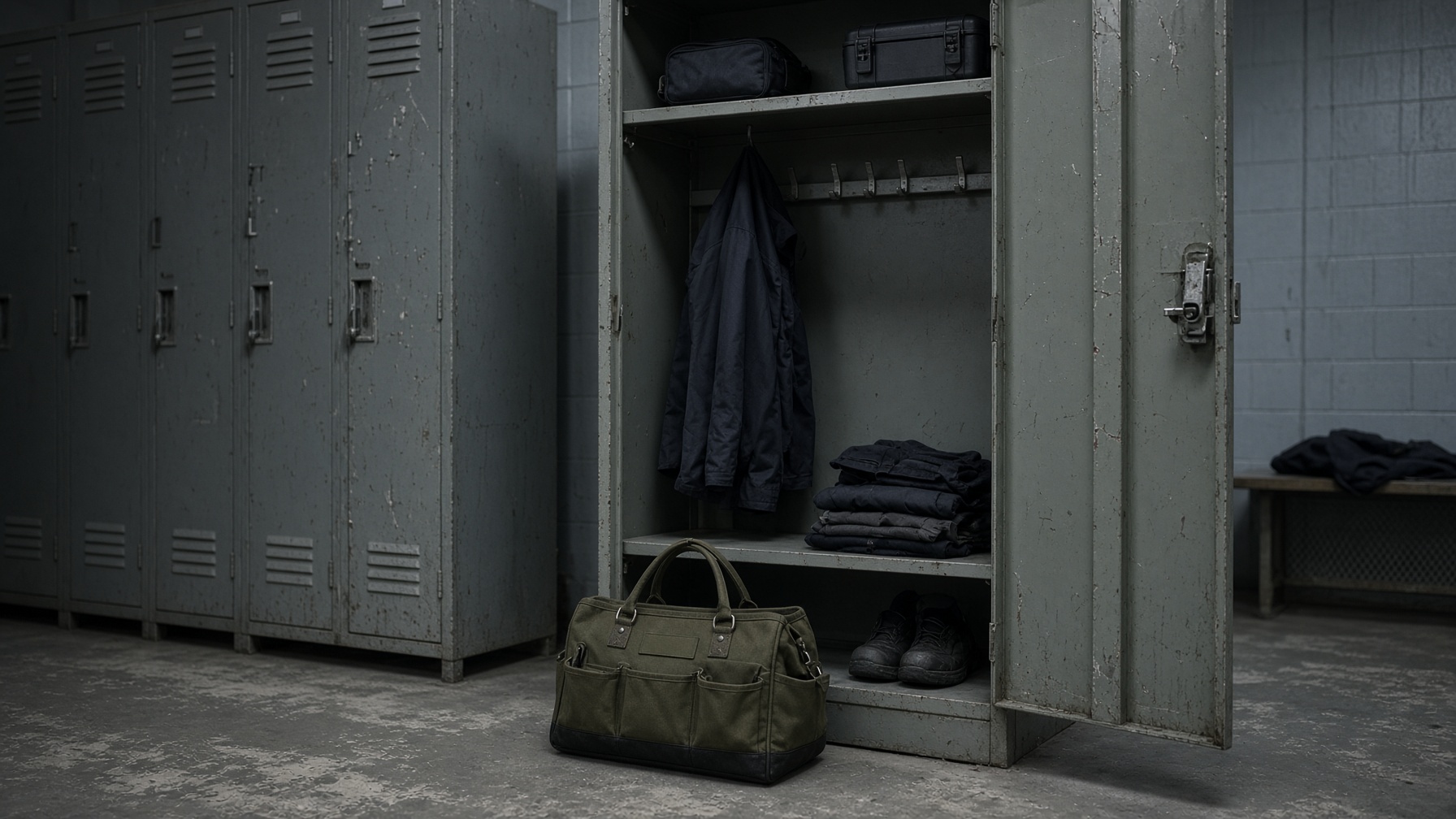
Starting pay is the question schools bury and Reddit inflates. A new A&P without a type, without nights, without a city that hurts, should plan roughly $22–$28/hour unless a shop has published higher. The BLS median of $79,870 is a photograph of the whole trade, including year-twelve airline overtime. The 10th percentile of mechanics — less than $48,780 — is the statistical version of the first locker. That is the number that belongs on this page.
Budget tools, the first pair of boots, and a month before the first full check. The locker photo is the honest one. If you came here from the salary desk, stay here until you can explain the gap between median and offer letter out loud. If you do not have the ticket yet, the calendar lives on how to get an A&P. Do not sign a training loan against a year-four Reddit hourly.
Why the BLS median is not year one
Medians include people who have been on a bid for a decade, people who work cargo nights, people who hold IA, and people in cities where rent looks like a second mortgage. A first-ticket A&P is none of those things yet. The mean of about $84,740 is even less useful for year one, because the right tail pulls it. Use the 10th percentile as a planning floor, the shop’s posted rate as the only number that pays rent, and the median as a five-year conversation.
Schools like the median because it is a round, official, nationally published figure. Recruiters like the mean for the same reason. You should like the offer in writing, the shift, and the zip code. The Occupational Outlook Handbook is doing its job. The brochure is not doing yours.
| Year-one lever | What it does | What it does not do |
|---|---|---|
| Nights / weekends | The real raise for a lot of first tickets | Fix a city you cannot afford |
| A 145 vs a 10-person GA | Rate, overtime culture, who signs | Guarantee a type |
| City | Housing can erase a $3/hour win | Change the national median |
| Tools / first month | A real cash hole | Count as “the shop will provide everything” |
| IA later | A GA overlay in year three-plus | A week-one event |
GA vs 145 vs airline on day one
A major airline will often not hire a brand-new ticket onto the line you pictured. When they do, year one can still look ordinary until overtime and the bid start to work. A Part 145 MRO is the more common first shop: a posted rate, a shift, a lead who will tell you if you are slow. A ten-person GA shop will let you touch more of the airplane and pay you like a ten-person GA shop. None of those sentences is a moral ranking. They are first-locker rankings.
- Airline / cargo: slower door, higher ceiling, nights that hurt, a scale you can read if they will show it.
- Part 145: the default first job in a lot of the country. Ask the shop rate, not BLS.
- GA: more signing, less money, faster learning if the IA is honest.
- Avionics bench: a different SOC. GROL may matter more than your A&P. See FCC GROL.
If two offers are within a dollar, pick the hangar that will let you build a log a future lead will trust. A pretty rate in a shop that parks you on wheels and tires for eighteen months is a delayed career, not a win. The outlook says there are openings. It does not say they are all good first shops.
The city can erase the raise
A $3/hour bump that costs $500 more in rent and an hour of commute is a pay cut you will feel in March. Cross-check OEWS for the state on bls.gov and a one-bedroom listing in the same sitting. Florida trains a lot of people; the junior bench is thick; housing is not in the tuition PDF. Washington prints a higher mean and a higher grocery bill. Alaska pays isolation. Do not relocate for a sticker you have not walked.
Remote 145s sometimes pay a location premium that looks like a raise until you price the truck, the winter, and the fact that there is one grocery store. That can still be the right first job. Just do the arithmetic with after-tax dollars and a realistic overtime number, not with the school’s map pin.
The first month is a cash hole
The FAA mechanic path is what got you the ticket. It will not buy the dikes. If a 147 told you “tools included,” get that in writing and still bring a light you own. Borrowing a torque wrench for a year is how you never learn what your own click feels like. Ask who the last three first-tickets were and whether they still work there. A shop that cannot name them is a shop that does not actually hire first-tickets, no matter what the recruiter said on the phone.
The starter box is not optional theater. Safety wire pliers, a light, a mirror, torque you trust, sockets that fit aircraft hardware — buy them once. A 270-piece chrome set from a big-box aisle is how you spend money you needed for rent. Ask the shop what they issue and what they laugh at. Budget a month of groceries before the first full check, because payroll does not care that you started on a Thursday.
Some 145s have a tool program that looks friendly until you read the assignment agreement. Read it. If the box is yours when you leave, that is one kind of deal. If the box stays, you just rented chrome. Neither is immoral. Pretending you did not need to ask is.
What to ask before you take the locker
- The posted hourly, in writing, for your ticket and shift — not BLS, not “competitive.”
- Nights, weekends, and how overtime actually happened last year, not in theory.
- Who signs, and whether a new A&P is allowed to do anything besides fetch.
- Tool policy, uniforms, parking, and the first paycheck date.
- Whether they have hired a first-ticket in the last twelve months. If they have not, you are the experiment.
If they will not answer those, you already have the answer. The AMT pay scale desk explains why a “scale” and a shop rate are different species. Bring that vocabulary into the interview. People who can tell median from offer letter get taken more seriously than people who quote a YouTube thumbnail.
When the number starts to move
After you have a shift, a shop that trusts you, and a city you can afford, the levers look like the rest of the Pay desk: nights, a type, IA if the field needs it, maybe GROL if the bench needs it. Until then, the work is getting hired and staying hired. A 6 percent national outlook through 2035 does not pay January rent. A first check does.
If you are still in school, ask last year’s class what they actually made, not what the placement office averaged. A municipal 147 that sends people to a 145 at $24 with nights can beat a famous brand that sends people to the same 145 at the same $24 with more debt. The how-long desk is the calendar half of that decision.
What is starting pay for an aviation mechanic?+
Often the mid-$20s per hour in much of the U.S. for a fresh ticket, with a wide band by city and shop. Ask for the posted rate, not BLS. The mechanic 10th percentile was less than $48,780 in May 2025.
Why is BLS $79,870 not my first offer?+
It is the national median for the occupation, including seniors, overtime, and high-cost shops. Year one is a different conversation. See aircraft mechanic salary.
Will nights fix a low offer?+
They can. They can also wreck sleep and still not cover rent in the wrong city. Get last year’s typical check, not a theoretical multiplier.
Should I wait for a major?+
Only if you can afford to wait. A 145 that will train you is a first job. A major that might hire next spring is a hope. The job outlook is national, not a bid.
Do I need IA or GROL in year one?+
No. IA needs three years of ratings and two years engaged. GROL is a bench filter. Collect them when the work exists.
Sources (verified)
Hourly bands are planning figures from shop practice, not BLS percentiles. Verify the current OEWS table and the written offer before you relocate. Aviation Titans is independent editorial.