Introduction: The “Tombstone Mentality”
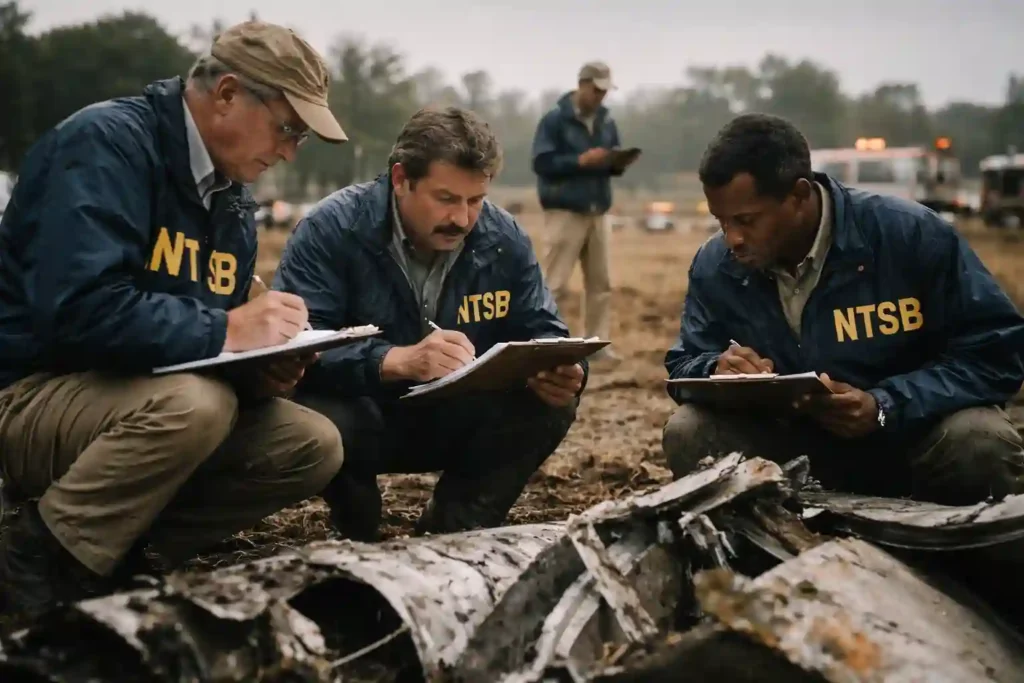
In the hallowed halls of the National Transportation Safety Board (NTSB) in Washington D.C., there is an unspoken truth known to every investigator and veteran mechanic: Aviation regulations are written in blood.
To the general public, air travel is a miracle of convenience. To the A&P Mechanic walking the hangar floor in 2026, the Federal Aviation Regulations (FARs) are not merely a rulebook—they are a history book. Every paragraph in 14 CFR Part 43 or Part 121 exists because, at some point in history, a plane fell out of the sky, and people died.
Historically, the US aviation industry operated on a “reactive” basis, often criticized as the “Tombstone Mentality.” We waited for a disaster, investigated the smoking hole, and then wrote a rule to prevent it from happening again.
However, the story of US aviation safety is also a story of triumph. It is the story of how engineers, mechanics, and regulators transformed a dangerous frontier into the safest mode of transport in human history. In this analysis, we will trace the seismic shifts—from the “Wild West” of the 1950s to the AI-driven predictive maintenance of today—and examine the specific tragedies that forced the industry to grow up.
Era 1: The Grand Canyon & The Birth of Order (1956)
Before we talk about fixing planes, we must talk about where they fly.
In the mid-1950s, the US skies were uncontrolled. On June 30, 1956, a United Airlines DC-7 and a TWA Super Constellation collided over the Grand Canyon. All 128 people aboard perished. At the time, pilots largely relied on “See and Avoid” principles.
The Impact: This tragedy shocked the American public and forced Congress to pass the Federal Aviation Act of 1958, creating the Federal Aviation Agency (now Administration). For the maintenance world, this was the beginning of standardized oversight. It signaled the end of the “barnstorming” era and the beginning of federal airworthiness standards that would eventually evolve into the strict A&P licensing system we have today.
Era 2: American Airlines Flight 191 & The “Shortcut” Culture (1979)
By the late 1970s, jet travel was booming. The pressure on maintenance crews to turn aircraft around quickly was immense. This pressure led to the deadliest aviation accident in US soil history.
On May 25, 1979, a DC-10 taking off from Chicago O’Hare lost its left engine. The entire pylon assembly ripped off the wing, severing hydraulic lines. The plane rolled and crashed, killing 273 people.
The Mechanical Reality: The investigation revealed a fatal flaw in maintenance culture. To save time during engine changes (approx. 200 man-hours), maintenance crews had devised a “shortcut” using a forklift to remove the engine and pylon as a single unit, rather than separating them as the manufacturer (McDonnell Douglas) specified. This unapproved procedure cracked the pylon flange. The crack grew unnoticed until it failed.
The Expert Analysis: Flight 191 taught the US industry a brutal lesson about “Approved Data.” Today, if you walk into any Part 145 Repair Station, you will hear the mantra: “Show me the reference.” You cannot deviate from the Maintenance Manual (AMM) or the Structural Repair Manual (SRM) just to save time. Flight 191 killed the concept of “creative mechanics.” It cemented the rule that if a procedure isn’t written in the manual, you don’t do it.
Related: Using the right tool for the job is part of compliance. Check our Ultimate Aviation Mechanic Tools List to see what professional-grade equipment looks like.
Era 3: Aloha Airlines 243 & The Aging Fleet Crisis (1988)
If American 191 was about procedure, Aloha Airlines Flight 243 was about physics and time.
On April 28, 1988, a 19-year-old Boeing 737-200 flying island-hops in Hawaii suffered an explosive decompression. An 18-foot section of the roof peeled off at 24,000 feet. The pilot, Robert Schornstheimer, performed one of the most miraculous landings in history, but flight attendant Clarabelle Lansing was lost.
The Cause: The investigation uncovered “Multi-Site Damage” (MSD). The aircraft had accumulated over 89,000 flight cycles (takeoffs and landings). The saline, humid environment of Hawaii caused corrosion in the lap joints, debonding the adhesive. The rivets were taking the full load, and fatigue cracks linked up like a zipper.
The Legacy: The Birth of Modern NDT Aloha 243 changed my job forever. Before this, maintenance was focused on “safe-life” limits. After Aloha:
- The National Aging Aircraft Research Program: The FAA mandated that “visual inspection” was no longer sufficient for high-cycle aircraft.
- Mandatory NDT: It led to strict Airworthiness Directives (ADs) requiring Eddy Current inspections of fuselage lap joints.
- Widespread Fatigue Damage (WFD) Rules: Engineers had to redesign structures to tolerate damage better.
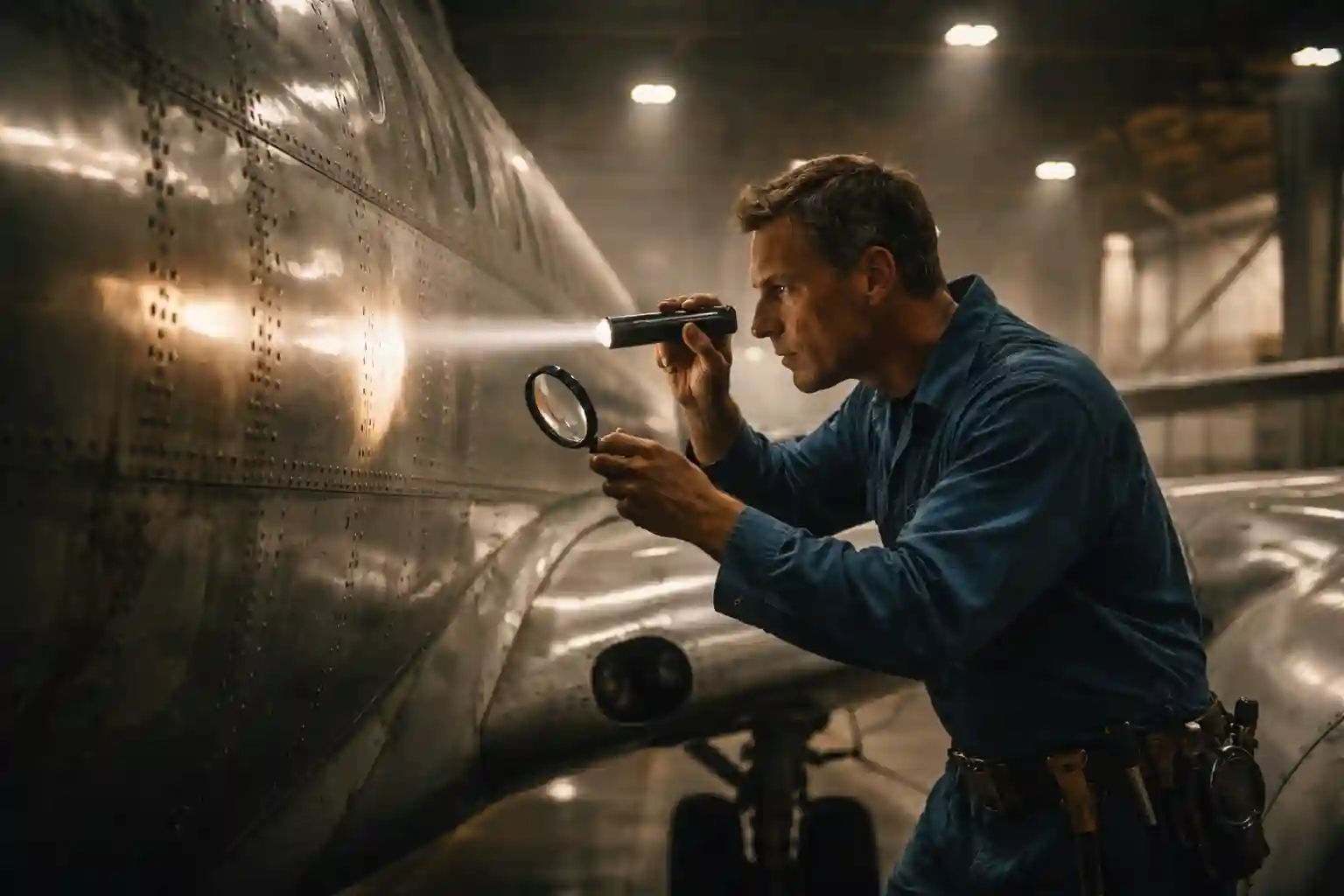
This crash effectively created the modern demand for NDT Level II and III technicians. It proved that corrosion is not just a cosmetic issue; it is a structural killer.
Era 4: ValuJet 592 & The Outsourcing Problem (1996)
In the 1990s, “Low-Cost Carriers” began to rise. To keep ticket prices low, many airlines outsourced heavy maintenance to third-party vendors.
In May 1996, ValuJet Flight 592 crashed into the Florida Everglades, killing all 110 onboard. The cause was a fire in the cargo hold started by oxygen generators (chemical candles). These hazardous materials had been improperly removed, mislabeled as “Empty,” and loaded onto the plane by a contractor, SabreTech.
The Impact on MRO: This was a reckoning for the MRO (Maintenance, Repair, and Overhaul) industry.
- Chain of Custody: The FAA ruled that airlines could outsource the labor, but they could not outsource the responsibility.
- Hazmat Training: It led to rigorous, mandatory Hazardous Materials training for all aviation personnel.
- The “Lowest Bidder” Fallacy: It exposed the dangers of airlines selecting maintenance providers solely based on price rather than quality assurance.
Era 5: Alaska Airlines 261 & The Ethics of Maintenance (2000)
Perhaps the most painful lesson for mechanics came in 2000. Alaska Airlines Flight 261 crashed into the Pacific Ocean due to a failure of the Jack Screw assembly that controls the horizontal stabilizer trim.
The investigation was devastating. It revealed that the lubrication interval for this critical part had been extended repeatedly to save money and keep the planes flying. More damning, maintenance records showed that previous mechanics had recommended replacing the worn part, but those recommendations were overruled or ignored to avoid grounding the aircraft.
The Ethical Shift: This tragedy is taught in every aviation ethics class. It highlighted the pressure mechanics face from management. It empowered the mechanic to say “NO.” Today, if a mechanic grounds an aircraft for a safety issue, they have legal protections. Alaska 261 reminded the world that a signature in a logbook is a legal oath. When you sign an Airworthiness Release, you are betting 150 lives on your integrity.
Era 6: The Modern Shift – From Reactive to Predictive (2026)
We are now living through the next great evolution. We have moved from the “Fly-Fix-Fly” model of the 1970s to MSG-3 (Maintenance Steering Group) logic, and now, to Predictive Maintenance.
The Data Revolution Modern aircraft like the Airbus A350 or Boeing 787 are flying data centers. They don’t just fly; they communicate.
- Health Monitoring: Sensors transmit real-time data on oil pressure, vibration, and hydraulic temperature to the ground.
- The Result: We no longer wait for a part to fail. The aircraft tells us, “My #2 hydraulic pump is degrading. Change it in 50 hours.”

The “Digital Twin” MROs are now using “Digital Twins”—virtual replicas of physical aircraft. By running simulations on the digital twin, engineers can predict exactly when a wing spar will develop fatigue cracks based on the specific routes that plane has flown, not just a generic fleet average.
Industry Insight: To understand how these heavy maintenance intervals are calculated today, read our Aircraft MRO Guide.
Conclusion: The Mechanic as the Final Firewall
As we analyze this history, one thing becomes clear: Technology has changed, but human nature has not. The temptation to cut corners, to save money, or to rush a job will always exist.
The 737 MAX crisis was a stark, modern reminder that when we become complacent—when we trust systems blindly and remove transparency—history repeats itself.
For the readers of Aviation Titans, whether you are a veteran with 20 years of seniority or a student just learning to safety wire, remember this: You are the inheritor of a legacy built on the lessons of Aloha, United, and ValuJet.
When you pick up a torque wrench, you are not just tightening a bolt. You are honoring the victims of the past by ensuring the safety of the future. The pilot relies on his instruments; the passengers rely on the pilot; but everyone relies on the mechanic.
Your signature is the final firewall.
Timeline of Key US Regulatory Changes
- 1958: Federal Aviation Act established the FAA.
- 1984: MSG-3 Logic becomes the industry standard for developing maintenance programs (preventive vs. reactive).
- 1990: The Pollution Prevention Act begins to change how MROs handle chemical waste (stripping paint, solvents).
- 1996: ValuJet Crash leads to stricter oversight of Part 145 Repair Stations.
- 2001: 9/11 Attacks create the TSA and fundamentally change airport access for mechanics (SIDA Badges).
- 2010s: SMS (Safety Management Systems) becomes the standard, encouraging a “Just Culture” where reporting errors is encouraged, not punished.
Are you ready to join the ranks of these professionals? Start your journey by understanding the certifications required in our Aviation Maintenance Technician Career Guide.
Frequently Asked Questions (FAQ)
What is the “Tombstone Mentality” in aviation safety? The “Tombstone Mentality” is a critical term used in US aviation to describe a reactive regulatory approach. Historically, it meant that the FAA or NTSB only implemented new safety rules after a fatal accident occurred, rather than proactively identifying risks. Modern SMS (Safety Management Systems) are designed to eliminate this mindset.
How did Aloha Airlines Flight 243 change aircraft maintenance? Aloha 243 is the reason Non-Destructive Testing (NDT) is mandatory on aging aircraft today. The crash revealed that visual inspections could not detect “Multi-Site Damage” (hidden fatigue cracks) in fuselage lap joints. It led to the National Aging Aircraft Research Program and strict requirements for Eddy Current inspections on high-cycle airframes.
What is the difference between MSG-2 and MSG-3 maintenance logic? MSG-2 (common in the 1970s) was “bottom-up” and focused on “Hard Time” limits—replacing parts at fixed intervals regardless of condition. MSG-3 (the modern standard) is “top-down” and task-oriented. It focuses on Reliability Centered Maintenance (RCM), asking how a failure affects safety and operations, allowing for more efficient, condition-based maintenance.
Who is responsible when a contractor (MRO) makes a mistake? Following the ValuJet 592 crash, the FAA clarified that the certificate holding airline (Part 121) retains final responsibility for airworthiness. While they can outsource the labor to a third-party Repair Station (Part 145), they cannot outsource the oversight. This concept is known as the “Chain of Custody.”
Why are FAA regulations written in blood? This industry phrase acknowledges that most major aviation regulations—from CRM (Crew Resource Management) to Hazmat protocols—were born from the lessons of specific tragedies. For example, the Grand Canyon collision created the FAA, and the Alaska 261 crash revolutionized lubrication protocols and whistleblower protections for mechanics.