Introduction: The Pillar of Aviation Safety
In the complex and high-stakes world of aviation, aircraft maintenance is the backbone of operational safety and airline efficiency. It is not merely about repairing broken parts; it is a strictly regulated, continuous process defined by global airworthiness authorities like the Federal Aviation Administration (FAA) and the European Union Aviation Safety Agency (EASA). At its core, aircraft maintenance ensures that every commercial, cargo, and private vessel is airworthy, reliable, and compliant with stringent safety standards.
For an airline, an effective aircraft maintenance program is the difference between a profitable operation and a logistical nightmare. When a plane is grounded due to a technical fault—known as an Aircraft on Ground (AOG) situation—the costs can skyrocket to tens of thousands of dollars per hour. Therefore, the goal of modern aircraft maintenance is twofold: to guarantee passenger safety without compromise and to maximize the availability of the fleet.
As we move through 2025, the industry is witnessing a paradigm shift. We are moving from reactive repairs to predictive strategies, driven by data and advanced diagnostics. This guide explores the entire ecosystem of aircraft maintenance, from the tarmac to the hangar, demystifying the checks and technologies that keep the world flying.
The Two Worlds: Line Maintenance vs. Base Maintenance
Understanding the logistics of aircraft maintenance requires distinguishing between its two primary operational categories. While both share the same goal, they differ vastly in scope, location, and intensity.
Line Maintenance
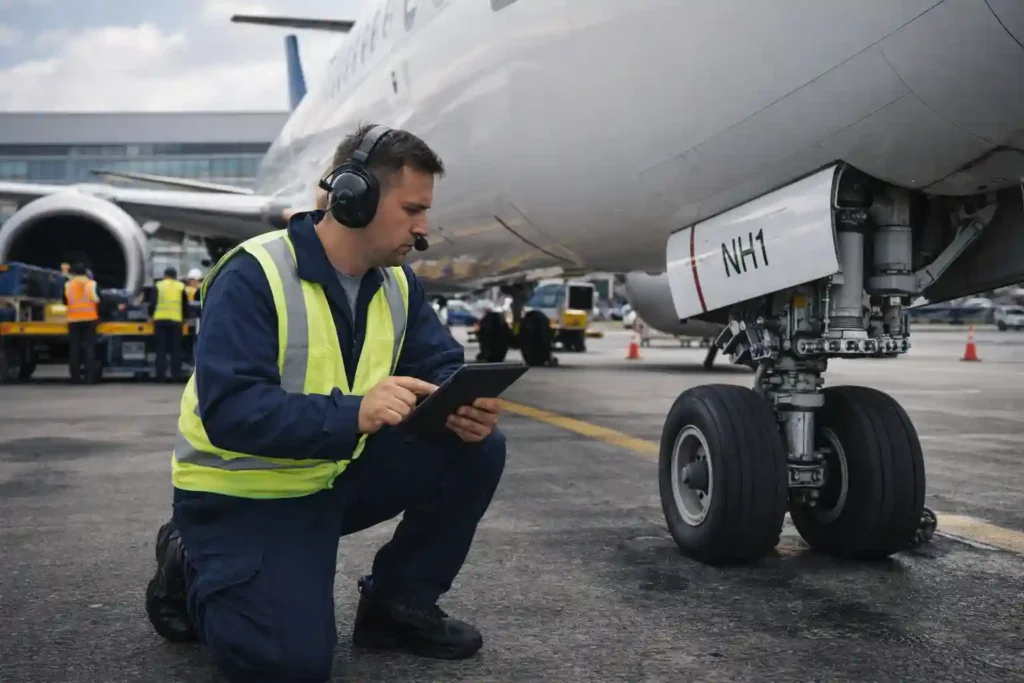
Line maintenance is the “front line” of the industry. It is performed on the tarmac or at the gate while the aircraft is in service, often during short turnaround times between flights. The objective here is speed and efficiency—ensuring the plane is safe for its next immediate departure.
The scope of tasks is generally minor and scheduled. Technicians focus on pre-flight inspections, refueling, checking fluid levels (hydraulic, oil), and visually scanning for external damage, such as foreign object debris (FOD) caused by birds or runway rocks.
A key characteristic of this phase is the use of Line Replaceable Units (LRUs). These are “plug and play” components, like flight computers or radios, that can be swapped quickly without extensive testing. However, the challenge remains high: technicians work outdoors in all weather conditions, under extreme time pressure. If a aircraft maintenance task on the line takes too long, it causes delays that ripple through the airline’s entire schedule.
Base Maintenance (Heavy Maintenance)
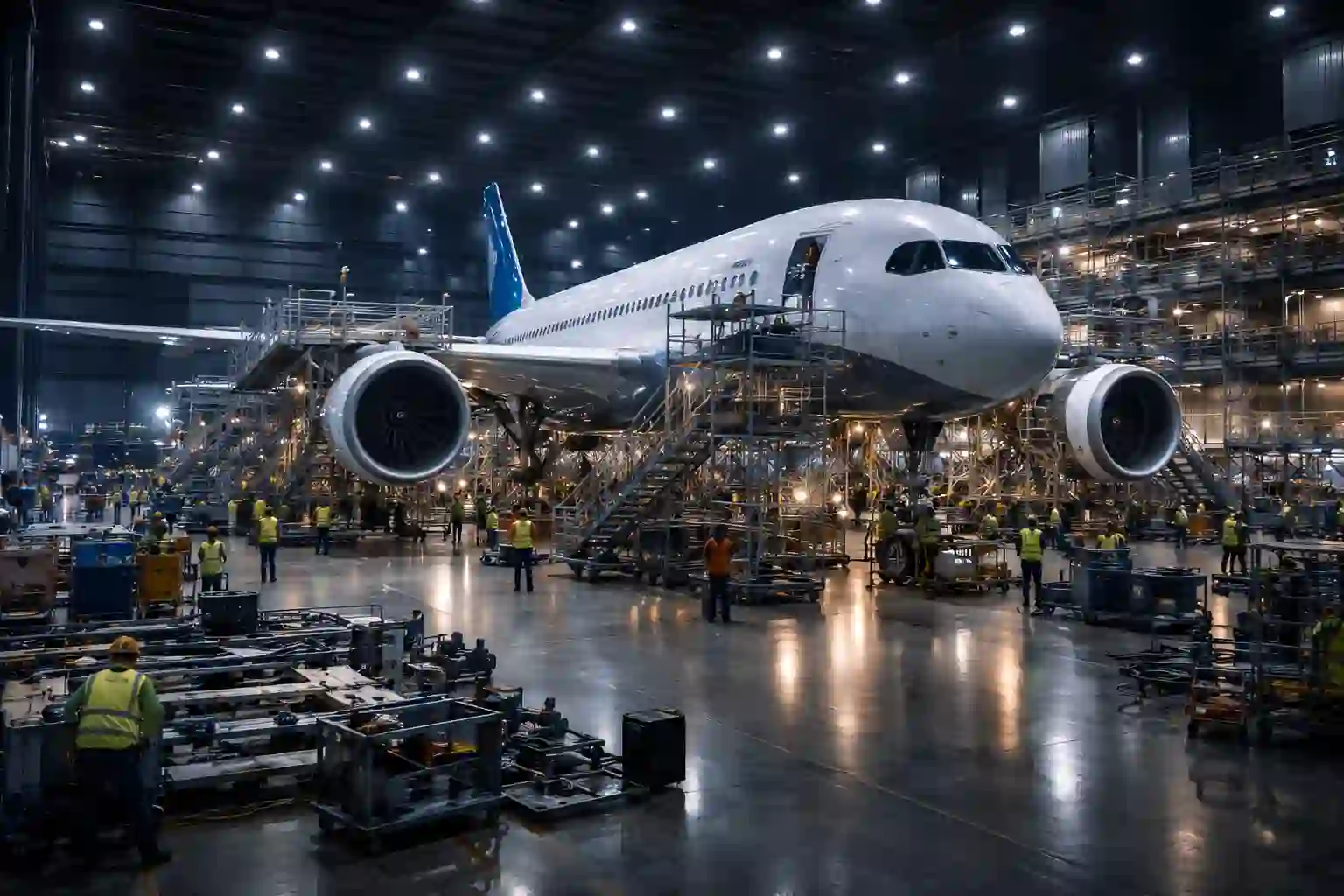
Base maintenance is the “surgery” of the aviation world. It is heavy aircraft maintenance that cannot be performed on the line and requires the aircraft to be removed from service for days, weeks, or even months.
This involves deep structural inspections, corrosion control, engine removal, and major modifications, such as installing new Wi-Fi systems or upgrading cabin interiors. Because this work requires significant infrastructure, including climate-controlled hangars and scaffolding, many airlines outsource this work to specialized Maintenance, Repair, and Overhaul (MRO) providers. These facilities are equipped with the advanced tooling and certified technicians necessary to execute complex aircraft maintenance tasks that an airline’s line crew cannot handle.
The Alphabet Checks: A, B, C, and D
A robust aircraft maintenance program is structured around a schedule of checks, designated by letters. These checks escalate in complexity and time. While modern programs are moving toward “task-based” intervals, the A-to-D nomenclature remains the industry standard for understanding maintenance depth.
The A Check (Light Maintenance)
The A Check is a standard, routine intervention performed approximately every 400 to 600 flight hours (or every 8–10 weeks, depending on the aircraft type). It is usually completed overnight, requiring 10 to 20 hours of labor. Tasks involve general inspections of the fuselage for damage, checking emergency equipment, lubricating landing gear, and verifying filter statuses. The aircraft is rarely taken out of service; the A Check is often slotted into a long overnight stopover at a hub.
The B Check (The Intermediate)
Historically, the B Check was a separate event. However, in modern aircraft maintenance schedules, B Check tasks are often broken up and absorbed into A Checks or C Checks to reduce downtime. When it does occur as a standalone event, it happens every 6 to 8 months and involves more detailed system riggings and fluid analysis.
The C Check (Heavy Maintenance)
The C Check is a major aircraft maintenance event occurring every 20 to 24 months, or based on a specific number of flight cycles (takeoffs and landings). The aircraft is removed from service for one to two weeks. This requires a hangar, as technicians will open deep access panels, test complex systems, and perform detailed X-ray or ultrasound inspections of the airframe for cracks. A C Check is expensive, requiring thousands of labor hours, and serves as a critical milestone in the life of the asset.
The D Check (Structural Overhaul)
The D Check is the most intensive form of aircraft maintenance, often referred to as a “Heavy Maintenance Visit” (HMV). It occurs roughly every 6 to 10 years. During a D Check, the plane is effectively taken apart. The entire cabin interior—seats, galleys, lavatories, sidewalls—is removed to inspect the bare metal fuselage skin for corrosion and fatigue. Engines and landing gear are removed for overhaul.
Often, the old paint is stripped chemically, and the aircraft is repainted. A D Check can take 3 to 6 weeks, or even two months, and consume 30,000 to 50,000 labor hours. Because a D Check can cost millions of dollars, older aircraft often face a “D Check decision.” If the value of the plane is lower than the cost of the aircraft maintenance, the plane is retired and scrapped for parts.
The Role of NDT in Aircraft Maintenance
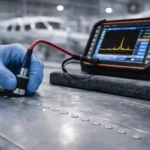
Non-Destructive Testing (NDT) is a critical sub-discipline within aircraft maintenance. As aircraft age, metal fatigue and environmental stress create microscopic cracks that are invisible to the naked eye. NDT technicians use sophisticated technology to “see” inside materials without damaging them.
Ultrasonic Testing uses high-frequency sound waves to detect internal delamination in composite materials, like the carbon fiber used on the Boeing 787 or Airbus A350. Eddy Current testing uses electromagnetic fields to detect surface and near-surface cracks in conductive metals, particularly around fastener holes and rivet lines.
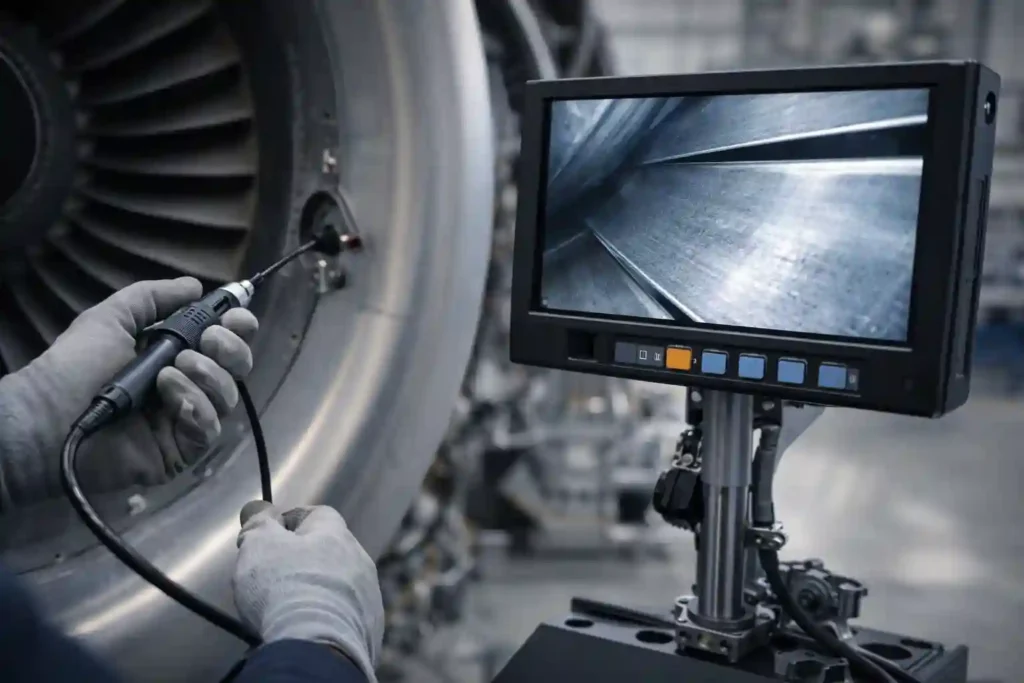
Furthermore, internal visual inspection is crucial for engines. This is where a detailed borescope inspection guide becomes essential, allowing technicians to use snake-like cameras to inspect turbine blades deep inside the engine without dismantling it. Without these advanced aircraft maintenance techniques, catastrophic structural failures would be far more common.
2026 Trends: The Shift to Predictive Maintenance
The future of aircraft maintenance is digital. The traditional method was “Preventive Maintenance”—replacing parts after a set time, regardless of their condition. This was safe but wasteful. The new standard is “Predictive Maintenance.”
Modern engines and airframes are equipped with thousands of sensors measuring temperature, vibration, pressure, and voltage. This data is streamed in real-time via satellite to ground stations, known as Aircraft Health Monitoring (AHM). An airline can create a “Digital Twin” of a specific engine. By feeding the twin real-world data, AI algorithms can predict that a specific fuel pump will fail in exactly 50 flight hours.
The result is that the aircraft maintenance team receives an alert before the pilot even sees a warning light. They can have the replacement part waiting at the arrival gate. This drastically reduces AOG time and optimizes the supply chain, as airlines don’t need to hoard unnecessary spare parts.
The Human Element: The AMT Career
Despite the rise of AI, aircraft maintenance remains a deeply human skill. The Aviation Maintenance Technician (AMT) is a highly trained professional. In the US, AMTs hold an Airframe and Powerplant (A&P) license, while in Europe, they hold an EASA Part-66 license.
An AMT has the unique authority to sign a “Certificate of Release to Service” (CRS). If the AMT says the plane is not safe, the pilot cannot fly. It is one of the few jobs where a technician can ground a multi-million dollar asset with a signature. The demand for skilled personnel in aircraft maintenance is at an all-time high. As the global fleet expands, the industry faces a shortage of technicians who can handle both the mechanical wrench-turning and the digital diagnostics of modern avionics.
Conclusion
Aircraft maintenance is the invisible shield that protects every flight. It is a discipline that combines the brute force of heavy engineering with the microscopic precision of laboratory science. From the quick turnaround of Line Maintenance to the exhaustive disassembly of a D Check, every procedure is calculated to maintain the highest standards of airworthiness.
As we look toward the future, aircraft maintenance will continue to evolve. The integration of AI, predictive analytics, and composite materials is making planes safer and longer-lasting than ever before. For airlines, investing in high-quality aircraft maintenance is not just a regulatory requirement—it is the cornerstone of their reputation and the guarantee that every takeoff leads to a safe landing.
Frequently Asked Questions (FAQ)
What is the difference between Preventive and Predictive aircraft maintenance? Preventive aircraft maintenance replaces parts on a fixed schedule (e.g., every 1000 hours), regardless of condition. Predictive aircraft maintenance uses data sensors to replace parts only when they show signs of actual degradation, saving money and reducing waste.
How much does extensive aircraft maintenance cost? Costs vary wildly. A simple overnight check might cost a few thousand dollars, while a heavy D Check on a wide-body jet like a Boeing 777 or Airbus A380 can cost between $2 million and $6 million, depending on the labor required and parts replaced.
Who regulates aircraft maintenance? It is regulated by national authorities. In the USA, it is the FAA (Federal Aviation Administration). In Europe, it is EASA (European Union Aviation Safety Agency). They set the standards that all MROs and airlines must follow.
Can a pilot perform aircraft maintenance? Generally, no. Pilots are limited to very basic preventative maintenance (like checking oil on small private planes). On commercial jets, only a certified AMT (Aviation Maintenance Technician) can perform and sign off on aircraft maintenance tasks.
What happens if aircraft maintenance is missed? If a mandatory aircraft maintenance check is missed or overflown by even one hour, the aircraft is legally considered “unairworthy.” It is grounded immediately, and the airline can face massive fines and regulatory audits.