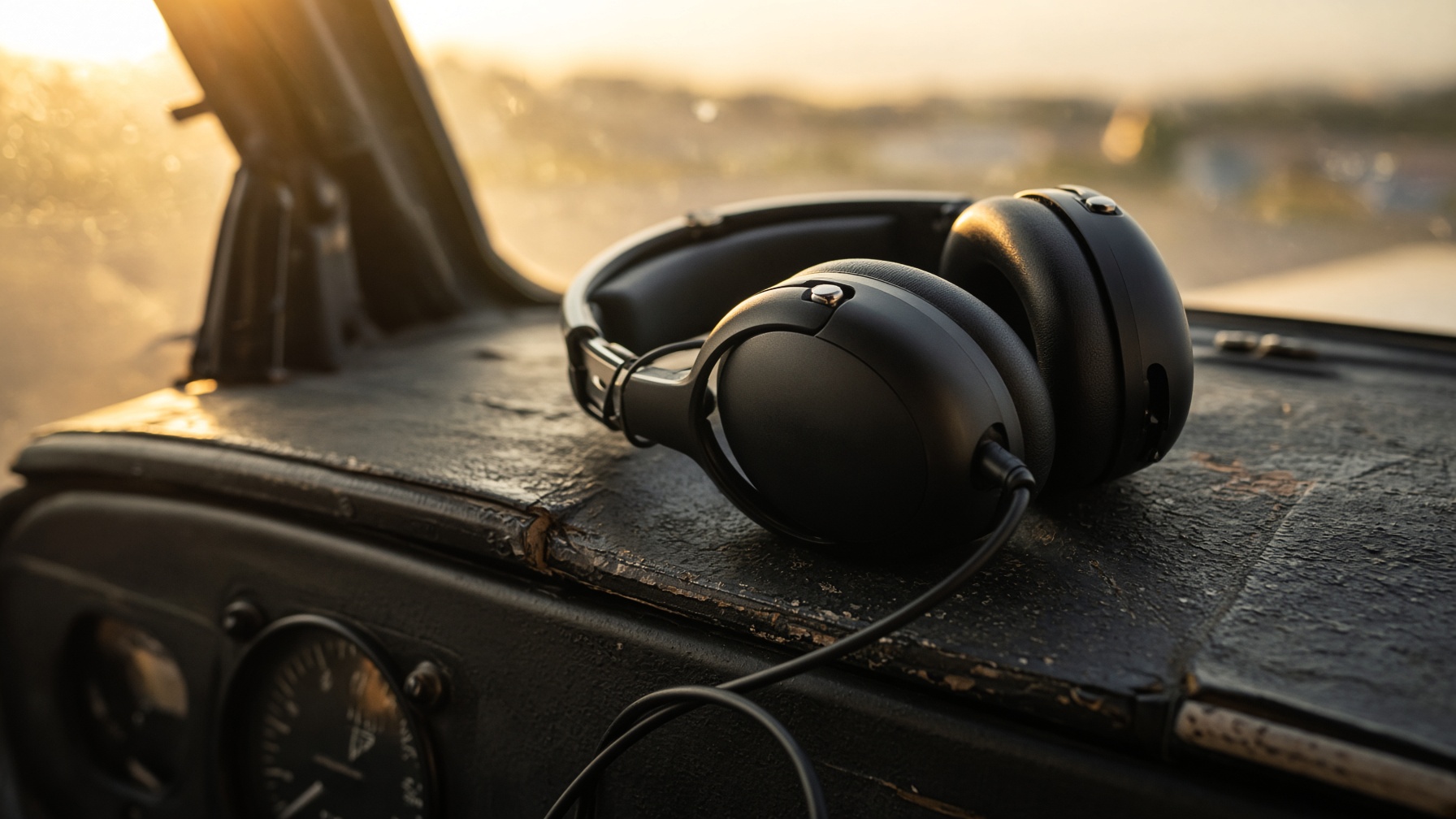
A headset is either a career tool or a headache. Student pilots, CFIs, and jumpseating AMTs search “best aviation headset” because the first one is expensive and the wrong one is louder than the 172. ANR (active noise reduction) versus passive is the real fork, not the color of the cups, not a carbon-fiber headband, and not a marketplace star rating. You are buying clamp force you can wear for hours, a mic the tower can understand, a plug that matches the airplane, and — if you go ANR — batteries or a panel that still work next season.
Buy for hours in the seat, not the unboxing. A student in a 172 for 40–80 hours has a different fatigue problem than a CFI in a busy pattern for six-hour days, and both are different from an AMT who needs something light in a bag for a jumpseat or a maintenance run. We will name classes — passive David Clark–style cups, the Bose A20/A30 class of ANR, Lightspeed-class ANR, in-ear sets — as classes. We will not invent a current street price as a SKU, and we will not point at a specific marketplace listing. Get a dated quote. Used ANR with a dead battery is a passive headset at full price. The rest of the personal kit is on the Kit hub; the insurance nobody explains while you shop cups is student pilot insurance.
ANR versus passive is the fork
Passive headsets kill noise with mass, seal, and clamp. The classic aviation cup still works, survives a bag, and makes sense when cash is tight or you do not want a battery in the failure path. They are heavier and clamp harder. After a three-hour lesson in July, that clamp is a safety item. A known-good used passive from a maker that still sells earseals is a legitimate first headset. A no-name “pilot” set with toy foam is not.
ANR adds electronics that listen to the cabin and push an opposite wave. It owns the low drone that passive cups only partly kill. It is not magic in a sudden bang, and a leaking gel seal is ANR working like a weak passive. You now own batteries or a panel lead and a higher buy-in. For anyone flying more than a handful of hours, ANR is usually worth it because fatigue is a safety item. For a discovery-flight gift, it is not.
- Passive: no battery, simpler failure, more clamp, more weight. Buy a known-good used pair before a new no-name ANR.
- ANR: less low-frequency drone, less fatigue, more to fail. Budget earseals, batteries or a panel cable, and a warranty you can actually use.
- In-ear ANR: different comfort math, better in heat for some heads, worse if you hate tips. Still an aviation mic and an aviation plug — not a consumer earbud with a sticker.
- Bluetooth for a phone is a convenience. It is not a second COM. Do not let a pairing menu live between you and ATC.
Plugs, TSO, and what “aviation” means on the box
General aviation training airplanes in the U.S. almost always want the dual PJ plugs (mic + phones). Many helicopters want a single U-174/U. A jet jumpseat may want something else again — ask before you pack. Adapters exist; adapters also fail, add noise, and get left in the last airplane. Buy the plug the airplane has, or a headset the maker supports with a real adapter, not a drawer of unmarked barrels. Panel-powered ANR is a gift in an airplane that has the jack wired for it and a brick in one that does not. Read the aircraft, not the brochure.
TSO’d (Technical Standard Order) headsets show up in some commercial and fractional ops, and on some insurance or ops-spec lists. A lot of GA training does not require TSO on the student’s personal set. If your school, your 91K program, or your jumpseat carrier does, that is the buy. Do not pay a TSO premium because a forum said “real pilots.” Do pay it when the paper on the wall says so. The mic boom should sit at the corner of the mouth, not on the lips, not on the chin; tinny or muffled is a seating problem before it is a brand problem. Replace earseals when they shine, flatten, or leak. A $40 pair of seals can save a $1,000-class headset. That dollar figure is a class, not a SKU.
Planning bands — not a SKU
Street prices on name-brand ANR move with bundles, refurbs, and whoever is clearing last year’s cup. The Bose A20 was the default ANR for a long stretch; the A30 is the successor class. Lightspeed Zulu-class sets are the other sentence people say in the FBO. We will not print a current A20 or A30 street price as if it were a part number. Plan a four-figure check before tax for that class, then get a dated quote from an avionics shop, a catalog page with a date, or the maker. A screenshot from 2023 is how you overpay or buy a dead battery. Passive David Clark–class cups: plan a few hundred dollars new, less used if the headband and earseals are honest.
| Use | Shape | Planning band | Skip |
|---|---|---|---|
| Student, 172, ~40–80 h | Decent ANR if the budget can stand it; known-good passive if it cannot | Passive: roughly $250–$450 class. ANR: four-figure name-brand — quote it | Toy “pilot” set; no-name ANR with no spare seals |
| CFI / busy pattern / 6-hour days | ANR you can wear all day; seals you will replace on a schedule | Name-brand ANR, dated quote; budget seals and batteries as consumables | Tight cheap clamps; a heavy passive you already hate by lunch |
| AMT / jumpseat / maintenance run | Light ANR or a compact passive, easy bag, correct plug | Often the same ANR class, bought used with a working battery if the cups are honest | Carbon-fiber flex for Instagram; a drawer of unmarked adapters |
| In-ear convert | Aviation in-ear ANR with a real mic boom or equivalent, aviation plugs | Quote it. Comfort is personal; return policy matters more than the badge | Consumer earbuds with an aviation sticker |
Used-market traps
Used passive: check the headband spring, yoke pivots, mic windscreen, and whether earseals are still sold for that cup. Crushed seals on a famous-maker pair are a parts kit. Used ANR: the electronics are the product. Ask when it last powered and whether the maker still talks to that serial. A maker refurb is a different animal from a hangar-closet orphan. Cables crack at the boot — a deal-breaker if nobody will touch that generation.
Stolen headsets move. Engrave. Keep a serial. Do not buy “new in bag, cash” on the ramp from someone who will not meet you at the FBO desk. A dated catalog quote with a return policy beats a cheaper anonymous listing. We will not send you to a marketplace cart. If the price is half of every dated quote, you are not winning.
Students, CFIs, and jumpseating AMTs
Students: if you will fly more than a handful of hours, ANR usually pays in fatigue. If cash is tight, a known-good used passive beats a new no-name ANR. School-owned sets are a hygiene lottery. Pair the purchase with the unglamorous paper: renter insurance is a different product from the cups, and AOPA’s insurance page is a front door, not a religion. Get a quote. Read the exclusions.
CFIs live in the set: ANR, spare seals, a spare battery or panel lead, a mic the student can hear when you are tired. Clamp that seemed “secure” in the shop is a headache at hour five. Try before you buy, or insist on a return policy. Jumpseating AMTs: light, bags small, correct plug. It is a tool, like the first mechanic box. Treat it like one.
Ears, hours, and the rest of the kit
Hearing is a career. The BLS handbook describes a loud trade: rivet guns, engines, APU. A headset in the airplane and muffs on the ramp are different tools. Do not wear ANR cups as hangar protection unless they are rated for it and the shop allows it.
If you are still collecting tickets, the FAA mechanic path and a headset are not the same receipt — do not let a four-figure ANR delay a written. Replace seals on a calendar. Retire a cable the day it crackles. The best headset is the one you will actually wear correctly for the whole lesson.
Is ANR worth it for a student?+
If you will fly more than a handful of hours, usually yes — fatigue is a safety item. If cash is the constraint, a known-good used passive beats a new no-name ANR. Get a dated quote on the name-brand class; we will not invent a Bose A20/A30 street price.
What plug do I need?+
Most U.S. trainers: dual GA PJ plugs. Many helicopters: U-174/U. Jumpseats vary. Buy the plug the airplane has. Adapters fail.
Should I buy used?+
Used passive from a maker that still sells seals: often yes. Used ANR: only if it powers, the serial is clean, and someone will stand behind it. Dead-battery ANR is a passive set at full price.
Do I need a TSO’d headset?+
When your school, operator, or insurance list says so. A lot of GA training does not. Do not pay the premium for a forum; do pay it for the ops spec.
Can I use Bluetooth for ATC?+
No. Bluetooth is a phone convenience on some sets. COM is the aviation plugs and the panel. Do not let a pairing screen sit between you and the tower.
Sources (verified)
Planning bands, not a binder or a cart. Confirm model year, plug, return policy, and a dated quote. Aviation Titans is independent editorial. We may earn on partner links. We do not sell headsets and we do not quote current Bose A20/A30 street prices as SKUs.