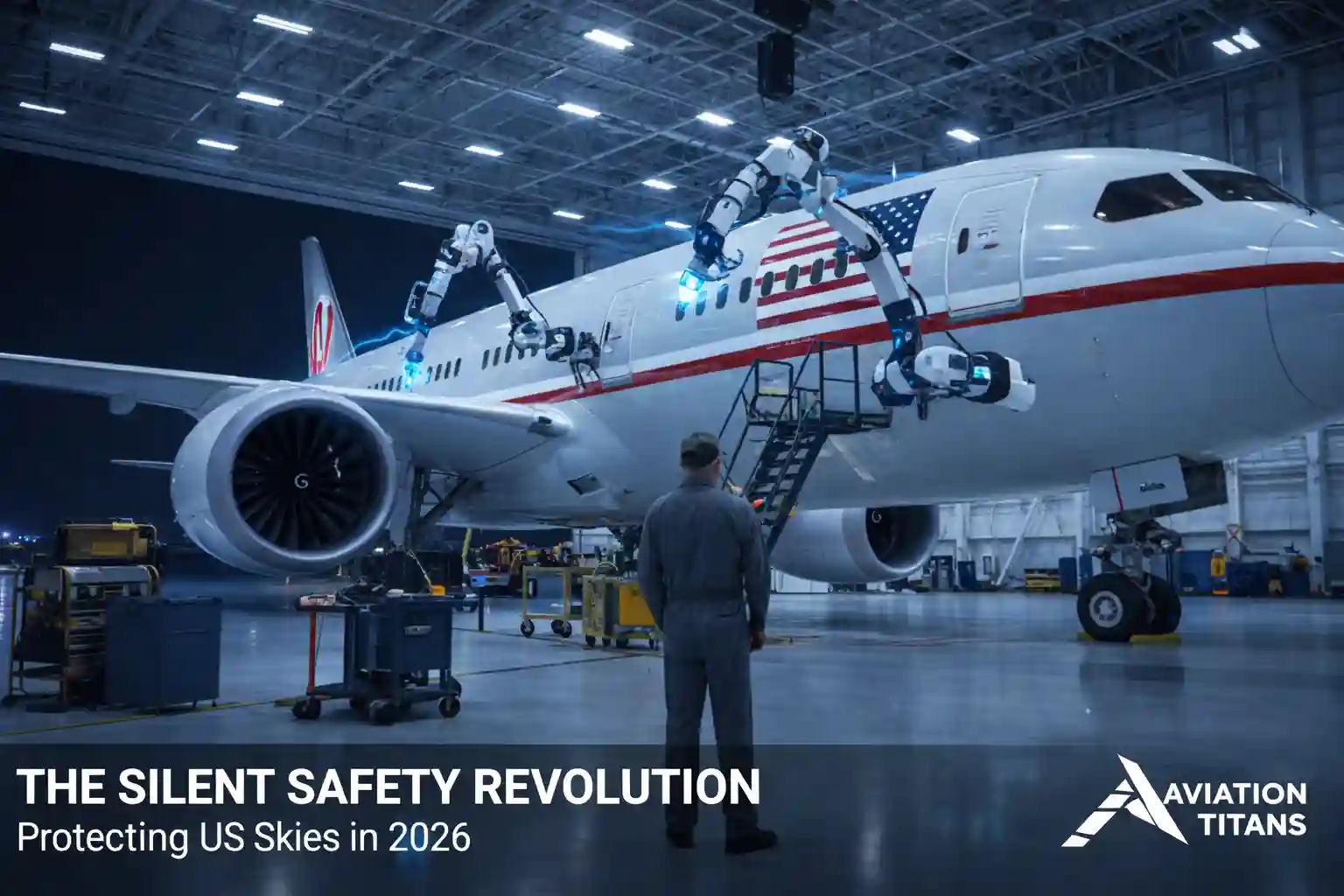
When a Boeing 737 MAX door plug blew out mid-flight over Portland in January 2024, it wasn’t just a mechanical failure—it was a wake-up call. The Federal Aviation Administration responded with unprecedented scrutiny, and Boeing faced a reckoning that reverberated through boardrooms and maintenance hangars nationwide. But behind the headlines and congressional hearings, a quieter revolution has been unfolding in aircraft maintenance facilities across America. Today, as passengers board commercial flights from Seattle to Miami, an invisible army of technicians, inspectors, and AI-powered systems works around the clock to ensure that every rivet, every hydraulic line, and every turbine blade meets exacting standards. In 2026, aircraft maintenance has evolved from routine upkeep into the aviation industry’s primary defense against catastrophic failure.
The stakes have never been higher. With over 45,000 flights crossing US airspace daily and public confidence still recovering from recent safety incidents, Maintenance, Repair, and Overhaul (MRO) operations have become the unsung guardians of American aviation. This isn’t your grandfather’s wrench-and-clipboard maintenance anymore. It’s a high-tech, data-driven discipline where microscopic cracks are detected before they propagate, where digital replicas predict failures months in advance, and where regulatory frameworks are being rewritten in real-time to match the complexity of modern aircraft. Welcome to the new era of aircraft safety—where maintenance isn’t just about fixing what’s broken, but preventing problems that haven’t even occurred yet.
The NDT Edge in Next-Gen Aircraft Maintenance: Catching Invisible Threats
Non-Destructive Testing has transformed from a periodic inspection method into the cornerstone of predictive maintenance. Unlike traditional visual inspections that rely on the human eye to spot surface anomalies, NDT technologies peer deep into the molecular structure of aircraft components without damaging them. Ultrasonic testing sends high-frequency sound waves through metal structures, detecting internal flaws invisible to even the most experienced inspector. Eddy current techniques identify subsurface cracks in critical areas like wing spars and engine mounts. Radiographic inspection uses X-rays to reveal corrosion hiding beneath composite materials.
The sophistication of these methods has reached unprecedented levels in 2026. Phased array ultrasonic testing now maps the internal geometry of complex components in three dimensions, creating detailed visualizations that highlight stress concentrations and material degradation. Thermographic cameras detect heat signatures that indicate friction or electrical resistance in components that should be operating smoothly. Acoustic emission monitoring listens for the telltale sounds of crack propagation in real-time during operational stress tests.
What makes NDT particularly crucial is its ability to catch the precursors to catastrophic failure. Metal fatigue doesn’t announce itself with obvious symptoms—it begins with microscopic stress cracks that grow slowly over thousands of flight cycles. By the time these cracks become visible to the naked eye, they’ve already compromised structural integrity. Modern NDT protocols, mandated by increasingly stringent FAA regulations, require inspection of high-stress areas at intervals calculated based on aircraft age, flight hours, and cycle counts. The result? Potential failures are identified and addressed during scheduled maintenance rather than discovered mid-flight.
American MRO facilities have invested heavily in automated NDT systems that improve both speed and accuracy. Robotic crawlers equipped with ultrasonic probes systematically scan fuselage sections, generating comprehensive data sets that are analyzed by AI algorithms trained to recognize patterns associated with material degradation. This technology doesn’t replace human inspectors—it augments their capabilities, allowing them to focus their expertise on anomalies flagged by the system. For passengers, this means that the aircraft they’re boarding has undergone scrutiny far more rigorous than anything possible even five years ago.
The Tech Talent Gap: America’s Critical Shortage of Aviation Mechanics
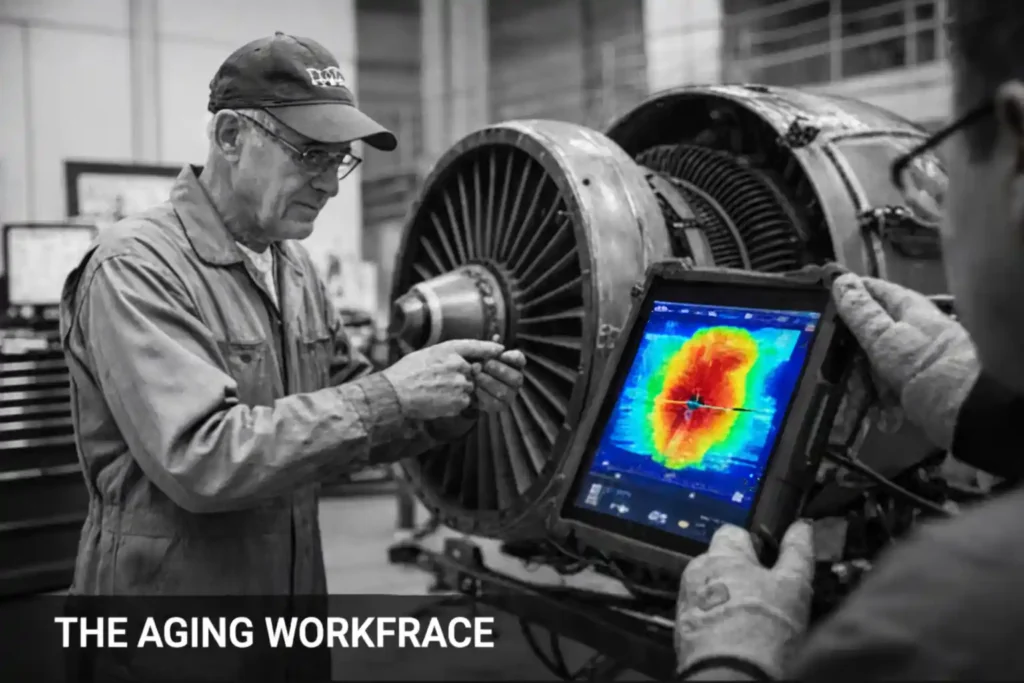
While technology advances, the US faces a paradox: we have the most sophisticated maintenance tools in aviation history, but not enough skilled hands to operate them. The aviation mechanic workforce is aging out faster than new technicians are entering the field. According to industry analyses, the United States needs approximately 14,000 new aviation maintenance technicians annually to meet demand, but training programs are graduating fewer than 10,000 per year. This shortage isn’t merely numerical—it represents a potential vulnerability in the safety infrastructure that protects millions of passengers.
The problem stems from multiple factors. Becoming a certified Airframe and Powerplant (A&P) mechanic requires 18-30 months of FAA-approved training followed by rigorous examinations. The investment in time and money is substantial, yet starting salaries haven’t kept pace with other technical professions requiring similar commitments. Meanwhile, experienced mechanics who cut their teeth on earlier-generation aircraft are retiring, taking with them decades of institutional knowledge about aging fleets still in service.
Major airlines and MRO providers have responded with aggressive recruitment initiatives. Partnerships with technical schools now offer apprenticeship programs that combine classroom instruction with paid on-the-job training. Some carriers have implemented six-figure signing bonuses for experienced A&P mechanics, particularly those with specializations in avionics or composite materials. The International Aviation Womens Association and similar organizations are working to diversify the technician pipeline, recognizing that expanding recruitment demographics is essential to solving the labor shortage.
The integration of advanced technology into maintenance operations has created demand for a new hybrid skillset. Today’s aviation mechanics need traditional mechanical aptitude combined with digital literacy. They must interpret data from aircraft health monitoring systems, understand the algorithms that flag potential issues, and work alongside automated inspection equipment. This evolution has prompted curriculum updates at training facilities nationwide, where students now learn to troubleshoot electronic engine controls and composite repair techniques alongside traditional sheet metal work and hydraulic systems.
For the industry, addressing this talent gap isn’t optional—it’s existential. Even the most advanced diagnostic technology requires human judgment to interpret results and make repair decisions. The Career & Training pathways being developed today will determine whether America maintains its aviation safety leadership in the decades ahead.
How Digital Twins Power Next-Gen Aircraft Maintenance Systems?
Walk into a modern American MRO facility and you’ll witness something that would seem like science fiction a decade ago: technicians consulting digital replicas of aircraft that predict failures before they happen. Digital twin technology creates virtual copies of physical aircraft, continuously updated with real-time data from thousands of sensors embedded throughout the airframe and engines. These virtual models don’t just mirror current conditions—they simulate future performance under varying operational scenarios.
The predictive power of digital twins comes from their integration with artificial intelligence and machine learning algorithms. These systems analyze patterns across entire fleets, identifying correlations between operating conditions and component degradation that human analysts would never detect. When an engine sensor registers a subtle vibration increase that falls within normal parameters, AI algorithms compare this data against billions of historical data points. They recognize that this specific vibration signature, combined with certain temperature trends and operational hours, preceded compressor blade failures in similar engines six months later.
This predictive capability fundamentally changes maintenance economics and safety margins. Instead of waiting for components to fail or replacing parts on fixed schedules regardless of actual condition, maintenance becomes truly predictive and condition-based. Airlines can schedule component replacements during routine maintenance windows rather than responding to unexpected failures that ground aircraft. The safety implications are profound—failures are prevented rather than reacted to, and maintenance resources are allocated where they’ll have the greatest impact.
American carriers are leveraging these technologies in increasingly sophisticated ways. Real-time aircraft health monitoring systems transmit operational data to ground-based analysis centers throughout every flight. By the time an aircraft parks at the gate, maintenance teams already know which systems showed anomalies during the flight and have parts and procedures ready. This proactive approach minimizes aircraft downtime while maximizing safety margins.
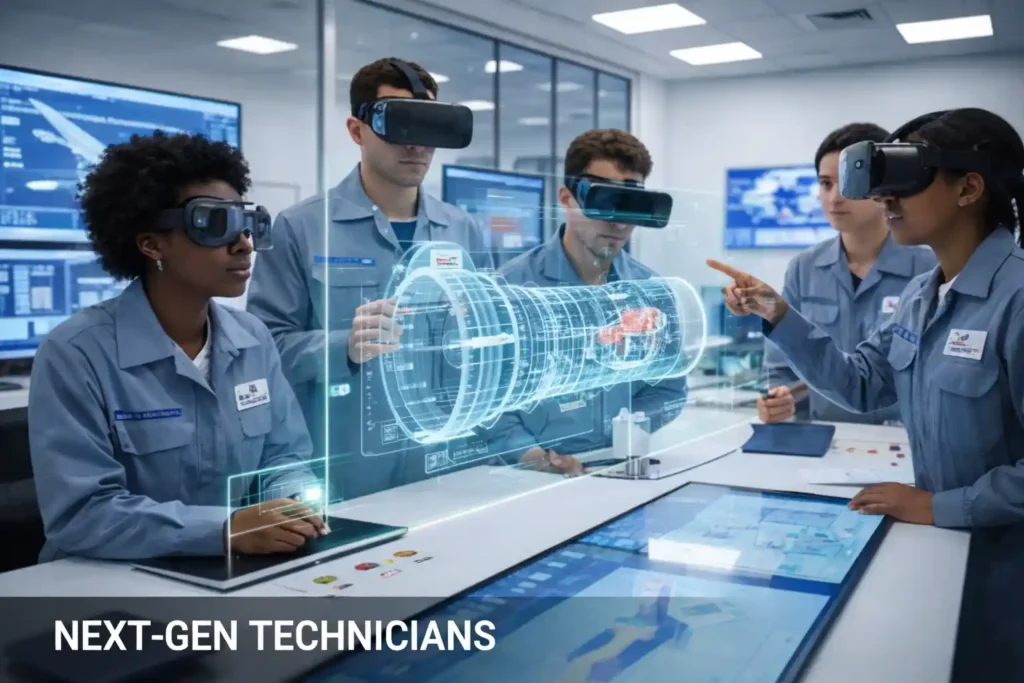
The integration of augmented reality (AR) into maintenance procedures represents another technological leap. Mechanics wearing AR headsets see digital overlays that guide them through complex procedures, highlighting exactly which fasteners to remove or where to apply sealant. These systems reduce human error, accelerate training, and ensure consistent quality across maintenance operations. When combined with the analytical power of AI and the comprehensive data from digital twins, these technologies create a maintenance ecosystem that’s more capable and reliable than ever before. For insights into how these inspection technologies work, explore our NDT Insights section.
Safety Regulations: How the FAA is Rewriting the Rulebook for 2026
The regulatory landscape governing aircraft maintenance has undergone seismic shifts in response to recent safety incidents and technological capabilities. The FAA’s approach in 2026 reflects a fundamental rebalancing—stricter oversight of manufacturing quality combined with more flexible, performance-based maintenance requirements that leverage new technologies.
Following the Boeing 737 MAX crises and subsequent quality control failures, the FAA instituted more rigorous production oversight. Inspectors now maintain continuous presence at major manufacturing facilities, with authority to halt production if quality standards slip. The agency has also expanded its safety data collection systems, requiring airlines and MRO providers to report a broader range of maintenance findings. This expanded data collection creates a more comprehensive picture of fleet health and allows regulators to identify emerging trends before they become widespread problems.
Perhaps most significantly, the FAA has begun embracing predictive maintenance methodologies in its regulatory framework. Traditional maintenance requirements were largely prescriptive—specific tasks performed at fixed intervals regardless of actual aircraft condition. The new performance-based regulations allow operators to adjust maintenance intervals based on data from health monitoring systems, provided they can demonstrate equivalent or superior safety margins. This regulatory flexibility incentivizes investment in advanced monitoring technologies while maintaining rigorous safety standards.
The FAA has also strengthened requirements for maintenance technician training and certification. New regulations mandate recurrent training on composite materials and advanced avionics systems for A&P mechanics working on modern aircraft. The agency has partnered with industry groups to develop standardized competency assessments that ensure mechanics possess the skills necessary for increasingly complex maintenance tasks.
International harmonization efforts have accelerated, with the FAA working closely with the European Union Aviation Safety Agency (EASA) and other regulatory bodies to align safety standards. This cooperation reduces compliance burdens for manufacturers and operators while ensuring that aircraft moving between jurisdictions meet consistent safety benchmarks. For passengers, these regulatory evolutions mean that the oversight protecting them is both more comprehensive and more responsive to technological realities than previous frameworks.
The Future of Trust: Rebuilding Confidence in American Aviation
As 2026 progresses, the aviation industry faces a critical mission beyond technical excellence—restoring public confidence. Recent safety incidents damaged the implicit trust passengers place in commercial aviation every time they board a flight. Rebuilding that trust requires transparency, technological investment, and demonstrable commitment to safety above all other considerations.
Airlines and maintenance providers are responding with unprecedented openness about their safety protocols. Carriers now publish detailed safety reports accessible to the public, outlining maintenance practices, inspector qualifications, and fleet age statistics. This transparency helps demystify the complex systems protecting passengers and demonstrates the industry’s accountability.
The investments in next-generation maintenance technologies aren’t merely operational improvements—they’re essential to aviation’s social license to operate. When passengers understand that their aircraft has been inspected by AI systems analyzing billions of data points, scanned by robots that detect microscopic cracks, and maintained by technicians using augmented reality guidance systems, it builds confidence that extends beyond traditional safety statistics.
Looking ahead, the integration of sustainability with safety maintenance practices will become increasingly important. As airlines adopt newer, more fuel-efficient aircraft and retrofit existing fleets with efficiency improvements, maintenance procedures must evolve to support these environmental initiatives without compromising safety. The maintenance facilities that will succeed in the next decade are those that demonstrate excellence across both safety and sustainability dimensions.
The silent revolution in aircraft maintenance isn’t about dramatic breakthroughs or singular innovations. It’s about the systematic application of technology, training, and regulatory oversight to create multiple overlapping layers of protection. It’s about mechanics who take pride in work that passengers will never see but depend upon absolutely. It’s about algorithms that detect patterns invisible to human observation. It’s about regulators who demand accountability while enabling innovation. Together, these elements form the safety infrastructure that makes commercial aviation the safest form of transportation humanity has ever created—and continues to make it safer still.
People Also Ask: Your Aircraft Maintenance Questions Answered
Are older planes in the US still safe to fly?
Yes, older aircraft in the US remain safe when properly maintained according to FAA regulations. Age itself doesn’t determine safety—maintenance quality does. Older aircraft undergo more frequent and intensive inspections as they accumulate flight cycles. The FAA’s aging aircraft program mandates enhanced structural inspections and corrosion prevention measures for aircraft exceeding specific age or cycle thresholds. Many carriers operate aircraft 20+ years old that receive such meticulous maintenance they’re arguably safer than poorly-maintained newer planes. The key is strict adherence to maintenance protocols and component replacement schedules.
What is the difference between A, B, C, and D maintenance checks?
Aircraft maintenance follows a tiered system of increasing complexity. A-checks occur approximately every 400-600 flight hours (roughly monthly) and involve visual inspections, fluid level checks, and operational tests—typically completed overnight. B-checks (every 4-6 months) are more thorough, examining systems and components in greater detail. C-checks (every 18-24 months) are extensive, taking the aircraft out of service for several days or weeks. Technicians inspect structural components, flight control systems, and landing gear, often removing interior panels for access. D-checks (every 6-10 years) are the most comprehensive, essentially disassembling the aircraft for complete structural inspection and overhaul, taking 1-2 months.
How often are US commercial jets inspected?
US commercial aircraft undergo continuous inspection cycles. Pilots perform pre-flight walk-arounds before every flight. Mechanics conduct daily inspections checking for obvious damage, leaks, or anomalies. Beyond these routine checks, aircraft follow the A/B/C/D maintenance schedule described above. Additionally, specific components have individual inspection intervals—engines might be inspected every 200 hours, while certain structural areas receive NDT inspection at prescribed intervals based on stress analysis. Between scheduled checks, advanced monitoring systems continuously track aircraft health, flagging anomalies that trigger intermediate inspections. The result is that commercial aircraft spend significant portions of their operational lives under some form of inspection or maintenance.
Is there a shortage of aircraft mechanics in the US?
Yes, the United States faces a significant shortage of qualified aircraft maintenance technicians. The industry requires approximately 14,000 new A&P mechanics annually, but training programs graduate fewer than 10,000 per year. This gap stems from an aging workforce (average age over 50), the substantial training investment required, and competition from other technical fields offering comparable or better compensation. The shortage has prompted airlines to offer enhanced benefits, signing bonuses, and partnerships with technical schools to expand the talent pipeline. This workforce challenge represents one of the aviation industry’s most pressing concerns, as even the most advanced inspection technology requires skilled human technicians to interpret results and perform repairs.
What role does NDT play in preventing engine failures?
Non-Destructive Testing is critical for preventing catastrophic engine failures by detecting internal damage before components fail in service. Turbine engines operate under extreme temperatures and stresses that cause metal fatigue over time. NDT techniques like ultrasonic testing, eddy current inspection, and radiography identify cracks, corrosion, and material degradation invisible to visual inspection. For example, turbine blades are regularly inspected using fluorescent penetrant inspection that reveals surface-breaking cracks, while ultrasonic methods detect subsurface flaws. By catching these defects early, NDT allows replacement of compromised components during scheduled maintenance rather than experiencing in-flight failures. Modern engines also incorporate borescope inspection ports allowing internal inspection without disassembly, dramatically improving the ability to monitor engine health throughout its service life.
Aviation Titans is committed to bringing transparency and expertise to the aviation maintenance industry. For more insights into the technologies protecting modern aviation, explore our comprehensive resources on inspection methodologies and career development in this critical field.

Senior NDT Controller with over 20 years of experience in aviation (FAA, EASA, and NRCAN certified). Expert in aircraft maintenance, non-destructive testing (NDT), and pilot training. I share practical, up-to-date 2026 guides for pilots and aviation maintenance technicians.