
The aircraft maintenance industry stands at an unprecedented crossroads. While global passenger traffic surges past 9.8 billion travelers and airlines scramble to keep aging fleets airborne, the traditional wrench-and-clipboard approach to maintenance is giving way to something far more sophisticated. The numbers tell a compelling story: the global air transport MRO market hit $84.2 billion in 2025 and is projected to expand at a 5.4% CAGR to reach $134.7 billion by 2034.
For aviation maintenance professionals, this transformation isn’t coming—it’s already here. From AI-powered predictive diagnostics to digital twins monitoring every engine component in real-time, the MRO landscape of 2026 bears little resemblance to the hangars of even five years ago. This analysis examines seven critical trends that every A&P mechanic, NDT inspector, and MRO manager needs to understand to stay relevant in this rapidly evolving industry.
Why AI is the Core of Aviation MRO Trends 2026 ?
Artificial intelligence powers the MRO revolution, evolving predictive maintenance from experimental tools to operational necessities. The transformation is quantifiable and dramatic. Implementing predictive maintenance programs results in a 15% reduction in downtime and a 20% increase in labor productivity.
What does this mean on the hangar floor? Instead of inspectors discovering problems during scheduled checks, AI systems now flag potential failures weeks or months in advance by analyzing patterns across thousands of data points—vibration signatures, oil analysis, temperature variations, and performance metrics invisible to human observation.
Major players like Lufthansa Technik and Rolls-Royce have moved beyond testing to full-scale deployment. Rolls-Royce’s TotalCare model transformed MRO from per-repair billing to outcome-based delivery, with the program covering up to 95% of engine materials. This shift represents more than operational efficiency; it fundamentally changes the economics of aircraft maintenance.
The financial commitment backing this transformation is substantial. Spending in the aerospace and defense sector on AI and generative AI is expected to reach $5.8 billion by 2029—3.5 times higher than 2025 levels. For technicians, this means new skill requirements. Understanding data analytics, sensor networks, and AI-driven diagnostic tools is becoming as essential as traditional mechanical expertise.
Digital Twins: A Pillar of Next-Gen Aviation MRO
Imagine having a precise digital replica of every aircraft in your fleet—one that updates in real-time, predicts component wear, and allows you to test maintenance scenarios without touching a single bolt. That’s the promise of digital twin technology, and it’s moving from concept to standard practice across major MRO operations.
McKinsey estimates global investment in digital twin technology will surpass $48 billion by 2026, driven by AI-enabled simulation and real-time analytics. Industry leaders like General Electric and Rolls-Royce employ these virtual models to monitor engine health continuously, enabling targeted interventions before critical failures occur.
The practical applications extend far beyond engine monitoring. Digital twins enable MRO facilities to:
- Simulate maintenance procedures before performing them on actual aircraft
- Optimize parts inventory by predicting component lifecycles with unprecedented accuracy
- Train technicians on complex procedures using virtual replicas
- Identify design flaws and wear patterns across entire fleets
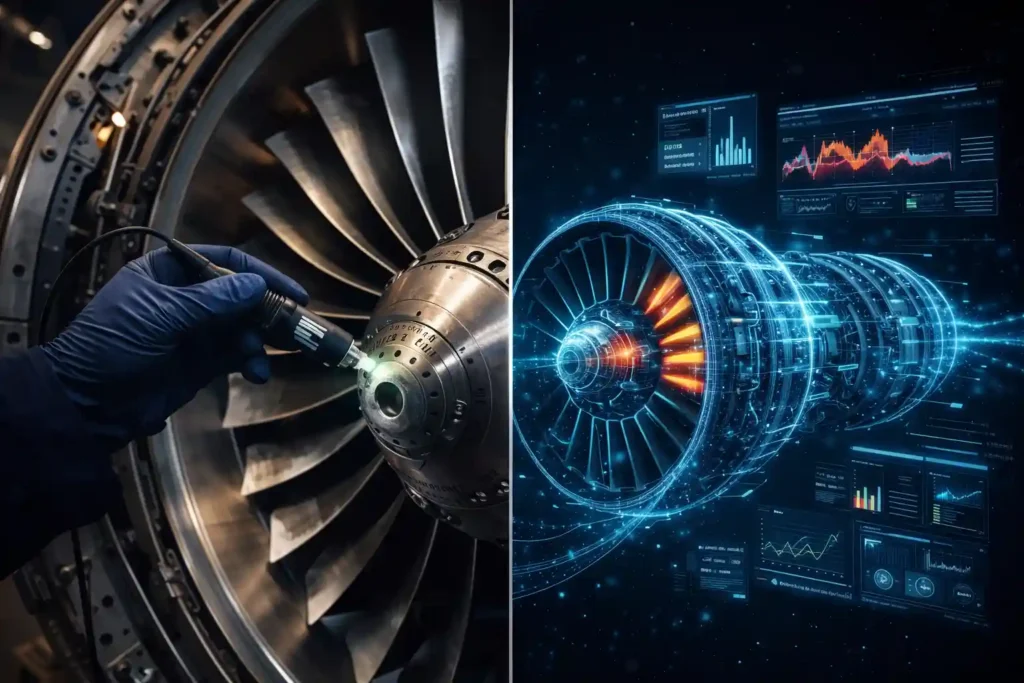
Challenges involve high initial costs and data security, but ROI through reduced downtime makes digital twins a cornerstone of the MRO revolution.
The Cloud Migration: MRO Goes Mobile-First
Paper logbooks and desktop-bound maintenance systems are vanishing from modern hangars. The shift toward cloud-based, mobile-first platforms is accelerating, driven by operational necessity and generational workforce changes.
The scalability and accessibility of cloud systems appeal particularly to smaller Tier 2 and Tier 3 MRO providers who can now access enterprise-grade capabilities without massive IT investments. Airlines now give technicians tablets integrated with real-time data to boost accuracy and ensure regulatory compliance across locations.
This transformation impacts every aspect of daily operations:
For A&P Mechanics: Instant access to maintenance manuals, wiring diagrams, and service bulletins directly at the aircraft, eliminating trips back to the shop or office.
For Quality Assurance: Real-time oversight of work in progress, automated compliance checking, and instant documentation of completed tasks.
For Parts Departments: AI-driven inventory systems that auto-adjust stock levels, integrate with procurement platforms, and forecast demand based on fleet-wide patterns.
The digital logistics market reflects this momentum. The aviation MRO logistics market is projected to reach $6.5 billion by 2026, growing from $6.13 billion in 2025 at a CAGR of 6.1%. This growth stems largely from the efficiency gains cloud platforms deliver—reduced paperwork errors, faster turnaround times, and enhanced regulatory compliance tracking.
The Labor Crisis: Automation Meets Apprenticeship
The aviation maintenance industry faces a paradox: surging demand for services amid an acute shortage of qualified technicians. This workforce gap isn’t theoretical—it’s impacting operations today and forcing fundamental changes in how MRO work gets performed.
Several factors compound the problem:
- An aging workforce with experienced A&P mechanics retiring faster than new technicians enter the field
- Increased competition from other technical industries offering comparable or better compensation
- The growing complexity of modern aircraft requiring more specialized skills
- Regulatory requirements that limit how quickly new technicians can gain certifications
The industry’s response combines automation with enhanced training initiatives. Augmented reality and virtual reality technologies are transforming how new technicians learn complex procedures. Instead of shadowing experienced mechanics for months, trainees can now practice critical tasks repeatedly in immersive simulations before touching actual aircraft.
Robotics and automation are filling gaps where human technicians are scarce. Automated inspection drones equipped with high-resolution cameras and NDT sensors can now perform detailed fuselage inspections in a fraction of the time required for manual inspections. Three-dimensional printing enables on-site fabrication of certain components, reducing supply chain dependencies.
Yet technology cannot fully replace human expertise. The most successful MRO operations are those balancing automation with investment in workforce development—partnering with technical schools, offering competitive compensation, and creating clear career advancement pathways.
Blockchain and Supply Chain Transparency
Counterfeit parts represent one of aviation’s most insidious safety threats. A single fake component can compromise an entire aircraft, and traditional paper-based tracking systems offer limited protection against sophisticated forgeries.
Blockchain technology promises a solution through immutable, transparent parts tracking from manufacturer to installation. Every component receives a digital identity that travels with it through the supply chain, creating an unalterable record of provenance, maintenance history, and compliance documentation.
While still emerging from pilot programs, blockchain adoption is accelerating. The technology offers particular value for:
Parts Authentication: Instant verification of component legitimacy and certification status
Maintenance Records: Complete, tamper-proof histories accessible to operators, regulators, and maintenance facilities
Warranty Claims: Automated validation of parts under warranty and service history
Regulatory Compliance: Simplified audits with complete, verifiable documentation chains
The aviation MRO software market’s trajectory reflects growing integration of these technologies. The market is projected to expand from $7.15 billion in 2025 to $7.48 billion by 2026 at a CAGR of 4.6%, and further reaching $8.88 billion by 2030. Much of this growth stems from platforms incorporating blockchain, AI, and cloud capabilities into comprehensive MRO management systems.
Engine MRO: The 53% Solution
Not all MRO segments are created equal, and the engine sector increasingly dominates both spending and innovation. Aviation Week projects global commercial aftermarket MRO demand will grow at a 3.2% CAGR between 2026 and 2035, with the engine segment’s share of total MRO demand expected to rise to 53%.
This concentration makes sense when examining the economics. Engines represent the most expensive aircraft components, suffer the harshest operating conditions, and require the most specialized expertise to maintain. Modern turbofan engines contain thousands of precision components operating at extreme temperatures and pressures—any one of which can ground an aircraft if it fails.
The engine focus drives several industry dynamics:
Consolidation of Expertise: Engine overhaul requires specialized facilities, tooling, and expertise that only a limited number of MRO providers can offer at scale.
Long-Term Service Agreements: Airlines increasingly opt for comprehensive engine maintenance contracts that provide predictable costs and guaranteed availability.
Technology Investment: Engine MRO attracts disproportionate technology development, from advanced coatings that extend component life to AI systems that optimize maintenance timing.
Parts Management: The complexity and value of engine components make them prime candidates for advanced inventory management and blockchain tracking.
For career-minded technicians, engine specialization offers substantial advantages. Powerplant specialists command premium salaries, enjoy strong job security, and work with the most advanced technologies in aviation maintenance.
Sustainability: Green Maintenance Practices
Environmental concerns are no longer peripheral to aviation maintenance—they’re reshaping operational practices and regulatory requirements. MRO facilities face increasing pressure to minimize waste, reduce emissions, and adopt sustainable practices throughout their operations.
The push toward sustainable aviation fuels introduces new maintenance considerations. Different fuel chemistries can affect seals, gaskets, and engine components, requiring updated inspection protocols and maintenance intervals. Materials used in repairs must align with sustainability goals, driving adoption of recyclable composites and eco-friendly chemical processes.
Regulatory emphasis on sustainability metrics is intensifying. MRO providers must now track and report environmental impacts, from hazardous waste disposal to energy consumption. Those leading in sustainability aren’t just meeting compliance requirements—they’re gaining competitive advantages through reduced costs and enhanced corporate reputations.
Practical green initiatives gaining traction include:
- Solvent recovery and recycling systems that reduce hazardous waste
- LED lighting and energy-efficient facility designs cutting operational costs
- Water-based cleaning solutions replacing traditional chemical solvents
- Component refurbishment programs extending parts life and reducing raw material consumption
- Digital systems eliminating paper-based processes
Regional Dynamics: Where Growth Happens
While North America remains the largest MRO market, the industry’s center of gravity is shifting. Emerging markets—particularly in Asia-Pacific and the Middle East—are rapidly expanding their MRO capabilities, driven by fleet growth, regional airline expansion, and strategic government investments.
The Middle East exemplifies this transformation. Countries like the UAE and Saudi Arabia are investing heavily in MRO infrastructure, aiming to position themselves as regional maintenance hubs. These facilities leverage modern technology from inception, often surpassing established Western operations in automation and digital integration.
China represents both opportunity and complexity. The nation’s massive domestic fleet growth drives substantial MRO demand, but regulatory requirements favor domestic providers, creating challenges for Western companies seeking market access.
For individual technicians and MRO businesses, these regional shifts create both opportunities and challenges. Emerging markets offer growth potential but may require relocation, cultural adaptation, and navigation of different regulatory frameworks. Established markets provide stability but face intense competition and margin pressure.
The MRO Workforce of Tomorrow
Technology transforms processes, but people remain central to aviation safety. The most successful MRO operations will be those that effectively blend technological capabilities with human expertise.
For current aviation maintenance professionals, continuous learning isn’t optional—it’s essential for career survival. The technician who only knows traditional mechanical skills will increasingly find opportunities limited. Those who combine hands-on expertise with data literacy, familiarity with AI-driven diagnostic tools, and understanding of digital platforms will thrive.
Educational institutions and MRO providers are adapting training programs accordingly. Modern curricula now include modules on predictive analytics, sensor technologies, and digital troubleshooting alongside traditional airframe and powerplant instruction. Apprenticeship programs increasingly emphasize exposure to advanced technologies from the outset rather than treating them as advanced topics.

Regional Shifts, Workforce Evolution, and Navigating the MRO Revolution
Growth accelerates in Asia-Pacific and the Middle East, while North America remains dominant. The workforce demands hybrid skills—mechanical expertise plus digital literacy.
Adopt incrementally: start with foundational tools, ensure interoperability, invest in training, and measure ROI.
The MRO revolution in 2026 isn’t just technological—it’s a paradigm shift enhancing safety, efficiency, and sustainability. Professionals who embrace continuous learning will thrive in this dynamic $103 billion+ industry.
(Word count: approximately 2,150)
Frequently Asked Questions About the MRO Revolution
What is the MRO revolution in aviation? The MRO revolution refers to the rapid digital and technological transformation of maintenance, repair, and overhaul practices, driven by AI, digital twins, and sustainability in 2026.
How large is the aviation MRO market in 2026? The global market reaches around $103 billion in 2026, with strong growth projected long-term.
What are the main benefits of predictive maintenance? It reduces downtime by 15-30%, increases productivity, and improves safety through early issue detection.
Why do engines dominate MRO spending? Engines account for 46-50% of costs due to complexity and value, with demand peaking in 2026.
How can technicians prepare for the MRO revolution? Develop skills in AI tools, data analytics, AR/VR, and sustainable practices alongside traditional certifications.
For more resources, visit our aviation maintenance hub.

Senior NDT Controller with over 20 years of experience in aviation (FAA, EASA, and NRCAN certified). Expert in aircraft maintenance, non-destructive testing (NDT), and pilot training. I share practical, up-to-date 2026 guides for pilots and aviation maintenance technicians.