

Flight school loans Florida options have expanded significantly in 2026, with Meritize and Sallie Mae emerging as the two dominant lenders for aspiring pilots. The dream of becoming a professional pilot has never been more attainable—or more expensive. As airlines continue their aggressive hiring campaigns and the pilot shortage persists into 2026, Florida flight students seeking flight school loans face a critical financial decision: securing the right Sallie Mae pilot training loan or Meritize financing without compromising their future financial health.
For students comparing flight school loans Florida providers, where the nation’s highest concentration of flight training facilities operates, choosing between Meritize flight school loans and Sallie Mae pilot training loans can mean the difference between manageable debt and financial strain. Understanding the nuances of flight school loans in Florida is essential—the state’s unique aviation training ecosystem, year-round flying weather, and concentration of Part 141 schools create specific financing considerations that both lenders address differently.
This comprehensive guide examines both pilot training loan options through the lens of real-world costs, comparing Sallie Mae and Meritize rates, credit requirements, and unique features to help you make an informed flight school financing Florida decision. We’ll also explore the broader financial ecosystem of flight training, including insurance considerations, alternative career paths, and long-term ROI calculations that every prospective pilot should understand before signing Sallie Mae pilot training loan or Meritize flight school loan documents.
The 2026 Financial Landscape: Understanding Flight School Loans Florida Costs
Financing flight school in Florida now requires between $90,000 and $110,000 for a complete zero-to-hero program that takes students from no experience to commercial multi-engine instrument rating with CFI certificates. This represents a 15-18% increase from 2024 levels, driven by several converging factors that show no signs of reversing—making pilot training loan interest rates a critical consideration for aspiring aviators seeking flight school loans Florida options.
Aircraft operating costs have surged due to persistent inflation in aviation fuel, insurance premiums that have doubled at many schools, and maintenance expenses for aging training fleets. The Cessna 172s and Piper Archers that form the backbone of primary training now cost $180-220 per hour to operate, up from $150-170 just two years ago. Multi-engine aircraft like the Piper Seminole now exceed $350 per hour at most Florida facilities—costs that both Sallie Mae pilot training loans and Meritize flight school loans are designed to cover through their flight school loans Florida programs.
Breaking Down the $100,000 Flight School Loan
Understanding where your flight school loan Florida money goes provides context for your Sallie Mae vs Meritize financing decision:
Private Pilot Certificate: $12,000-$18,000 (typically 60-80 flight hours at Part 141 schools, 50-70 hours ground instruction, examiner fees, materials)
Instrument Rating: $15,000-$22,000 (40-50 flight hours, 30 hours ground instruction, sophisticated avionics training, written and practical exam fees)
Commercial Single-Engine: $18,000-$25,000 (120+ hours of complex aircraft time, advanced maneuvers, commercial standards training)
Commercial Multi-Engine: $12,000-$18,000 (15-20 hours in twin-engine aircraft at $350+/hour, complex systems training)
Certified Flight Instructor (CFI): $8,000-$12,000 (25-30 hours right-seat training, teaching methodology, FOI written exam)
CFI-Instrument (CFII): $5,000-$8,000 (15-20 hours instrument instruction training)
Multi-Engine Instructor (MEI): $5,000-$8,000 (10-15 hours multi-engine instruction training)
Living Expenses: $15,000-$25,000 (6-12 months of rent, food, transportation during full-time training)
These costs don’t include unexpected expenses like additional training hours if you don’t meet standards on the first attempt, FAA medical examinations, or the professional equipment every pilot needs—headsets ($300-$1,200), flight bags, charts, and navigation tools. Both Sallie Mae pilot training loans and Meritize flight school loans Florida options allow you to finance up to 100% of these certified costs.
Why Florida Commands Premium Flight School Loan Amounts
While flight training costs have risen nationwide, Florida flight school loans often cover higher amounts at the spectrum’s upper end due to several factors. The state’s year-round flying weather means schools can maintain higher utilization rates and command premium pricing. Florida’s proximity to complex airspace (Miami Class B, multiple military operations areas, Kennedy Space Center restricted zones) provides exceptional training value but requires more instructor time for proper preparation—costs reflected in flight school loans Florida students must secure.
The concentration of international students at Florida schools—drawn by the state’s reputation and visa-friendly training environment—has created a market willing to pay premium prices. Schools like Epic Flight Academy and others profiled in our comprehensive Florida flight schools guide have built global reputations that support higher pricing structures—and most maintain partnerships with both Sallie Mae for pilot training financing and Meritize for flight school loans in Florida.
The Hidden Costs in Flight School Loans Florida Calculations
One expense that catches many student pilots off-guard when calculating flight school loan needs is renter’s insurance. While your flight school carries liability insurance on their aircraft, you’re typically responsible for damage you cause during training. A single gear-up landing or runway excursion can result in bills exceeding $50,000-$100,000 if you’re not properly insured.
Understanding student pilot insurance requirements and options before beginning training is essential. Most policies cost $200-$500 annually and provide crucial financial protection during your learning curve. When comparing Sallie Mae pilot training loan rates 2026 versus Meritize for flight school loans Florida, factor this insurance cost into your total borrowing needs.
Instructor shortages have paradoxically increased training costs as schools compete for CFIs by raising wages, a cost inevitably passed to students seeking flight school loans in Florida. The average flight instructor in Florida now earns $40,000-$55,000 annually (up from $25,000-$35,000 in 2019), and schools must charge accordingly. Meanwhile, the FAA’s heightened emphasis on safety and standardization has extended average training timelines by 10-15%, adding both flight hours and ground instruction costs.
For most students, these costs make flight school loans Florida financing not optional but essential. Unlike undergraduate education where scholarships, grants, and federal student aid provide alternatives, flight training operates almost entirely on private financing. According to the Aircraft Owners and Pilots Association (AOPA), fewer than 5% of flight students receive any form of scholarship assistance, and those that do typically receive only $2,000-$5,000 toward six-figure training costs.
This makes your choice between a Sallie Mae pilot training loan and Meritize flight school financing one of the most consequential flight school loans Florida decisions of your aviation career—one that will impact your monthly cash flow for potentially two decades.
Sallie Mae Pilot Training Loans: The Career Training Powerhouse
The Smart Option Student Loan for Career Training
Sallie Mae’s pilot training loan program—officially called the Smart Option Student Loan for Career Training—has become the default choice for many students seeking flight school loans Florida options, primarily due to the lender’s name recognition, extensive marketing partnerships with flight schools, and four decades of experience in educational lending. As of February 2026, this Sallie Mae flight school loan offers both variable and fixed-rate options designed specifically for vocational and career training programs that don’t qualify for federal student aid.
Founded in 1972 as a government-sponsored enterprise and privatized in 2004, Sallie Mae has financed over $10 billion in career training loans since launching this product line. Their brand recognition means most flight school financial aid offices have established relationships and streamlined processes for Sallie Mae pilot training loan borrowers seeking flight school loans in Florida.
Sallie Mae Pilot Training Loan Rates 2026: Understanding the Spectrum
Sallie Mae pilot training loan rates 2026 feature variable rates ranging from approximately 3.75% to 16.62% APR, while fixed rates span 2.89% to 17.64% APR. These wide ranges often confuse borrowers comparing flight school loans Florida options, but understanding how Sallie Mae determines pilot training loan interest rates clarifies why your neighbor might receive 5% while you’re offered 12%.
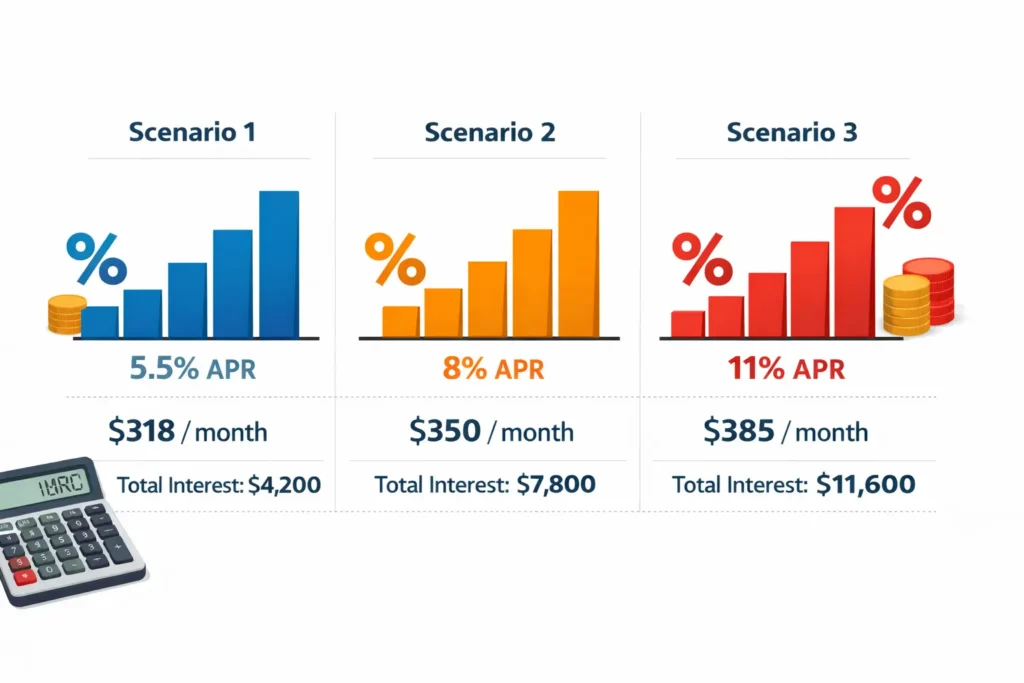
Your actual Sallie Mae pilot training loan rate for flight school loans Florida depends on several factors:
Credit Score: FICO scores above 760 typically qualify for the lowest Sallie Mae pilot training loan rates 2026 for flight school loans in Florida. Scores of 720-759 receive mid-tier pricing. Below 720, rates increase substantially, and below 680, approval becomes difficult without a strong cosigner for Florida flight school financing.
Debt-to-Income Ratio: Even with excellent credit, high existing debt relative to income pushes pilot training loan interest rates higher when applying for flight school loans Florida. Sallie Mae prefers DTI ratios below 35% for the best rates on their flight school financing products.
Repayment Option: Choosing immediate repayment (principal and interest during school) qualifies you for the lowest Sallie Mae pilot training loan rates on flight school loans Florida. Interest-only and deferred repayment options carry rate premiums of 1-2%.
Loan Term: Shorter repayment terms (5-10 years) receive better pilot training loan rates than 15-year terms, though this is offset by higher monthly payments on flight school loans in Florida.
Cosigner Strength: A cosigner with excellent credit (750+) and low DTI can dramatically improve your Sallie Mae pilot training loan rate—often by 3-5 percentage points when financing flight school in Florida.
The Consumer Financial Protection Bureau (CFPB) provides resources for understanding how private student loan rates are determined and your rights as a pilot training loan borrower seeking flight school loans Florida.
Repayment Options: Three Paths During Training
Sallie Mae pilot training loans offer three repayment approaches while you’re in school, each with distinct advantages and drawbacks for Florida flight school financing:
Immediate Repayment: You begin paying principal and interest immediately on your Sallie Mae flight school loan, resulting in the lowest total cost but highest monthly burden during training. For a $100,000 pilot training loan at 7% over 15 years, you’d pay approximately $900 monthly starting immediately. While challenging on a student budget, this saves roughly $18,000-$22,000 in interest over the loan’s life compared to full deferment on flight school loans Florida.
Interest-Only: You pay only accrued interest during training on your Sallie Mae pilot training loan, keeping your balance from growing while maintaining manageable payments. On that same $100,000 flight school loan at 7%, interest-only payments run about $580 monthly during school. This middle ground prevents interest capitalization while keeping payments lower during training.
Deferred Repayment: All payments on your Sallie Mae pilot training loan are postponed until after a grace period, but interest capitalizes monthly, significantly increasing your total repayment amount. The same flight school loan Florida could grow to $110,000-$115,000 by the time you start repayment, depending on training duration. While this maximizes cash flow during school, it substantially increases your long-term costs.
Most financial advisors recommend the interest-only option as the optimal balance for financing flight school in Florida—preventing balance growth without the full burden of immediate principal payments on your pilot training loan.
The 0.25% Auto-Debit Discount: Small Percentage, Big Savings
While seemingly modest, the 0.25% rate reduction for automatic payment enrollment on Sallie Mae pilot training loans can save thousands over a 15-year repayment term. On a $100,000 pilot training loan at 8% APR, this discount translates to approximately $1,800 in interest savings over the life of the loan. More importantly, automatic payments virtually eliminate the risk of missed payments that could damage your credit score—critical as you’ll need excellent credit for future financial needs like mortgages and car loans during your airline career after financing flight school in Florida.
The 12-Month Grace Period: Designed for Airline Career Paths
Sallie Mae’s pilot training loan 12-month grace period after program completion represents a significant advantage for airline career-track students using flight school loans Florida. This extended window—twice the length of typical private student loans—recognizes that newly certificated commercial pilots need time to build the 1,500 hours required for airline transport pilot certification under current FAA regulations.
During this period, typically spent working as flight instructors earning $40,000-$55,000 annually, you’re not required to make full principal and interest payments on your Sallie Mae pilot training loan. However, interest continues accruing on deferred repayment plans, and many financial advisors recommend making at least interest-only payments during this grace period if your cash flow allows.
This grace period acknowledges the unique structure of aviation careers. Unlike nursing or dental hygiene graduates who can immediately enter their profession at full earning capacity, pilots face a 12-24 month period of lower-wage time building before reaching regional airline salaries of $80,000-$100,000—making the Sallie Mae pilot training loan grace period essential for financial stability after using flight school loans Florida to complete training.
Credit Requirements and Cosigner Realities
Sallie Mae pilot training loans operate on traditional FICO-based underwriting. Their credit model for flight school loans Florida considers:
Credit Score: Minimum typically 680, though approval rates drop significantly below 700 for Sallie Mae flight school financing
Credit History Length: At least 2-3 years of credit history preferred for pilot training loan approval
Payment History: No delinquencies or major negative marks in the past 24 months
Credit Utilization: Below 30% on revolving accounts
Recent Inquiries: More than 4-5 credit inquiries in the past 6 months raises red flags for Sallie Mae pilot training loan applications
Most approved applicants have credit scores of 680 or higher. For students with limited credit history or scores below this threshold, a cosigner becomes virtually mandatory for Sallie Mae pilot training loans. According to Sallie Mae’s own data, approximately 90% of career training borrowers include a cosigner, typically a parent or relative with established credit and stable income when securing flight school loans in Florida.
The cosigner effectively becomes a co-borrower, equally responsible for the pilot training loan debt. Their credit profile becomes as important as yours in Sallie Mae rate determination. A student with a 650 score but a cosigner with 780 credit and strong income might receive a better Sallie Mae pilot training loan rate than a solo applicant with a 720 score when comparing flight school loans Florida options.
Cosigner Release: The Fine Print
The Sallie Mae pilot training loan cosigner release option allows you to remove your cosigner after making 12 consecutive on-time principal and interest payments and meeting credit requirements. However, several caveats apply to flight school loans Florida:
You must demonstrate financial ability to handle the pilot training loan independently, typically meaning income of at least 2x the annual loan payment amount and a DTI ratio below 43%. Your credit score must be at least 680, though realistically you’ll need 700+ for approval. You must specifically request release—it doesn’t happen automatically on Sallie Mae flight school loans.
In practice, approval rates for cosigner release remain relatively low. Sallie Mae doesn’t publish approval statistics, but consumer advocacy groups estimate 20-30% approval rates for release requests. The company has faced criticism and legal action regarding release denials, with the CFPB finding in 2017 that servicer errors contributed to low release rates.
Meritize Flight School Loans: The Merit-Based Alternative for Florida Pilots
Understanding the Merit-Based Model
Meritize flight school loans have disrupted flight school financing since 2016 by looking beyond FICO scores to evaluate applicants. Their proprietary underwriting model for flight school loans Florida considers academic performance, military service, professional certifications, and career trajectory alongside traditional credit metrics. This approach has opened pilot training loan opportunities for students who might face rejection or prohibitive Sallie Mae pilot training loan rates.
For Florida flight students comparing Meritize vs Sallie Mae pilot training loans, this means your 3.7 GPA in an aerospace engineering degree, your military aviation experience, or even your private pilot certificate already earned can work in your favor. Meritize assigns a “merit score” that influences both approval and rate determination, creating pathways for students with strong potential but limited credit histories when seeking flight school loans in Florida.
The company was founded by former Sallie Mae executives who recognized that FICO scores, designed primarily to predict consumer credit behavior, don’t effectively predict success in career training programs. A student with a 650 FICO score but a 3.8 GPA in engineering and military discipline might be a better pilot training loan risk than someone with a 720 score but minimal work ethic or academic achievement—particularly important when evaluating flight school loans Florida applications.
What Counts as “Merit”?
Meritize flight school loans evaluate several non-traditional factors for Florida pilot training financing:
Academic Performance: Your GPA in previous college coursework, particularly in STEM fields. A 3.5+ GPA can offset a modest credit score and potentially secure better pilot training loan rates than a Sallie Mae loan with weak academics when comparing flight school loans Florida.
Military Service: Active duty or veteran status, particularly in technical specialties, carries substantial weight in Meritize flight school loan applications. The discipline and training completion rates of military members make them statistically better credit risks for flight school loans in Florida.
Professional Certifications: Existing pilot certificates (private, instrument), A&P mechanic licenses, or other technical certifications demonstrate commitment and follow-through—factors that influence Meritize pilot training loan approval. For more on alternative aviation careers, see our guide to aircraft maintenance technician salaries.
Career Trajectory: Stable employment history, even in non-aviation fields, shows reliability. Progressive responsibility in previous roles indicates drive and capability.
Aviation-Specific Factors: Hours already logged, ratings earned, and demonstrated commitment to aviation career goals.
This holistic approach means two applicants with identical FICO scores might receive vastly different pilot training loan offers based on their merit profiles when comparing Meritize vs Sallie Mae for flight school loans Florida.
Meritize Interest Rates and Loan Terms
Meritize pilot training loan rates for 2026 typically range from 5.99% to 15.99% APR for both fixed and variable options, though the company doesn’t publicize rate ranges as transparently as Sallie Mae pilot training loan rates 2026. The narrower spread compared to Sallie Mae’s wider range (2.89%-17.64%) reflects their alternative underwriting approach for flight school loans Florida, which tends to segment borrowers differently than traditional FICO-based models.
The company offers both fixed and variable rates for Meritize flight school loans, though most flight students opt for fixed rates to ensure predictable payments over the long repayment term. Variable rates are tied to LIBOR or SOFR (Secured Overnight Financing Rate) indices and adjust quarterly.
Meritize pilot training loan terms extend from 5 to 20 years, providing flexibility to match monthly payments to expected career earnings. A 5-year term minimizes total interest paid but requires monthly payments exceeding $1,800 on a $100,000 flight school loan. A 20-year term reduces payments to around $700 monthly but nearly doubles the total interest paid over the loan’s life. Most borrowers choose 10-15 year terms as a middle ground when financing flight school in Florida.
Time Building Phase Deferment: The Instructor Pathway
Meritize’s signature feature for pilot training loans is their “Time Building” phase deferment option. Recognizing the unique career progression in aviation, they offer extended deferment periods specifically designed for the CFI-to-airline pipeline. This allows you to postpone full principal and interest payments while instructing and building hours, typically for 18-24 months post-graduation—significantly longer than the Sallie Mae pilot training loan 12-month grace period for flight school loans Florida.
During this period, you can make interest-only payments on your Meritize flight school loan to prevent balance growth, or fully defer if cash flow is constrained. This flexibility has made Meritize particularly attractive to students committed to the instructor route for time building when comparing financing flight school in Florida options.
The rationale is sound: newly certificated CFIs earn $40,000-$55,000 annually while building the 1,500 hours required for airline transport pilot certification. Requiring full pilot training loan payments on this income would strain most budgets and might force pilots into non-aviation work, delaying their career progression. The extended deferment allows pilots to remain in aviation, building hours while managing modest interest-only payments.
However, borrowers should understand that interest continues accruing during full deferment. On a $100,000 Meritize pilot training loan at 8%, approximately $8,000 in interest accrues annually. If not paid, this capitalizes into your principal balance, increasing your ultimate repayment amount substantially on flight school loans Florida.
The Application Process and School Certification
Meritize flight school loans require your chosen flight school to be in their network of approved institutions. They work directly with schools to verify costs and disburse funds, creating a streamlined process but limiting your school choices compared to Sallie Mae pilot training loans. Most major Florida flight schools maintain Meritize partnerships, but smaller operations may not qualify. For a comprehensive list of approved schools, see our best flight schools in Florida guide.
The school certification process protects both lender and borrower. Meritize verifies that the school:
- Maintains proper FAA certifications (Part 141 or Part 61 authority)
- Has acceptable completion rates (typically 70%+ for Part 141 schools)
- Provides accurate cost disclosures
- Follows ethical lending practices and doesn’t pressure students toward particular lenders
This vetting process means Meritize-approved schools tend to be more established and reputable, though some excellent smaller schools don’t meet their institutional requirements for flight school loans in Florida.
The Meritize flight school loan application process emphasizes documentation of your merit factors. You’ll submit transcripts, military records (DD-214 for veterans), professional certifications, and a career plan statement explaining your aviation goals. This additional documentation requirement takes more time than Sallie Mae’s pilot training loan more automated process—typically 2-5 business days versus 15-30 minutes—but can result in better terms for qualified applicants seeking flight school loans Florida.
Cosigner Requirements and Release Policies
Meritize flight school loans still require cosigners for many applicants, though their merit-based approach sometimes allows approval without one where Sallie Mae pilot training loans would not. If your merit score is exceptionally high—for example, a 3.9 GPA aerospace engineering graduate with a private pilot certificate and military service—you might qualify independently even with a 680 credit score when applying for flight school loans in Florida.
When cosigners are required, Meritize applies the same high standards as other pilot training loan lenders: typically 700+ credit scores, stable income, and DTI ratios below 43%. The cosigner’s credit profile significantly influences your Meritize pilot training loan rate for Florida flight school financing.
Meritize offers cosigner release after 36 consecutive on-time payments (versus Sallie Mae’s 12), a longer timeline that reflects their focus on demonstrating sustained repayment capability. You must also meet income and credit requirements at the time of release request. While the 36-month requirement is longer, some borrowers report higher approval rates for release compared to Sallie Mae pilot training loans, though neither company publishes official statistics.
Head-to-Head Comparison: Sallie Mae vs. Meritize
| Feature | Sallie Mae | Meritize |
|---|---|---|
| Primary Credit Model | FICO score-based (typically 680+ required) | Merit-based (academics, military, career trajectory) |
| Interest Rate Range (2026) | Variable: 3.75%–16.62% APR Fixed: 2.89%–17.64% APR | Variable/Fixed: 5.99%–15.99% APR (typical range) |
| Absolute Lowest Rate | 2.89% (fixed, immediate repayment, excellent credit) | ~5.99% (best merit profile) |
| Maximum Loan Amount | Up to 100% of certified training costs | Up to 100% of certified training costs |
| Typical Maximum | $110,000-$125,000 for flight training | $100,000-$110,000 for flight training |
| Repayment Terms | 5, 10, or 15 years | 5 to 20 years |
| Grace Period | 12 months after completion | 6 months standard |
| Special Deferment | Standard forbearance only | Extended time-building deferment (18-24 months) |
| Cosigner Requirement | Required for ~90% of flight students | Required for many applicants, but merit factors can reduce need |
| Cosigner Release | Available after 12 on-time payments (low approval rate) | Available after 36 on-time payments |
| Rate Discounts | 0.25% auto-debit discount | 0.25% auto-debit discount (when available) |
| Approval Timeline | 15-30 minutes for initial decision | 2-5 business days (due to merit documentation review) |
| Application Complexity | Straightforward online form | Requires transcripts, career statement, certification docs |
| School Restrictions | Accepts most Part 141 and Part 61 schools | Requires school to be in Meritize network |
| Best For | Students with established credit (700+) Those seeking widest school choice Fastest approval needs | Students with strong academics/military background Those prioritizing time-building flexibility Applicants with thin credit files |
Florida-Specific Considerations: School Partnerships and Regional Advantages

Florida’s status as the nation’s flight training capital makes it a priority market for both lenders. The state’s weather advantages—flyable conditions 300+ days annually versus 200-250 in most northern states—airspace diversity, and concentration of 141-approved schools create an ideal environment for accelerated training programs. These are precisely the programs these lenders prefer to finance.
The National Weather Service data shows Florida averages more VFR (Visual Flight Rules) days than any other state, allowing students to maintain training momentum. This weather advantage translates directly to faster completion times and lower costs through training efficiency.
Preferred Florida Flight Schools
ATP Flight School, with multiple Florida locations including Jacksonville, Tampa, Miami, Orlando, and Fort Myers, maintains robust partnerships with both Sallie Mae and Meritize. Their standardized 7-month airline career pilot program aligns perfectly with lender expectations for training duration and cost, typically running $85,000-$95,000 all-inclusive. ATP’s proven track record—they’ve trained over 75% of current regional airline pilots—makes them a low-risk partner for lenders.
Epic Flight Academy in New Smyrna Beach is Meritize’s showcase partner school, featuring streamlined financing integration and specialized deferment options for their international student population. Their 100-day accelerated program costs approximately $85,000-$95,000, fitting well within standard loan limits. Epic’s focus on international students (approximately 70% of their enrollment) means they have extensive experience helping students navigate U.S. financing requirements.
Sling Pilot Academy, operating from multiple Florida airports including Torrance, Fullerton, and others, offers a unique lower-cost pathway using modern Sling aircraft. Their programs typically run $70,000-$80,000, potentially reducing borrowing needs and making loan qualification easier regardless of lender choice. The lower costs result from using newer, more fuel-efficient aircraft and streamlined training approaches.
For a comprehensive analysis of these and other top Florida training options, including completion rates, aircraft fleets, and cost comparisons, see our detailed guide to the best flight schools in Florida for 2026.
Part 141 vs. Part 61: Why Lenders Care
The concentration of Part 141 schools in Florida—offering FAA-approved structured curricula with reduced hour requirements—makes the state ideal for borrowers seeking maximum efficiency from their training investment. Both lenders recognize 141 certification as reducing training risk, sometimes reflected in better rate offers or higher approval odds.
Part 141 schools must meet stringent FAA standards for curriculum, instructor qualifications, facility requirements, and record-keeping. They undergo regular FAA inspections and must maintain minimum passing rates on checkrides. This structure appeals to lenders because it correlates with higher completion rates and more predictable training timelines.
Part 61 schools offer more flexibility but less structure, operating under general aviation regulations. While many excellent Part 61 operations exist, lenders sometimes view them as higher risk due to more variable completion rates and training durations. Some lenders limit loan amounts for Part 61 training or charge slightly higher rates.
Making Your Decision: The Pre-Approval Strategy
The optimal approach is obtaining pre-approval from both lenders before making your final decision. This dual-application strategy provides several advantages:
Real Rate Comparison
Pre-approval reveals your actual personalized rates, not the published ranges that span 13-14 percentage points. A student with a 750 FICO score and strong cosigner might receive 5.5% from Sallie Mae but 7.2% from Meritize, while another with a 670 FICO but exceptional academic record might see the opposite.
The only way to know your actual rates is to apply. Don’t assume based on advertised ranges—your specific profile might yield surprising results. One aviation finance advisor noted that in his experience, about 40% of applicants receive better terms from the lender they didn’t expect to favor them.
Negotiation Leverage
Having competing offers sometimes provides room to negotiate with your preferred flight school on total program costs. Schools have incentive to help students secure financing—no funding means no enrollment. If you’re choosing between two schools and one is slightly more expensive, showing that the cost difference would push you into a higher rate bracket might prompt them to offer a discount or payment plan.
Some schools also offer “preferred lender” relationships with better terms. However, be cautious—schools sometimes receive financial incentives for steering students toward particular lenders. The CFPB has investigated such arrangements in the broader student loan market. Always compare the “preferred lender” terms against open market options.
Backup Options
Flight training plans change. Aircraft availability issues, instructor turnover, weather delays, or personal circumstances might shift your timeline or school choice. Having pre-approval from both lenders provides flexibility if your original plan becomes unworkable.
Pre-approvals typically remain valid for 30-60 days, giving you time to finalize school selection, review contract terms, and ensure you’re comfortable with the financial commitment before drawing funds.
The Application Timeline Strategy
Start the process 60-90 days before your planned training start date. This allows time for:
- Credit optimization (30-60 days before applying): Pay down credit cards below 30% utilization, resolve any credit report errors, avoid new credit inquiries
- Document gathering (especially for Meritize): Request transcripts, locate military records, compile certifications
- Rate shopping (30 days before starting): Apply to both lenders within a short window (applications within 14-45 days count as a single inquiry for scoring purposes)
- School coordination (2-3 weeks before starting): Ensure your chosen school can accept your lender, complete enrollment paperwork, coordinate disbursement timing
The ROI Perspective: Understanding Your Investment

Before committing to any six-figure debt, consider the investment’s return potential. First-year regional airline pilots in 2026 earn $80,000-$100,000, with major airline captains reaching $350,000-450,000 after 10-15 years. This career trajectory supports loan repayment, but only if you complete training and reach the airlines.
The Career Progression Timeline and Earnings
Year 0-1 (Training): $0 income, approximately $100,000 in costs
Years 1-2 (CFI/Time Building): $40,000-$55,000 annually
Years 2-5 (Regional Airline First Officer): $80,000-$120,000 (first year to year three), including bonuses and per diem
Years 5-8 (Regional Captain): $130,000-$180,000, including override pay and bonuses
Years 8-15 (Major Airline First Officer): $150,000-$250,000, depending on equipment and seniority
Years 15+ (Major Airline Captain): $300,000-$450,000 at top carriers (United, Delta, American)
These figures from the Air Line Pilots Association (ALPA) and airline pay scales reflect current contract rates. The timeline assumes continuous career progression without furloughs or major industry disruptions.
Calculating True ROI
A $100,000 training investment financed at 7% over 15 years costs approximately $900 monthly or $162,000 total. Over a 30-year airline career with earnings progression from $80,000 to $350,000+, your total career earnings might reach $7-9 million. The training investment represents roughly 1-1.5% of lifetime career earnings—a strong ROI compared to many professional degrees.
However, this calculation assumes:
- Completion of training without significant delays or additional costs
- Securing a CFI position immediately after graduation
- Hiring by a regional airline within 18-24 months
- Eventually reaching major airline employment
- No career interruptions due to economic downturns, medical issues, or industry changes
The Bureau of Labor Statistics projects 14% growth in commercial pilot employment through 2031, faster than the average for all occupations, suggesting strong long-term career prospects that support this investment thesis.
Alternative Aviation Career Paths
For perspective on alternative aviation careers that might require less training investment, explore opportunities in aviation maintenance. Our comprehensive analysis of aircraft maintenance technician salaries across the USA shows AMTs earning $50,000-$75,000 with significantly lower training costs ($15,000-$30,000), presenting a viable “Plan B” or complementary career path within aviation.
Many successful aviation professionals start in maintenance, then transition to piloting after saving money and gaining industry experience. The technical knowledge from an A&P certificate also makes you a more knowledgeable, safety-conscious pilot. Some pilots even maintain both certifications as career insurance—if medical certification becomes an issue, they have an alternative aviation career path.
The aviation industry offers multiple entry points. While airline pilot careers command the highest salaries, corporate aviation, charter operations, CFI positions, and maintenance careers all provide solid middle-class incomes with less educational debt. Consider your risk tolerance, timeline, and career goals when deciding how much to borrow.
Interest Rate Scenarios: Understanding Total Cost
Understanding how different rates affect your total repayment illuminates the real cost of borrowing. Consider a $100,000 loan over three common repayment terms:
10-Year Repayment
At 5.5% APR: Monthly payment of $1,089, total repayment of $130,680 (total interest: $30,680)
At 8.0% APR: Monthly payment of $1,213, total repayment of $145,560 (total interest: $45,560)
At 11.0% APR: Monthly payment of $1,378, total repayment of $165,360 (total interest: $65,360)
15-Year Repayment (Most Common)
At 5.5% APR: Monthly payment of $817, total repayment of $147,060 (total interest: $47,060)
At 8.0% APR: Monthly payment of $956, total repayment of $172,080 (total interest: $72,080)
At 11.0% APR: Monthly payment of $1,137, total repayment of $204,660 (total interest: $104,660)
20-Year Repayment
At 5.5% APR: Monthly payment of $687, total repayment of $164,880 (total interest: $64,880)
At 8.0% APR: Monthly payment of $836, total repayment of $200,640 (total interest: $100,640)
At 11.0% APR: Monthly payment of $1,032, total repayment of $247,680 (total interest: $147,680)
The difference between a 5.5% and 8% rate on a 15-year $100,000 loan is $25,020 in additional interest—nearly three months of a first-year regional airline pilot’s gross salary. The jump from 8% to 11% adds another $32,580, representing approximately 40% of a CFI’s annual income.
These scenarios demonstrate why even a 1-2% rate improvement justifies significant effort in credit optimization, cosigner recruitment, and rate shopping between lenders.
Repayment Strategies: Optimizing Your Loan Over Time
Securing the loan is only the beginning. How you manage repayment over 10-20 years dramatically impacts your total cost and financial flexibility.
The Refinancing Opportunity
Once you’re employed with a stable airline salary, you can refinance through companies like SoFi, Earnest, Laurel Road, or LendKey to potentially secure a lower rate based on your improved financial profile. Many pilots refinance 12-24 months into their airline careers when they have:
- Proof of stable income ($80,000+)
- Improved credit scores from 24 months of on-time payments
- Lower debt-to-income ratios as they pay down balances
- Professional employment history that reduces perceived risk
A pilot who borrowed at 9% with limited credit history might refinance to 5-6% after establishing their airline career, saving $20,000-$40,000 over the remaining loan term. However, refinancing requires applying with new lenders and meeting their credit standards. Not everyone qualifies, particularly if you’ve missed payments or your income hasn’t increased as expected.
Extra Payments and the Amortization Advantage
Making extra principal payments, particularly in the early years when interest comprises the majority of each payment, dramatically reduces total interest paid. On a $100,000 loan at 8% over 15 years:
- An extra $100/month saves approximately $13,500 in interest and pays off the loan 3 years early
- An extra $200/month saves approximately $24,000 in interest and pays off the loan 5.5 years early
- An extra $500/month saves approximately $42,000 in interest and pays off the loan 8 years early
Most pilots find that once they upgrade to captain at a regional airline (years 3-5), they can substantially increase payments. The salary jump from $100,000 as a first officer to $150,000+ as a captain provides significant extra cash flow that can accelerate debt payoff.
The Avalanche vs. Snowball Debate
If you have multiple loans (flight training loan plus credit cards, car loans, etc.), you’ll need a payoff strategy:
The Avalanche Method: Pay minimums on all debts, then put all extra money toward the highest interest rate loan. This mathematically minimizes total interest paid.
The Snowball Method: Pay minimums on all debts, then put all extra money toward the smallest balance. This provides psychological wins as you eliminate debts completely, maintaining motivation.
For most pilots, the avalanche method makes more financial sense given the large balance and long term of flight training loans. However, if you have several smaller debts causing stress, the snowball method might provide the psychological momentum to stay engaged with debt repayment.
Tax Considerations and Deduction Limitations
Unlike undergraduate student loans that qualify for the student loan interest deduction under IRS rules, flight training loans occupy a gray area in tax treatment. The IRS generally allows deduction of student loan interest only for loans used for qualified higher education expenses at eligible institutions under Section 221 of the tax code.
Most flight schools don’t qualify as Title IV institutions (those eligible for federal student aid), making the interest likely non-deductible on your personal tax return as student loan interest. However, several potential tax strategies exist:
The Business Education Expense Argument
Some borrowers have successfully argued that flight training loans qualify as business education expenses once they’re employed as professional pilots. Under IRS regulations, you can deduct education expenses that maintain or improve skills required in your current job or that your employer requires. Once you’re employed as a pilot, continuing education (additional ratings, recurrent training, type ratings) might qualify as deductible business expenses.
However, initial career training—your first commercial certificate and CFI ratings—typically doesn’t qualify because it prepares you for a new trade rather than improving skills in an existing job. Consult a tax professional familiar with aviation career expenses, as interpretations vary.
Employer Reimbursement Programs
Some regional airlines now offer training reimbursement or loan repayment assistance as hiring bonuses. Programs like Endeavor Air’s “Pilot Pipeline Program” or Republic Airways’ training partnerships can provide $10,000-$30,000 toward training costs. These reimbursements are typically taxable income but directly offset your loan balance.
The Self-Employment Option
Many CFIs work as independent contractors rather than employees, opening self-employment tax strategies. As a self-employed CFI, you might be able to deduct continuing education expenses, professional memberships, and potentially even a portion of your initial training costs under startup business expense rules. However, this is complex tax territory requiring professional guidance.
The key point: don’t assume you can deduct flight training loan interest like undergraduate student loan interest. Plan your budget assuming no deduction, then work with a tax professional to explore possibilities once you’re employed in aviation.
Red Flags and Warning Signs: When to Reconsider
Not everyone should borrow $100,000 for flight training. Several red flags suggest you should pause, save more money, or explore alternative paths:
Financial Red Flags
High Existing Debt: If you’re carrying $30,000+ in credit card or auto loan debt before adding flight training loans, your debt burden might become unsustainable. Pay down existing debt first or accept that you’ll need to work while training, extending your timeline.
No Emergency Fund: Starting flight training with zero savings means any unexpected expense—medical issue, car repair, family emergency—could derail your training. Build 3-6 months of expenses in savings before committing to full-time training.
Unstable Cosigner Situation: If your cosigner has marginal credit or unstable income, they might not qualify when you apply, or rate increases during the loan period could strain the relationship. Ensure your cosigner fully understands the commitment and is financially stable.
No Career Plan B: If you haven’t considered what you’ll do if you can’t pass a medical exam, lose medical certification later in training, or discover you don’t enjoy flying, you’re taking excessive risk. Have a backup plan.
Aviation-Specific Red Flags
Medical Uncertainty: If you have any condition that might affect medical certification—vision issues, mental health concerns, certain medications, cardiovascular concerns—get your medical certificate BEFORE borrowing. Losing medical certification after borrowing six figures is financially devastating.
Limited Flying Experience: If you’ve never flown in a small aircraft, take a discovery flight or two before committing to this career and this debt. Some people discover they don’t enjoy small aircraft flying or find motion sickness prohibitive.
Unrealistic Timeline Expectations: If you believe you’ll complete training in less time than the school estimates or think you’ll get hired by a major airline in 3-4 years, you’re setting yourself up for disappointment and financial stress. Plan for longer timelines and slower progression.
School Selection Based Solely on Financing: Choosing a school only because they offer easy financing or have lender partnerships, without researching completion rates, aircraft condition, or instructor quality, is a mistake. Select your school first based on quality, then solve the financing puzzle.
Handling Financial Difficulties: Options When Repayment Becomes Challenging
Even with the best planning, financial difficulties can arise. Understanding your options before you need them reduces stress and prevents default.
Deferment and Forbearance
Both lenders offer deferment (pause payments without accruing interest in some cases) and forbearance (pause payments with interest continuing to accrue) for financial hardship. Typical qualifying reasons include:
- Unemployment or underemployment
- Medical emergencies
- Military deployment
- Economic hardship
These options typically allow 12-24 months of payment pauses over the loan’s life. Use them sparingly—interest continues accruing in most cases, increasing your total repayment amount.
Income-Driven Repayment (Limited Availability)
Unlike federal student loans with standardized income-driven repayment plans, private lenders offer limited income-based modification programs on a case-by-case basis. If you experience sustained income reduction, contact your lender to explore options. Some may reduce payments temporarily or extend the loan term to lower monthly obligations.
What Happens in Default
Defaulting on private student loans has severe consequences:
- Immediate demand for full balance
- Collection agency referral
- Wage garnishment (varies by state)
- Lawsuit and judgment against you
- Credit score devastation (650+ point drops common)
- Cosigner credit equally damaged
- Difficulty renting apartments, getting car loans, even employment issues (airlines check credit for pilot positions)
Both you and your cosigner remain liable even in bankruptcy—student loans are among the few debts not dischargeable except in cases of extreme hardship. This makes avoiding default essential, even if it requires working non-aviation jobs temporarily to maintain payments.
The Psychological Aspect: Managing Six-Figure Debt Stress
The emotional weight of $100,000+ debt is real and affects your training, relationships, and career decisions. Financial stress is cited by many flight students as a significant factor in training delays or dropout.
Strategies for Managing Debt Anxiety
Reframe the Debt as Investment: View your loan not as consumer debt but as business capitalization—you’re funding a high-earning professional career. This mental reframing helps some borrowers manage anxiety.
Focus on Controllables: You can’t control airline hiring waves or the economy, but you can control training efficiency, finding cost-effective time-building options, and making extra payments when possible.
Celebrate Milestones: Each certificate earned, each hundred hours logged, and each rating added is a step toward higher earnings and loan payoff. Acknowledge progress rather than fixating on the remaining balance.
Connect with Others: Online communities like the r/flying subreddit, pilot forums, and flight school cohorts include many people managing similar debt loads. Sharing strategies and frustrations normalizes the experience.
Avoid Debt-Driven Career Decisions: Don’t let debt force you into the cheapest housing, worst schedules, or most undesirable bases just to maximize loan payments. Quality of life matters—sustainable career longevity requires balance.
Final Recommendations: Matching Lender to Profile
Choose Sallie Mae if you:
- Have a credit score above 700 or a cosigner with excellent credit (750+)
- Want the fastest approval process (15-30 minutes) and widest school choice flexibility
- Prefer a traditional, established lender with extensive customer service infrastructure
- Value the 12-month grace period and don’t need extended time-building deferment beyond that
- Prioritize access to the absolute lowest rates (2.89% floor vs. Meritize’s ~6% floor)
- Are attending a smaller school that might not be in Meritize’s network
Choose Meritize if you:
- Have strong academic credentials, military experience, or professional certifications but limited credit history
- Are willing to wait 2-5 days for application review in exchange for potentially better terms despite modest credit
- Plan to instruct for 18-24 months to build time and need extended deferment options beyond standard grace periods
- Are attending a Meritize partner school (check their website for current list)
- Appreciate alternative underwriting that looks beyond FICO scores to evaluate your complete profile
- Have existing pilot certificates or ratings that demonstrate commitment
Consider applying to both if you:
- Have a mixed profile (decent credit but strong merit factors, or vice versa)
- Want leverage for rate negotiation or school cost discussions
- Need maximum flexibility as your training plans solidify
- Have time to complete both applications (allow 5-7 days for both responses)
- Want to understand the full range of financing options available to your specific situation
Conclusion: The Six-Figure Decision
The financing decision you make today will impact your cash flow for 10-20 years and influence every major financial decision during your early airline career—where you live, what you drive, when you can buy a house, and how quickly you can achieve financial independence beyond debt servicing.
Take the time to run the numbers with multiple rate scenarios. Use online loan calculators to see how different terms and rates affect monthly payments and total interest. Consider your realistic earning timeline—if you’re starting at age 30 rather than 22, you have fewer career years to recover from financial setbacks.
Understand the true cost of each option, align your choice with both your current financial reality and future career trajectory, and make peace with the investment required to achieve your aviation dreams. Your path to the flight deck starts with smart financial planning—and choosing the right lender is a crucial first step.
Remember that both Sallie Mae and Meritize serve important niches in the flight training finance market. Neither is universally “better”—the best choice depends entirely on your specific credit profile, merit factors, chosen school, and career timeline. Get pre-approved by both, compare your actual rates and terms, then make an informed decision that positions you for both training success and long-term financial health.
The pilot shortage continues, airlines are hiring, and flight training has never been more viable as a career investment. With proper financing and realistic planning, the dream of a professional pilot career is within reach—even if it requires six figures of debt to achieve it.
High-Intent FAQ
Q: Can I get approved for a flight school loan with a 650 credit score?
A: Approval with a 650 FICO score is challenging but possible, especially with a strong cosigner (700+ credit score, stable income, low debt-to-income ratio). Meritize may offer better odds if you have exceptional academic credentials (3.5+ GPA in STEM), military service, or existing pilot certifications that offset the lower score. Sallie Mae typically requires 680+ for approval without a cosigner, though they may approve with a creditworthy cosigner at the 650 level. Expect rates at the higher end of the spectrum (12-16% range) at this credit level. Consider spending 6-12 months improving your credit score before applying—paying down credit card balances below 30% utilization and ensuring no late payments can boost your score 50-80 points, potentially saving $30,000+ in interest over the loan term.
Q: What credit score does my cosigner need for Sallie Mae or Meritize?
A: Both lenders typically prefer cosigners with FICO scores of 700 or higher, though 750+ substantially improves your rate offers. Beyond credit score, cosigners need stable income (typically $50,000+ annually), manageable debt-to-income ratios (below 43%), and a clean credit history with no recent delinquencies or bankruptcies. The stronger your cosigner’s credit profile, the lower your rate will be—the difference between a cosigner with a 720 score versus 780 can reduce your rate by 2-3 percentage points, saving $15,000-$25,000 over a 15-year term. Meritize may be slightly more flexible on cosigner credit scores if your merit factors are exceptionally strong (3.8+ GPA plus military service, for example), but don’t count on this—plan on needing a strong cosigner regardless of lender.
Q: How long does it take to get approved and receive funds?
A: Sallie Mae typically provides initial approval within 15-30 minutes through their online application, with final approval requiring 1-3 business days for income/identity verification. Funds disburse to your school within 5-10 business days after final approval, assuming all paperwork is complete. Meritize’s merit review process takes 2-5 business days for initial approval as they review transcripts, military records, and career statements. Final disbursement occurs 5-10 business days after approval. Total timeline from application to funds availability: Sallie Mae 7-14 days, Meritize 10-20 days. Build in 3-4 weeks between starting applications and expecting funds in your school account, particularly if applying during peak season (May-August when most students start training). Late-stage delays often occur due to missing cosigner signatures, school certification paperwork, or identity verification issues, so stay proactive with both your lender and school’s financial aid office.
Q: Can I use these loans for living expenses during flight training, or just tuition?
A: Both lenders allow borrowing up to the school’s certified Cost of Attendance (COA), which typically includes tuition, fees, equipment, and reasonable living expenses during full-time training. However, the school must certify these costs through an official COA document. You can’t borrow beyond what the school certifies, even if your actual expenses are higher. Most Florida schools certify $15,000-$25,000 in living expenses for 6-12 month programs, covering rent, food, transportation, and personal expenses. Work with your school’s financial aid office early to understand their COA methodology and ensure it covers your expected needs. If the certified COA is insufficient for your situation (you have dependents, higher local rent costs, etc.), you’ll need to supplement with savings or part-time work. Budget carefully—many students underestimate living costs and run out of money late in training, forcing training delays while they work to save more.
Q: What happens if I don’t finish flight training or can’t find a pilot job?
A: The loan remains your legal obligation regardless of training completion or career outcomes—this isn’t a contingent loan that’s forgiven if you don’t become a pilot. Both lenders offer hardship deferment and forbearance if you face unemployment or financial difficulty, but interest continues accruing, and you’ll eventually need to repay the full balance plus accrued interest. This underscores the critical importance of attending a reputable school with high completion rates (check their graduation data before enrolling) and ensuring you’re truly committed to the career before borrowing. If aviation doesn’t work out, consider alternative career paths within the industry. Our analysis of aircraft maintenance technician salaries shows that AMTs with an A&P certificate earn $50,000-$75,000 with much lower training costs—potentially a pivot option if piloting becomes unviable. Some students have successfully negotiated with lenders for income-driven repayment plans or payment reductions based on financial hardship, though this is discretionary and not guaranteed.
Q: Can I refinance my flight training loan after I’m hired by an airline?
A: Yes, and this is often a smart financial move. Once you’re employed with a stable airline salary ($80,000-$100,000+), established income history (typically 12-24 months), and improved credit profile from on-time loan payments, you can refinance through companies like SoFi, Earnest, LendKey, or Laurel Road to potentially secure significantly lower rates. Many pilots refinance 12-24 months into their regional airline careers, often reducing rates by 2-5 percentage points and saving $20,000-$50,000 in interest over the remaining loan term. However, refinancing requires applying with new lenders and meeting their underwriting standards—not everyone qualifies, particularly if you’ve missed payments, your income hasn’t increased as expected, or your credit score hasn’t improved. When you refinance, you lose any benefits from your original lender (like Meritize’s time-building deferment options), so consider timing carefully. Most advisors recommend waiting until you’ve upgraded to captain at a regional (typically years 3-5) to refinance, as your improved income makes you more attractive to refinance lenders and may qualify you for even better rates.
Q: Does Sallie Mae or Meritize offer loan forgiveness programs?
A: No. Neither lender offers forgiveness programs comparable to federal student loans’ Public Service Loan Forgiveness or income-driven repayment forgiveness. These are private loans without government forgiveness provisions. Your obligation remains until paid in full, defaulted, or discharged through death or permanent disability (both lenders offer discharge in these extreme circumstances). This is a critical distinction from federal student loans and should factor heavily into your borrowing decision. Never borrow assuming future forgiveness—plan to repay every dollar borrowed plus interest. Some aviation industry advocates have lobbied for pilot-specific loan assistance programs given the national pilot shortage, but none currently exist at the federal level. A few airlines offer signing bonuses or training reimbursement programs that can help pay down loans, but these are employer benefits, not lender forgiveness programs.
Q: Which lender is better for international students training in Florida?
A: Both require a U.S. citizen or permanent resident cosigner, making them equally challenging for international students without U.S.-based family or connections. Meritize has slightly more experience with international student situations through their Epic Flight Academy partnership and may offer more guidance through the process, but the cosigner requirement remains the primary barrier. International students have had success by partnering with U.S.-based relatives, family friends, or host families willing to cosign, though this requires significant trust on the cosigner’s part given the financial liability. Some international students explore alternative strategies: training in their home country for initial certificates then coming to the U.S. for advanced ratings (reducing borrowing needs), working in the U.S. on employment visas while training part-time to avoid loans, or using private financing from their home country. The cosigner requirement is federal banking regulation-driven, not lender policy, so expect it from any U.S. private student loan provider. For detailed school recommendations that work well for international students, see our guide to Florida’s best flight schools.
Q: Should I choose immediate repayment, interest-only, or full deferment during flight school?
A: For most students, interest-only repayment during training offers the best balance—preventing interest capitalization (which compounds your debt) while keeping payments manageable on a student budget. On a $100,000 loan at 7%, interest-only payments run approximately $580/month, versus $900+ for full principal and interest payments, or $0 for deferment (but with $8,000+ capitalizing annually). If you have substantial savings or family support and can afford $900/month during training, immediate repayment saves the most money long-term—approximately $18,000-$22,000 over 15 years compared to full deferment on a $100,000 loan. However, most students lack this cash flow and shouldn’t sacrifice training focus or living standards to make immediate payments. Full deferment maximizes cash flow during school but substantially increases your total debt and future monthly payments—on that $100,000 loan, full deferment during a 12-month program adds $8,000-$9,000 to your principal balance before repayment even begins. Most financial advisors recommend interest-only if you can afford it, or deferment only if absolutely necessary for basic living expenses. Remember that your repayment option choice also affects your interest rate—immediate repayment receives the best rates, while deferment carries rate premiums of 1-2%.
Q: What insurance do I need during flight training, and can I include it in my loan?
A: You’ll need renter’s insurance (also called non-owned aircraft insurance) to protect yourself from financial liability if you damage your school’s aircraft during training. A single gear-up landing or runway excursion can result in $50,000-$150,000 in damage claims if you’re uninsured. Most policies cost $200-$500 annually and are essential financial protection during your learning curve. For detailed coverage options, requirements, and policy recommendations, see our comprehensive student pilot insurance guide. While flight schools carry liability insurance on their aircraft, you’re typically responsible for deductibles and damage you cause through negligence—renter’s insurance covers this gap. Some schools include insurance in their training costs (factored into hourly rates), while others require you to carry your own policy. Most lenders will include reasonable insurance costs in the certified Cost of Attendance if the school includes it in their official cost breakdown. If purchasing separately, factor $200-$500 annually into your budget and savings rather than loan proceeds, as lenders typically won’t disburse funds for external insurance purchases.

Senior NDT Controller with over 20 years of experience in aviation (FAA, EASA, and NRCAN certified). Expert in aircraft maintenance, non-destructive testing (NDT), and pilot training. I share practical, up-to-date 2026 guides for pilots and aviation maintenance technicians.