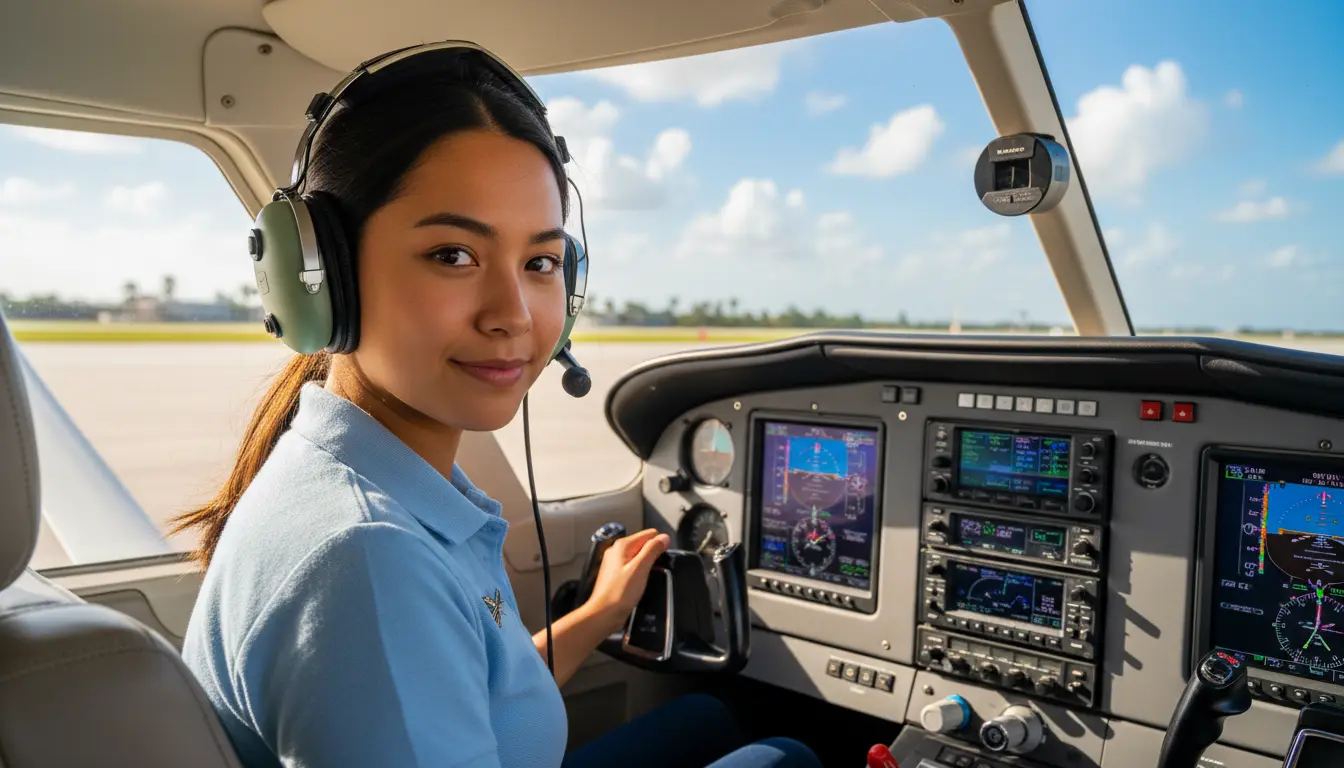
Finding the best flight schools in Florida requires understanding more than just advertised prices. Florida dominates US aviation training with over 300 days of flyable weather annually, the highest concentration of airports in the nation, and diverse training environments—from busy Class B airspace to quiet uncontrolled fields. Whether you’re a domestic student seeking an accelerated pathway to the airlines or an international student pursuing your aviation dreams on an M-1 visa, choosing among Florida’s flight schools means evaluating cost structures, training quality, and program outcomes carefully.
This 2026 guide compares Florida flight school costs across three categories: large academies like ATP Flight School ($96,995), university programs like Embry-Riddle ($140,000-$180,000), and local FBOs ($65,000-$85,000). We’ll reveal hidden expenses, financing options, and help you determine which Florida flight school delivers the best return on your investment.
Why Florida Dominates US Flight Training
When comparing the best flight schools in Florida, understanding why the state dominates US aviation training is essential. Florida’s dominance in aviation training isn’t accidental—it’s the result of perfect geographic, regulatory, and infrastructure conditions converging in one state. This is why Florida flight schools consistently rank among America’s top choices for aspiring pilots.
Weather Consistency Equals Cost Efficiency
The financial impact of weather cannot be overstated when evaluating flight schools in Florida. Training in states with harsh winters or unpredictable weather patterns can extend your training timeline by 3-6 months, adding significant costs through extended aircraft rental, instructor fees, and living expenses. Florida’s subtropical climate provides consistent VFR (Visual Flight Rules) conditions year-round, allowing students to maintain training momentum and complete programs on schedule. This weather reliability translates directly into cost savings and faster career progression—a key advantage that makes Florida’s flight schools more cost-effective than programs in other states.
Airport Density and Diverse Training Environments
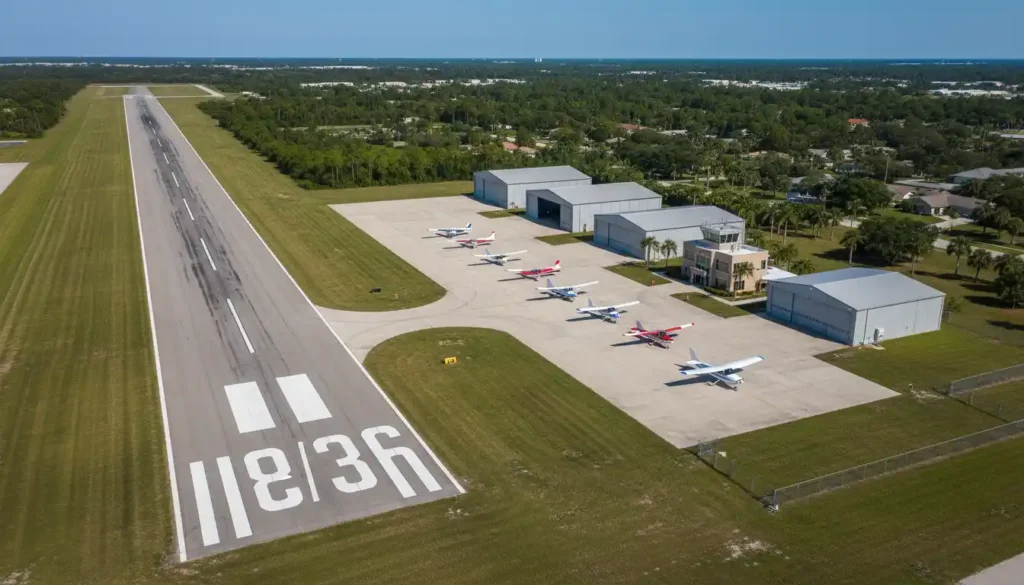
Florida boasts over 130 public-use airports and 20 commercial service airports, creating an unparalleled training infrastructure that distinguishes the best flight schools in Florida from competitors elsewhere. Students gain experience in varied airspace environments—from the complex Class B operations at Miami International and Orlando International to the relaxed atmosphere of small coastal airports. This diversity is particularly valuable during instrument training, where exposure to busy terminal areas and diverse approach procedures accelerates skill development.
Additionally, the state’s position as a maintenance hub—with major MRO facilities supporting both commercial and general aviation—creates a robust aviation ecosystem that benefits training operations through better aircraft availability and maintenance standards. Understanding the aircraft heavy maintenance infrastructure that supports this training environment helps explain why Florida-based flight school aircraft often maintain higher dispatch reliability than training fleets in other regions.
International Student Access
Florida flight schools lead the nation in international student enrollment. Florida’s proximity to Latin America and the Caribbean, combined with well-established M-1 visa processing infrastructure, makes it the top destination for international students. Many of the best flight schools in Florida maintain dedicated international student departments with experience navigating TSA security clearances, visa compliance, and foreign credential validation.
Understanding FAA Part 141 vs Part 61: The Cost and Time Implications
When researching Florida flight school costs, one of the most consequential decisions you’ll make is choosing between Part 141 and Part 61 training. This choice directly impacts your total hours required, program structure, and ultimately, your total cost at flight schools in Florida.
Part 141 Flight Schools: Structured and Streamlined
Part 141 schools—which include many of the best flight schools in Florida like ATP and Embry-Riddle—operate under FAA-approved training courses with specific syllabi, stage checks, and progress requirements. The key advantage: reduced hour requirements.
Minimum Hour Requirements Under Part 141:
- Private Pilot Certificate: 35 hours (vs. 40 under Part 61)
- Instrument Rating: 35 hours (vs. 40 under Part 61)
- Commercial Pilot Certificate: 190 hours total time (vs. 250 under Part 61)
This 60-hour reduction in minimum requirements for commercial certification represents approximately $12,000-$18,000 in potential savings at current Florida flight school hourly rates. However, Part 141 programs come with trade-offs: less scheduling flexibility, stricter progress requirements, and mandatory stage checks. For students who thrive in structured environments and can commit to full-time training, Part 141 typically offers the fastest and most cost-effective path.
Who Should Choose Part 141 at Florida Flight Schools:
- Students pursuing accelerated, full-time training programs
- International students (often required for visa compliance)
- Those seeking VA benefits or federal financial aid eligibility
- Career-focused students targeting airline hiring timelines
Part 61 Flight Schools: Flexible and Customizable
Part 61 training at smaller Florida flight schools offers maximum flexibility in curriculum, scheduling, and pacing. While the minimum hour requirements are higher, the actual cost difference often narrows when accounting for individual learning curves and scheduling realities.
Part 61 Advantages:
- Train at your own pace (ideal for part-time students)
- Customize lessons to focus on areas needing improvement
- Often lower hourly rates at smaller FBOs
- No stage check fees or rigid program structure
Who Should Choose Part 61:
- Part-time students balancing work or school
- Those preferring personalized instruction
- Students on a variable budget
- Pilots adding ratings to existing certificates
According to AOPA flight training industry reports, the average student completes private pilot training in 60-75 hours regardless of the regulatory pathway, suggesting that while Part 141 flight schools in Florida offer lower minimums, real-world completion times often converge.
The 2026 Florida Flight School Cost Comparison
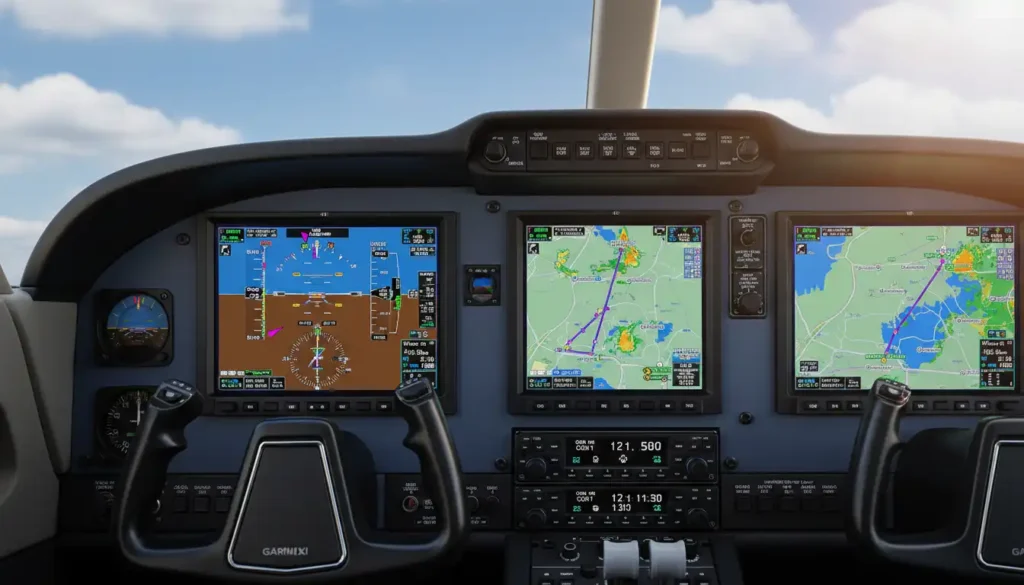
Understanding Florida flight school costs for 2026 requires examining how the Florida flight training market segments into three distinct categories, each with unique cost structures. Comparing the best flight schools in Florida across these categories reveals significant price differences and value propositions.
Comparison Table: Three Training Pathways
| Category | Large Academy (ATP Flight School) | University Program (Embry-Riddle) | Local FBO |
|---|---|---|---|
| Regulatory Structure | Part 141 | Part 141 | Typically Part 61 |
| Zero-to-CFI Program Cost | $91,995 – $96,995 | $140,000 – $180,000 (4-year degree) | $65,000 – $85,000 |
| Timeline to CFI | 9-12 months | 48 months (with degree) | 12-24 months |
| Aircraft Types | Piper Archer/Seminole | Cessna 172/Diamond DA42 | Varied (often older 172s) |
| Instructor Experience | 300-500 hour CFIs | Mix of students/career CFIs | Highly variable |
| Housing/Support | Partner housing assistance | On-campus housing | Student responsible |
| Job Placement | Guaranteed CFI position | Career services department | No formal placement |
| International Student Services | Comprehensive M-1 support | Comprehensive F-1 support | Limited or none |
| Fleet Size | 400+ aircraft nationwide | 100+ aircraft | 3-15 aircraft |
| Financing Options | Sallie Mae, Meritize | Federal loans + private | Limited institutional financing |
Large Academy Analysis: ATP Flight School
ATP Flight School represents the industrialized model of flight training—high volume, standardized processes, and airline-focused outcomes. With over 400 aircraft and 80+ locations nationwide (including 10+ Florida locations), ATP offers the most predictable training experience.
2026 Cost Structure:
- Airline Career Pilot Program: $96,995 (fixed-price, zero to CFI)
- Average monthly costs: $10,000-$11,000 during active training
- Completion timeline: 9-12 months for full-time students
What You’re Paying For: ATP’s premium pricing buys certainty and speed. The fixed-price model eliminates cost overruns, guaranteed instructor availability prevents scheduling delays, and the airline partnerships provide clear career pathways. ATP maintains tuition reimbursement agreements with multiple regional airlines, potentially recovering $10,000-$25,000 of training costs after hire.
The Reality Check: ATP’s fast-paced environment isn’t for everyone. Students report intense schedules (multiple flights daily), limited personalization, and pressure to maintain pace. The guaranteed CFI position, while valuable, typically requires relocating to understaffed locations and accepting lower starting pay ($20,000-$25,000 annually) than market-rate CFI positions.
University Program Analysis: Embry-Riddle Aeronautical University
Embry-Riddle represents the gold standard in aviation education, combining flight training with a four-year aviation degree. The Daytona Beach campus offers the most comprehensive aviation education available, but at a premium price.
2026 Cost Structure:
- 4-year Bachelor of Science in Aeronautical Science: $140,000-$180,000 (total)
- Includes: Tuition, flight training through CFI, housing, and degree
- Timeline: 48 months to degree completion
Value Proposition: The degree opens career doors beyond professional pilot positions—aviation management, safety, and corporate roles that require four-year credentials. The university’s reputation carries weight with legacy carrier recruiters, and the alumni network spans every major airline and aviation company globally. Campus resources include advanced simulators, diverse aircraft types, and research opportunities unavailable at standalone flight schools.
Cost-Benefit Analysis: The degree premium adds $55,000-$100,000 over standalone training, but provides career insurance if medical certification issues arise or airline hiring cycles turn negative. For career-focused students committed to aviation long-term and seeking the complete college experience, Embry-Riddle delivers unmatched value. However, students purely seeking the fastest path to airline cockpits may find the four-year timeline frustratingly slow in today’s hiring environment.
Local FBO Analysis: The “Mom & Pop” Flight School
Florida’s hundreds of small FBOs offer the most variable—and potentially most economical—training option. These schools typically operate 3-15 aircraft from single airport locations, providing personalized instruction and flexible scheduling.
2026 Cost Structure:
- Private Pilot Certificate: $12,000-$16,000
- Instrument Rating: $10,000-$14,000
- Commercial Pilot Certificate: $20,000-$30,000
- Certified Flight Instructor: $6,000-$8,000
- Zero-to-CFI Total: $65,000-$85,000
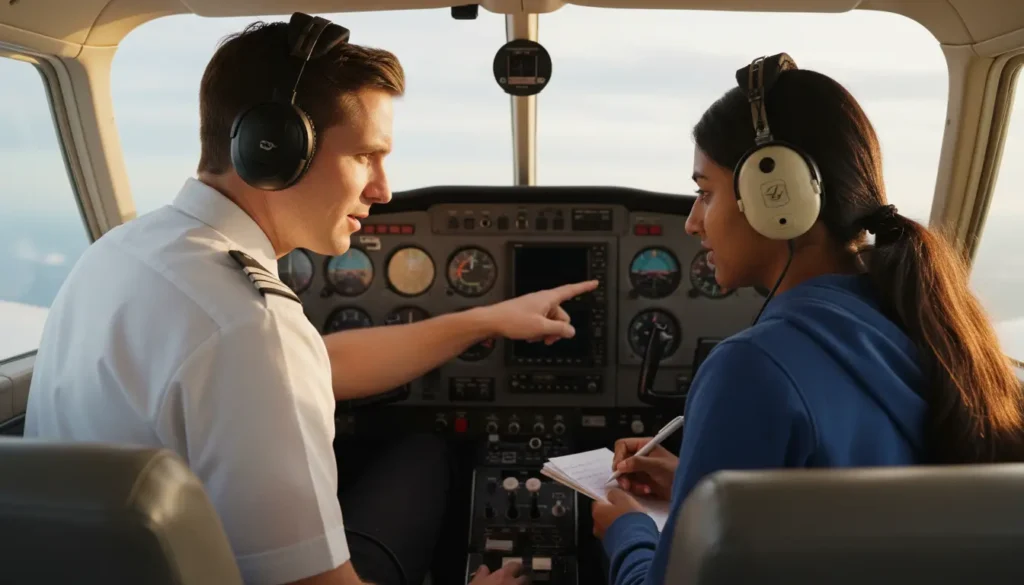
The Advantages: Lower hourly rates (often $130-$165 for aircraft, $50-$65 for instruction) create significant cost savings. Personalized instruction from long-term CFIs (not time-building students) often produces technically superior pilots. Flexible scheduling accommodates part-time students, and the small-school environment fosters close instructor-student relationships.
The Risks: Aircraft availability can be unpredictable, maintenance issues may cause extended training delays, and instructor turnover can disrupt training continuity. Quality varies dramatically between FBOs—from exceptional operations with experienced CFIs to questionable schools cutting maintenance corners. No institutional financing or job placement assistance means students navigate these challenges independently.
Due Diligence Essentials:
- Verify FAA certification and safety record
- Inspect aircraft maintenance logs personally
- Interview multiple current students
- Ensure aircraft and instructor availability matches your schedule
- Confirm insurance coverage and liability protections
Hidden Costs That Inflate Your Final Bill
Published program costs represent base training only. Savvy students budget an additional 20-30% for expenses that catch unprepared pilots by surprise.
FAA Knowledge and Practical Test Fees
Every certificate and rating requires passing a knowledge test and checkride:
- Knowledge tests (computer-based): $175-$200 each
- Private Pilot checkride: $600-$800 (examiner fee)
- Instrument Rating checkride: $600-$900
- Commercial checkride: $700-$1,000
- CFI initial checkride: $1,000-$1,200
Total checkride fees (Zero-to-CFI): $4,500-$6,000
Many schools exclude these fees from quoted program costs, creating sticker shock when students reach checkride milestones.
Required Equipment and Materials
Professional aviation headsets are non-negotiable for effective training:
- Entry-level ANR headsets: $400-$600
- Bose A20 or Lightspeed Zulu 3: $900-$1,100
Additional equipment costs:
- Pilot supplies (kneeboard, charts, logbook, etc.): $200-$300
- iPad with ForeFlight subscription: $500-$1,000 initially, then $200/year
- Test prep materials (Sporty’s, King Schools): $300-$500
Total equipment costs: $2,500-$4,000
Renters Insurance: The Under-Discussed Essential
Most training aircraft insurance policies include per-incident deductibles of $1,000-$5,000. If you’re the pilot-in-command during an accident, you’re typically liable for this deductible. Renters insurance (more accurately called “non-owned aircraft insurance”) protects against this liability and costs $200-$400 annually.
Critical Detail: This coverage triggers high-value advertising in the aviation insurance sector, but more importantly, it provides essential financial protection. A single gear-up landing or prop strike could cost you $5,000 out-of-pocket without coverage.
Retake and Additional Training Costs
National average first-time checkride pass rates hover around 80% for private pilot certificates. Failed checkrides require:
- Additional training with an instructor (2-5 hours): $500-$1,200
- Repeat examiner fee: $600-$1,000
Budget at least one retake in your financial planning. Additionally, most students require 10-20% more hours than program minimums to reach proficiency—add $3,000-$8,000 to quoted program costs.
Living Expenses for Out-of-State Students
Full-time training in Florida requires budgeting for 9-12 months of living expenses:
- Apartment (shared): $800-$1,200/month
- Food and transportation: $600-$800/month
- Health insurance: $200-$400/month
Total living costs: $18,000-$30,000 for program duration
Financing Your Flight Training: Navigating the Options for 2026
Flight training costs rival a year of private college tuition, making financing essential for most students. Understanding your options—and their true costs—is critical.
Federal Financial Aid and VA Benefits
GI Bill Benefits: Veterans using Post-9/11 GI Bill benefits can receive full tuition coverage at Part 141 schools, plus monthly housing allowances ($1,500-$2,500 depending on location). This represents the single best financing option available, potentially covering $80,000-$100,000 in training costs.
Eligibility: Requires 90+ days of active duty service post-9/11.
Federal Student Loans: Students enrolled in university programs (like Embry-Riddle) can access federal student loans with 4.5-7% interest rates and flexible repayment terms. Standalone flight schools generally don’t qualify for federal loans unless you’re pursuing both a degree and training simultaneously.
Private Flight Training Loans
Two lenders dominate the private flight training loan market:
Sallie Mae Career Training Loans:
- Loan amounts: Up to $100,000
- Interest rates: 4.5-13.5% (variable, credit-dependent)
- Repayment terms: Up to 15 years
- No origination fees
Sallie Mae offers the most flexible options but requires creditworthy co-signers for most young students. The variable interest rate structure creates uncertainty—a 2% rate increase over the loan term adds thousands to total repayment costs.
Meritize Flight Training Loans:
- Loan amounts: Up to $80,000
- Interest rates: 5-12% (fixed and variable options available)
- Considers academic performance and flight school in credit decisions
- Repayment begins while in training (interest-only options available)
Meritize’s unique underwriting model considers factors beyond credit scores, potentially qualifying students traditional lenders reject. However, interest accrues during training, increasing total costs.
The True Cost of Financing
Borrowing $90,000 at 7% over 10 years results in total repayment of approximately $124,000—adding $34,000 to your training costs. Starting CFI salaries of $30,000-$45,000 make this debt burden challenging, especially when combined with living expenses. Run detailed amortization calculations before committing to loan financing.
Alternative Financing Strategies
Regional Airline Cadet Programs: Multiple regional airlines offer tuition assistance, loan repayment, or financed training in exchange for employment commitments. Programs include:
- Republic Airways’ LIFT Academy
- SkyWest’s Pilot Pathway Program
- PSA Airlines’ Cadet Program
These programs can reduce out-of-pocket costs by $20,000-$40,000 but require 1-3 year employment commitments at fixed (often below-market) compensation rates.
Payment Plans: Some flight schools offer internal payment plans allowing monthly installments without interest. While eliminating interest charges, these plans require consistent cash flow throughout training.
The Career ROI: Is Florida Flight Training Worth the Investment?
Understanding training costs requires context: what’s the career return on this six-figure investment?
First Officer Starting Salaries (2026)
Regional airline first officers now earn significantly more than historical norms:
- Year 1: $70,000-$90,000
- Year 2: $80,000-$100,000
- Year 3: $90,000-$110,000
Upgraded captains at regionals earn $120,000-$180,000 annually. Major airline first officers start at $90,000-$120,000, reaching $200,000-$300,000+ as senior captains.
Break-Even Timeline
Conservative career progression:
- Years 1-2: CFI position ($30,000-$45,000)
- Years 3-5: Regional FO ($70,000-$100,000)
- Years 6-10: Regional Captain or Major FO ($120,000-$200,000)
Most pilots recover training costs within 5-7 years of starting at regional airlines, then enjoy 25-30 years of six-figure compensation. The career lifetime earnings differential between airline pilots and median college graduates exceeds $1.5-$2 million, making flight training one of the highest-ROI career investments available.
This strong earning potential should be contextualized against the aviation maintenance technician salary progression, which follows a different but also lucrative trajectory in the aviation industry, with AMTs earning $55,000-$85,000 with strong job security and less training investment.
The M-1 Visa Process for International Students
International students represent 20-30% of Florida flight training enrollment, attracted by excellent training conditions and FAA certificates’ global recognition.
M-1 Visa Basics
The M-1 vocational student visa allows international students to attend FAA-approved flight schools (typically Part 141). Key requirements:
- Acceptance letter from SEVIS-approved flight school
- Proof of financial support for full program duration
- TSA security clearance (adds 2-3 months to timeline)
- English language proficiency demonstration
Cost Implications for International Students
International students face additional costs:
- Visa application fees: $350-$500
- TSA security clearance fee: $130
- Travel and relocation: $1,000-$5,000
- Higher insurance premiums: Additional $500-$1,000 annually
- Limited work authorization during training
Budget an additional $5,000-$10,000 beyond domestic students’ costs for visa-related expenses and international banking challenges.
Currency Risk Management
For international students, exchange rate fluctuations can add thousands to final costs. The US dollar’s strength against many currencies in 2025-2026 has increased effective costs for international students by 10-20% compared to 2022-2023 levels. Consider currency hedging strategies or accelerated payment schedules to minimize exchange rate exposure.
Accelerated Flight Training Programs: Speed vs. Quality
Accelerated programs promise zero-to-airline-qualified in 12-18 months. While appealing, this pace demands careful consideration.
The Accelerated Program Structure
Intensive training typically involves:
- 5-6 flight lessons per week
- Daily ground school
- Multiple phase checks per month
- Limited time off throughout program
Pros of Acceleration
Time is money in aviation careers. Reaching airline hiring minimums 6-12 months faster accelerates lifetime earnings by $50,000-$100,000. Current airline hiring demand makes speed particularly valuable—historical hiring cycles show airlines can transition from aggressive hiring to furloughs within 18-24 months.
Cons of Acceleration
Compressed timelines increase pressure and reduce learning consolidation. Studies show skill retention improves with spaced practice—cramming 1,500 flight hours into 12 months produces different learning outcomes than spreading them over 24 months. Additionally, accelerated programs offer virtually no schedule flexibility, requiring 100% commitment without income for 9-12 months.
Who Should Choose Accelerated Training
Ideal candidates have:
- Full financing secured upfront
- No employment or family obligations
- Strong self-discipline and stress management
- Clear career goals and timeline motivation
- Previous aviation experience (Private Pilot Certificate minimum)
Final Verdict: Which Florida School is Right for You?
No single “best” flight school exists—only the best school for your specific situation, goals, and constraints.
Choose Large Academies (ATP Flight School) If:
- You want maximum speed and structure
- You’re committed to airline career pathway
- You value predictability over customization
- You need comprehensive M-1 visa support
- You can commit to full-time training for 9-12 months
Best for: Career-focused students, international students, and those willing to pay a premium for certainty and speed.
Choose University Programs (Embry-Riddle) If:
- You want a four-year degree alongside ratings
- You value the complete college experience
- You’re willing to invest in long-term career optionality
- You want access to advanced resources and networking
- You’re 18-22 years old and seeking traditional education
Best for: Traditional college-age students, those seeking career flexibility, and families prioritizing degree credentials.
Choose Local FBOs If:
- You need maximum cost savings
- You prefer personalized instruction
- You require scheduling flexibility for part-time training
- You’re comfortable with less structure
- You have the discipline to self-navigate training
Best for: Part-time students, budget-conscious pilots, those with previous aviation experience, and students who thrive with independent learning.
Taking the Next Step
Research thoroughly before committing to any program:
- Visit multiple schools: Schedule discovery flights at 3-5 schools to assess culture, aircraft condition, and instructor quality
- Talk to current students: Request contact information for students currently enrolled—their unfiltered feedback is invaluable
- Review the fleet: Inspect training aircraft personally, checking maintenance logs and overall condition
- Understand financing fully: Read loan documents completely, calculate total repayment costs, and ensure you understand all terms
- Verify FAA approval: Confirm Part 141 approval status if relevant, and check the school’s history with the FAA
Florida’s flight training market offers unmatched opportunities—300 days of flying weather, diverse training environments, and direct pathways to airline careers make the Sunshine State the premier destination for aspiring pilots. By understanding the true costs, hidden expenses, and financing options outlined in this guide, you’re equipped to make the investment decision that aligns with your aviation dreams and financial reality.
The sky isn’t the limit—it’s just the beginning of your aviation career.
Frequently Asked Questions
Q: How long does it take to complete flight training in Florida?
A: Timeline varies by program type and commitment level. Full-time accelerated programs (ATP Flight School) can take 9-12 months from zero experience to CFI. Part-time training at local FBOs typically requires 18-36 months for the same progression. University programs incorporate flight training over four years alongside degree coursework.
Q: Can I work while completing flight training in Florida?
A: Part-time training at Part 61 FBOs allows students to work and train simultaneously, though progress will be slower. Part 141 accelerated programs are designed for full-time commitment and leave little room for employment. International students on M-1 visas face strict work authorization limitations during training.
Q: What are the medical requirements to become a pilot?
A: Pilots need an FAA medical certificate issued by an Aviation Medical Examiner (AME). First Class (airline pilots), Second Class (commercial pilots), and Third Class (private pilots) medicals have different requirements. Most students should obtain a medical certificate before investing in flight training to avoid discovering disqualifying conditions after spending thousands of dollars. The FAA provides detailed medical certification standards and a list of approved AMEs.
Q: Is flight training covered by the GI Bill?
A: Yes, Post-9/11 GI Bill benefits cover flight training at Part 141 schools, including full tuition and housing allowances. This represents one of the most valuable benefits for veteran students, potentially covering $80,000-$100,000 in training costs. Contact your school’s veterans’ affairs office to understand specific benefit application processes.
Q: How do Florida flight school costs compare to other states?
A: Florida’s high school density creates competitive pricing, often 10-20% lower than Northeast or California markets. However, Florida’s year-round training capability provides the real savings—completing training 3-6 months faster saves thousands in living expenses and opportunity costs compared to weather-challenged states.
Q: What happens if I fail a checkride?
A: Failed checkrides are common (20-30% of students fail at least one checkride initially) and don’t disqualify you from an aviation career. You’ll need additional training with an instructor, then schedule a retest with the same examiner for the failed portions. Budget $1,000-$2,000 per retake for training and examiner fees.
Q: Can international students stay in the US after flight training?
A: M-1 visa holders receive limited practical training authorization (typically 6 months) after program completion, often used for CFI positions to build hours. Long-term US employment requires employer-sponsored work visas (H-1B), which are available but competitive. Many international students return home with FAA certificates, which are recognized globally and can be converted to local licenses in most countries.
Q: Should I finance my flight training or pay cash?
A: If you have cash available, paying outright avoids $20,000-$40,000 in interest charges over a 10-year loan. However, few students have $80,000-$100,000 in liquid assets. For those requiring financing, compare federal student loans (if available through university programs) against private loans carefully, considering both interest rates and repayment terms. Some students use a hybrid approach, financing the largest costs while paying cash for smaller expenses.


