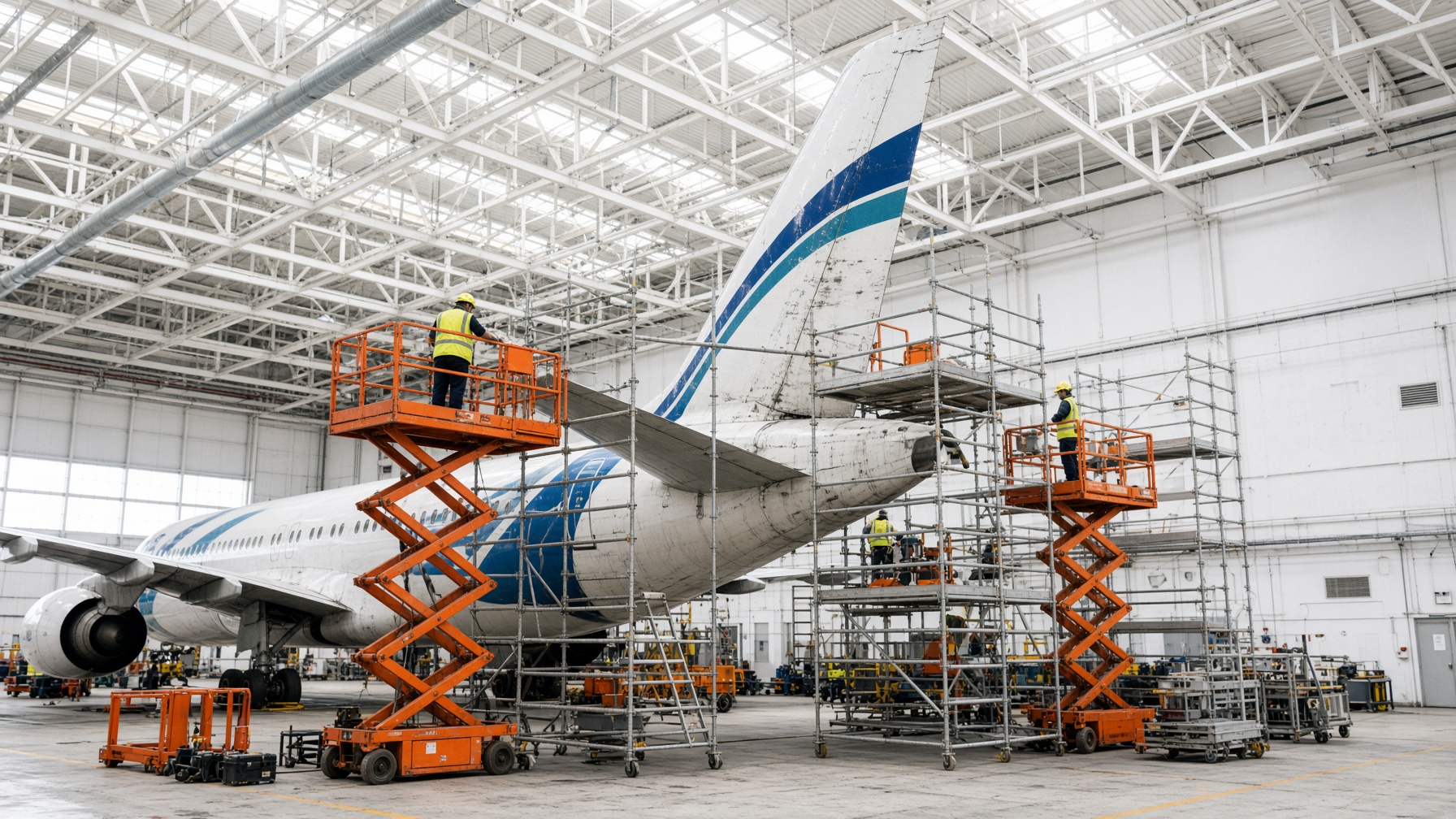
A C check is a scheduled heavy maintenance visit. It is not a longer A-check, and it is not a D-check with the lights dimmed. The airplane leaves the line. Jacks, docks, open leading edges, operational checks that need ground power and time. Airlines and lessors still talk in the letter-check language — A, B, C, D — even when the paperwork has moved into an MSG-3 equalized program that slices the same work into packages with less romantic names.
If you work line, a C-check is a rumor and a ferry date. If you work heavy, it is a quarter of your year. This page is hangar English, not a market-size slide. Intervals live in the operator's maintenance program, not in a blog table. Typical industry talk puts many C visits on the order of a year and a half to two years of calendar, or a matching utilization — and operators split, equalize, and rename constantly. If a recruiter quotes an exact hour-count as law, they are quoting a memory.
What a C check is in the hangar
On a C-check you will find the corrosion that GVI missed, the wiring that almost passed, and the cabin that looked fine under boarding lights. Panels come off that the overnight A-check never owed you. Structure gets sampled. Systems get operational checks that a gate turn cannot hold. NDT, interiors, and cabin often run as packages inside the visit, not as a separate holiday. The airplane is still an airplane. It is not yet a kit. That last sentence is how you tell C from D.
The work is a Maintenance, Repair, and Overhaul product. Line stations do not invent a C-check because a slot opened. Base MRO capacity, docks, and certifying staff do. A Part 145 (or the operator's own equivalent shop) releases the visit. The intern with the borescope does not. If you are new to the trade, this is the visit that teaches you the airplane is bigger than the MEL you lived with on nights.
A, B, C, D without fake hours
Letter checks are a language. An A-check is a lighter visit, often done on the line or overnight: named panels, lubrication, operational checks, defects the line already wrote up. A B-check, where it still exists as a letter, is often a heavier A — and many operators folded B tasks into A packages years ago. A C-check is a heavy hangar visit. A D-check is the structural teardown: interiors out, deep structure, a hull that looks unfinished on purpose. Follow the maintenance program on the hangar wall, not this paragraph.
| Check | Where it feels | What actually opens | How to talk about interval |
|---|---|---|---|
| A | Line / light bay, often overnight | Named panels, lubes, ops checks | Operator program — historically a few hundred hours or a matching calendar, split and equalized constantly |
| B | Line or light, if the letter still exists | A heavier A, or already absorbed | Ask the program. The letter is not sacred |
| C | Hangar, days to weeks | Panels, systems, structure sampling | Typical industry talk: on the order of 18–24 months, always per the program |
| D | Heavy shop, weeks to months | Cabin out, deep structure, paint often involved | Years — commonly discussed around 6–10 depending on aircraft and program, never a blog's exact hour-count |
What actually opens
Access is the product. Leading edges, flap tracks, landing-gear bays, dry bays that only get a flashlight on the line, ceiling panels that hide water paths. Filiform that lived under a perfect topcoat shows up because someone finally raked a light along a lap you cannot reach at a gate. That is not magic. That is time and docks. Operational checks that need hydraulics, ground power, and a closed hangar door happen here because the line could not hold them.
Non-routines are the other product. The carded work is the plan. The findings are the bill. Corrosion, wiring, cabin wear, and the defect a previous shift deferred into this visit — that is why C-check quotes slip. A clean C is a rumor. A managed C is a schedule with a findings budget. If you are quoting downtime to a lessor, say findings, not hope.
Who signs, and who lives there
Certifying staff on a Part 145 (or the operator equivalent) release the visit. Structures, avionics, interiors, and NDT often badge in as packages. NAS-410 hours exist because a C-check is where ET, UT, PT, and MT get used for real — different physics, different stamps, same hull. A line A&P who can close an A-check is not automatically the person who interprets an eddy-current hole scan. The A&P path is the door. The method qualification is a different paper.
- The maintenance program and the operator's specification beat any blog table — including this one.
- Certifying staff release the visit, not the person who held the borescope.
- NDT, structures, and cabin often run as packages inside the C, not as a side quest.
- Pull current ADs and regulatory text from the FAA Dynamic Regulatory System when the card names them.
- EASA operators live under EASA rules and their own AMP. The letter on the dock still sounds the same.
C versus D
A D-check is the visit that can take the airplane apart until it looks like a kit. Interiors out, paint off or mostly off, structure you only see a few times in a hull's life. Cost is a line on a lessor model. Labor is a different trade than overnight A-checks. Calling a long C a D because the airplane sat eight weeks is how students fail interviews. Duration is a consequence. Depth is the definition.
Some operators equalized the program and still say D in the hangar for the heavy structural visit. Some call it a heavy C or a named check. The maintenance hub uses the letters because the search queries use the letters. The specification on the wall still wins. If you are bidding the work, read the work package, not the nickname.
Downtime, lessors, and why the line hates the date
A C-check costs calendar more than it costs a textbook. The airplane is not earning. The dock is not free. Findings expand. That is why operators equalize packages — to smear the pain across the year instead of parking a hull for three weeks. Equalized does not mean easier. It means the letter on the card may not match the letter in your memory. Do the card in front of you.
Pay for the people who live here is a different desk. Heavy MRO work is skill variety and project pace. Line work is the bid and the overtime. The BLS occupational outlook photographs the whole trade. It does not tell you whether this C-check is a union 145 or a night shift in a desert hangar. Ask the shop, not the median.
What is a C check on an aircraft?+
A scheduled heavy hangar visit — typically discussed on the order of 18–24 months depending on the operator's program — opening systems and structure far beyond a line A-check. It is not a D-check.
How often is a C-check?+
Whatever the operator's maintenance program says. Typical industry talk is roughly a year and a half to two years, but packages are split and equalized constantly. Do not memorize a blog's hour-count.
Is there still a B check?+
Many operators folded B into A or into equalized packages. You will still hear B in older manuals and older hangars. Ask the program.
What is the difference between a C-check and a D-check?+
C is a heavy hangar visit with deep access and sampling. D is the structural teardown — interiors out, structure you rarely see, weeks to months. Depth, not just duration.
Who signs a C-check?+
Certifying staff under the operator's program and the 145 (or equivalent) that holds the work. NDT stamps are method qualifications, not a substitute for the release.
Sources (verified)
Letter-check intervals in this article are typical industry language, not OEM law and not a substitute for the operator's approved maintenance program. Aviation Titans is independent editorial.