MRO in aviation means Maintenance, Repair, and Overhaul. It is the industry that keeps aircraft, engines, and components airworthy after they leave the factory. It is not a stock ticker, and it is not a four-thousand-dollar market PDF — even though search results will happily show you both. If you asked what the letters stand for, you are in the right hangar. If you wanted a TAM/SAM/SOM slide, you need a different vendor.
The work lives in shops with certificates on the wall and in airline hangars that do the same jobs with an operator's own approval. Line, base, engine, component: four different floors that all get called MRO in a job posting. An A-check overnight is maintenance. A blended repair on a fan blade is repair. A shop visit that restores an engine to a defined standard is overhaul. Same three letters. Very different badges.
The three letters, without the brochure
Maintenance is the scheduled and unscheduled upkeep that keeps the airplane in the program: letter checks, daily work, MEL management, lubrication, the defect you found on GVI. Repair is what you do when something broke, wore, corroded, or got hit — including the filiform that was not on the card. Overhaul is restoration to a defined standard, often on a shop visit with a release that says the unit meets the manual's after-overhaul condition, not just that you stopped the leak.
People mash the letters together because the same company may do all three. A Part 145 can be a line station, a heavy hangar, an engine shop, and a component bench under one quality system. Or it can be a ten-person GA shop that still calls itself an MRO on the website. The certificate and the operations specifications matter more than the homepage. Read those. Then read the job posting.
Line, base, engine, component
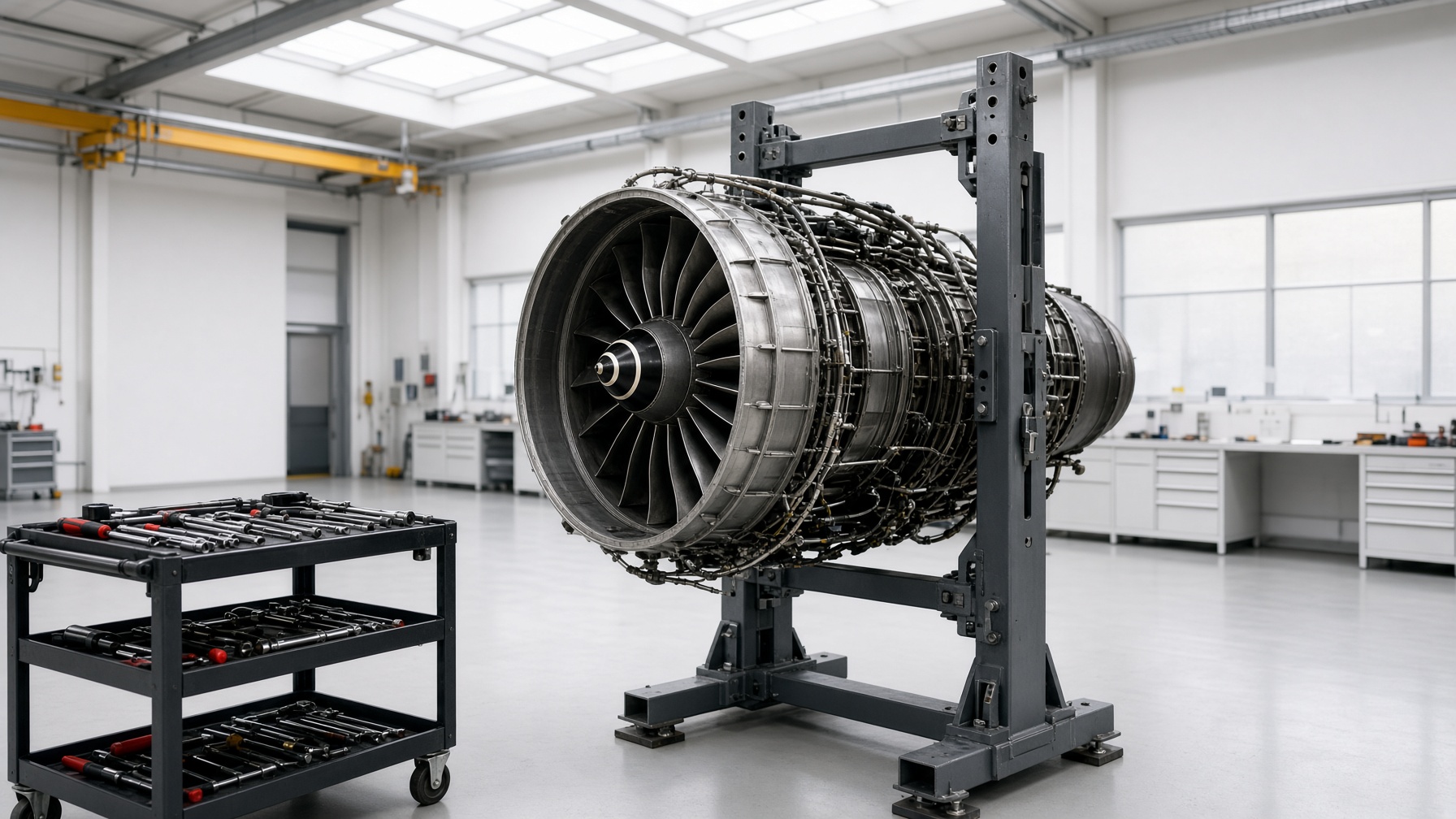
Line and transit live at the gate and in the overnight bay: A-checks, defects, turn work, the MEL the crew already wrote. Base and heavy live in the hangar: C-checks, D-checks, interiors, structure. Engine shops do performance restoration, life-limited parts, and the kind of work that makes a powerplant look new in the photos and used in the paperwork. Component shops do APU, landing gear, avionics, interiors, wheels and brakes — the units that come off the airplane so the airplane can leave.
| Lane | Typical work | Where it feels | Who you will meet |
|---|---|---|---|
| Line / transit | A-checks, defects, overnight | Gate, light bay | Line AMTs, avionics on call |
| Base / heavy | C and D, structure, cabin | Hangar, docks, weeks | Base AMTs, structures, NDT, interiors |
| Engine | Shop visits, LLP, restoration | Engine shop, stands | Powerplant, NDT, inspectors |
| Component | APU, gear, avionics, interiors | Back shops | Specialists, often with extra paper |
The paper on the wall
In the United States a lot of this work sits on a Part 145 repair-station certificate, or on an air carrier's own maintenance organization. EASA shops live under EASA Part-145 and the operator's AMP. The legal question is never whether the hangar is allowed to call itself an MRO. The legal question is whether the work is on the operations specifications, whether the certifying staff are authorized, and whether the data is current. Pull ADs and regulatory text from the FAA Dynamic Regulatory System when the card names them.
Inspection Authorization is GA paper — annuals and certain majors — under 14 CFR 65.91. It is not what releases a 737 C-check. Do not mix those worlds in an interview. The A&P certificate is still the common door for U.S. airframe and powerplant work. Avionics benches may also want FCC paper. NDT stamps follow the current NAS-410 revision plus the employer's written practice, not a weekend course with a laminated card.
How MRO relates to A, C, and D
Letter checks are products the MRO sells (or the airline does in-house). An A-check can live on the line. A C-check needs a hangar and a plan. A D-check needs a heavy dock and a structures bench that will still be there in month two. Operators equalize programs and still use the letters in the hangar. If you are scheduling the visit, the work package is the truth. If you are applying for a job, ask which visits the shop actually holds. A 145 that has never opened a D will still say heavy MRO on LinkedIn.
Non-routines are where shops make or lose the quote. Corrosion, wiring, cabin, and the finding a previous GVI missed — that is the C-check bill. Corrosion prevention is cheaper than the strip. Everyone knows. The leak still waits until the heavy visit more often than the brochure admits.
Who works there, and what they earn
AMTs, inspectors, NDT techs, structures, interiors, avionics, planners, and the person who owns the dock schedule. The BLS handbook photographs aircraft and avionics mechanics as a family. Line versus heavy versus engine is not a BLS row. It is a culture. Nights at a cargo sort do not feel like a day C-check. A GA 145 does not feel like either. Read the salary desk for medians. Ask the shop for the rate.
The first box still matters on every floor. Tools, safety wire, a light you can put on a lap — none of that is replaced by a C-check dock. Heavy just adds the methods and the paperwork. If you are choosing a first shop, pick the floor that will let you sign what you actually did, not the logo in the lobby.
How to read an MRO job posting
Lane, certificate, shift, and which aircraft. If the posting says MRO and nothing else, it is a net. Ask whether you will live on the line, in base, in engines, or on a bench. Ask who certifies. Ask whether NDT is in-house. Ask whether the C-check is their C-check or a subcontract they staff. Then ask about the rate, nights, and whether the FAA mechanic path they mention is a 147 they own or a wish.
- Line / transit: A-checks, defects, overnight — the bid and the weather.
- Base / heavy: C and D, interiors, structure — project pace, findings, docks.
- Engine: shop visits, LLP, performance restoration — a different union, often.
- Component: APU, landing gear, avionics, interiors — specialists, extra paper.
What does MRO stand for in aviation?+
Maintenance, Repair, and Overhaul. It is the industry that keeps aircraft, engines, and components airworthy after production.
Is an airline hangar an MRO?+
If it maintains, repairs, or overhauls aircraft or parts — as a business or as the operator's own shop — people will call it MRO. The certificate on the wall is what matters legally.
What is the difference between line and heavy MRO?+
Line is transit and overnight work, including many A-checks. Heavy is hangar visits — C and D, structure, interiors — measured in days to months, not a gate turn.
Do I need an A&P to work MRO?+
For most U.S. airframe and powerplant certifying work, yes. Benches, interiors, and some NDT paths have other paper. See the FAA become-a-mechanic page and the A&P desk.
Is MRO the same as a C-check?+
No. A C-check is one product an MRO (or an airline's own heavy shop) may perform. MRO also means line, engines, and components.
Sources (verified)
Certificate rules live in the current FARs, EASA regulations, and the shop's operations specifications. This page is a definition, not an approval. Aviation Titans is independent editorial.