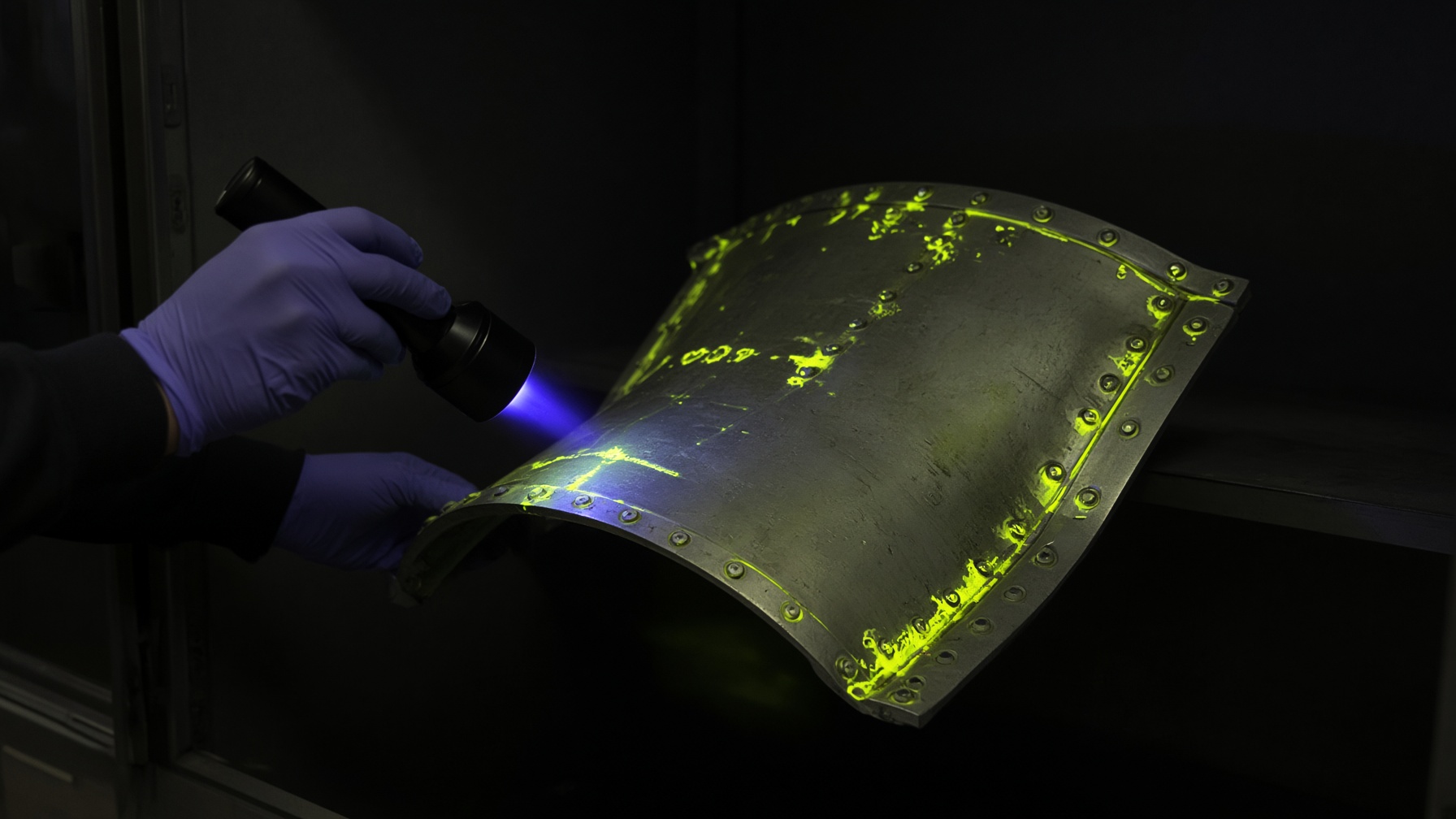
NAS-410 is how aerospace NDT personnel are qualified. The aligned EN 4179 world is the European cousin. NADCAP is an audit program that will ask whether your system actually does what the procedure claims. A formal training plan to NAS-410 / NADCAP requirements is not a Canva poster. It is hours, methods, vision, experience, exams, recency, and a Level 3 who will put their name on it. The controlling document is the current NAS-410 revision plus the employer's written practice — not a laminated wallet card from a weekend class.
If you came here because an audit finding said training plan, read this page, then open the written practice, then open the actual hours. If you came here because you want to become the person who holds eddy current or ultrasonic on a C-check, start with the method list and the Level 3, not with a course catalog. The A&P is a different certificate. You can hold both. You cannot substitute one for the other.
What NAS-410 actually is
NAS-410 is a personnel qualification standard for nondestructive testing in aerospace. It names methods, levels, training hours, experience, vision, examinations, and recertification. It is not a technique sheet. It is not a procedure for a specific airplane. It is not NADCAP. Shops write a written practice that implements the current revision of NAS-410 (or the EN 4179 equivalent they claim). That written practice is what the auditor reads. That written practice is what your hours must match.
We will name NADCAP in this sentence and then we will not send you to a vendor homepage. NADCAP audits special processes, including NDT, against a checklist that asks whether you follow the standard you claimed and the practice you wrote. Passing an audit is not the same as a Level 2 who can interpret an indication. Failing an audit is often a paperwork story that started as a real missed crack. Fix the practice. Then fix the hours. Then sit the exam.
NAS-410 vs NADCAP vs the written practice
| Thing | What it is | What it is not |
|---|---|---|
| NAS-410 (current revision) | Personnel qualification standard for aerospace NDT | A technique for one part number |
| EN 4179 | Aligned European qualification standard | A free pass to skip the U.S. written practice |
| Employer's written practice | How this shop implements the standard | A poster in the break room |
| NADCAP | An audit program that asks if you do what you claim | A qualification. It does not certify a person. |
| ASNT membership / SNT-TC-1A shops | A different NDT conversation, common outside aerospace | A substitute for NAS-410 in an aerospace written practice that named NAS-410 |
The American Society for Nondestructive Testing publishes training and recommended practices that many technicians grew up on. Aerospace shops that claim NAS-410 still live under NAS-410. Use ASNT for education. Use the written practice for the stamp. EASA operators will talk EN 4179 in the same breath. The hangar still needs a named responsible Level 3.
Levels 1, 2, and 3
Level 1 performs specific calibrations and evaluations under written instructions, and does not typically interpret beyond what those instructions allow. Level 2 sets up, calibrates, interprets, and evaluates to the procedure, and can prepare work instructions within the method. Level 3 is the person who owns the technique, the procedure, the training plan, and the uncomfortable conversation when the indication and the drawing disagree. Level 3 is a person, not a PDF. If your Level 3 is a consultant you have never had in the booth, the audit will notice. So will the first cracked part that was signed on a bad technique.
Do not collect methods like merit badges. Eddy current, ultrasonic, liquid penetrant, magnetic particle, radiography, thermography — each is a clock. Hours in PT do not count as hours in ET. A pretty fluorescent indication you cannot interpret is a missed gear. The composite inspection path is often UT plus visual plus whatever the SRM named, not a coin and a good attitude.
Hours, vision, exams
- Name the methods (PT, MT, UT, ET, RT, and any others the shop actually uses) and the levels (1, 2, 3).
- Document initial training hours and the experience clock for each method and level — separately.
- Vision exams on the interval the standard and the written practice require. Color and near vision are not optional theater.
- Exams: general, specific, practical — with passing scores recorded, not remembered.
- Recency, recertification, and what happens after a break in method. A two-year gap is not a weekend refresher by default.
- A responsible Level 3, not a shared inbox, and a training plan that matches the booth you actually run.
Formal training hours are classroom and structured practical, not 'watched a guy.' Experience hours are documented work in the method. Mixing them because the shop is short-staffed is how findings get written. The plan should say who may train, who may examine, and what happens when the candidate fails. People fail practicals. That is the point of a practical.
Name the methods you actually use
A plan that lists every method in the standard and then runs only visible PT and a yoke is a plan for an audit finding. List what the operations specifications and the work require. If you do fastener-hole ET on aluminum, say ET. If you do wet fluorescent MT on landing-gear steel, say MT. If you do UT on composites, say UT and the technique family. Visual inspection as GVI is usually a separate inspection-program conversation. Some shops also qualify VT as an NDT method. If you do, write it. If you do not, do not pretend the GVI card is a Level 2.
Physics do not commute. PT is a liquid in a surface-breaking discontinuity. MT is leakage of a magnetic field in ferromagnetic metal. ET is electromagnetics in conductive metal. UT is sound. Radiography is attenuation. Teach them as different methods because they are. The maintenance hub has a desk for each of the common hangar four.
A plan that survives an audit
Traceability is the product. A folder for each person: training, experience, vision, exams, recertification, the methods and levels currently valid, and the date of the last break. When someone leaves the method for a year, the practice should say what happens. When a procedure changes, the specific exam should notice. When a new airplane arrives, the technique sheets should exist before the first hole is scanned.
The FAA become-a-mechanic path does not issue an NDT level. Neither does 14 CFR 65.91 Inspection Authorization. IA is GA annuals. NAS-410 is NDT. Keep the paper in the right drawer. Pull current FAA text from the Dynamic Regulatory System when a card names a regulation. Pull the current NAS-410 revision from the source your quality system named — not from a 2012 PDF on a shared drive.
Is NAS-410 the same as NADCAP?+
No. NAS-410 is a personnel qualification standard. NADCAP is an audit program that will ask whether you follow it and your own written practice. The controlling document is the current NAS-410 revision plus the employer's written practice.
Can an A&P perform NDT without NAS-410 qualification?+
Only if they are qualified in the method under the shop's written practice. The A&P certificate is not a Level 2. Some visual tasks are inspection-program work, not NDT stamps. Read the card and the practice.
What is a Level 3 in NAS-410?+
The person who owns procedures, techniques, training, and the hard calls in the method. A PDF is not a Level 3. A responsible named individual is.
Do hours in dye penetrant count toward eddy current?+
No. Methods do not commute. PT hours are PT hours. ET hours are ET hours. The written practice will not save a mixed log.
Is EN 4179 the same as NAS-410?+
They are aligned aerospace qualification standards. Your written practice will name which one you live under. EASA shops often say EN 4179. Do not assume they are interchangeable without reading the practice.
Sources (verified)
NAS-410 revisions change. This page is hangar English for building a training plan, not a restatement of the current standard. Use the current revision and the employer's written practice. Aviation Titans is independent editorial, not an auditor or a Level 3 service.