

Here’s a sobering statistic that every aspiring aviator should know: approximately 75% of student pilots in the United States fly without adequate insurance coverage, either relying solely on their flight school’s policy or assuming they’re protected when they’re not. In 2026, with the average cost of a single-engine aircraft ranging from $150,000 to $400,000 and liability claims regularly exceeding $1 million, this gap in coverage represents a financial risk that could derail your aviation career before it even takes off.
As someone who’s spent over 15 years navigating the complexities of US aviation regulations and has witnessed firsthand the financial devastation that inadequate insurance can cause, I’m here to tell you: securing proper aviation insurance as a student pilot isn’t optional—it’s essential. Whether you’re training for your Private Pilot Certificate at a Part 61 flight school in Arizona or working through an accelerated Part 141 program in Florida, understanding aviation insurance is as critical as mastering your pre-flight checklist.
Why Aviation Insurance Matters More Than Ever in 2026
The aviation insurance landscape has shifted dramatically over the past few years. Following a series of high-profile training accidents and increasing aircraft values, insurance premiums for student pilots have risen by 40-60% since 2023. Simultaneously, the FAA has maintained strict enforcement of liability requirements, particularly for solo flight operations and cross-country training.
Consider this: a minor taxiway incident where you accidentally clip a wing on another aircraft could result in $50,000-$100,000 in repair costs. A more serious in-flight emergency requiring an off-airport landing could trigger claims exceeding $500,000 when you factor in aircraft damage, property damage, and potential injury claims. Without proper insurance, you’d be personally liable for every dollar—a reality that makes understanding the true costs of flight training even more critical.
Understanding the Types of Aviation Insurance for Student Pilots
Before we dive into finding the best coverage, you need to understand what you’re shopping for. Aviation insurance isn’t a one-size-fits-all product—it’s a combination of coverages designed to protect against specific risks.
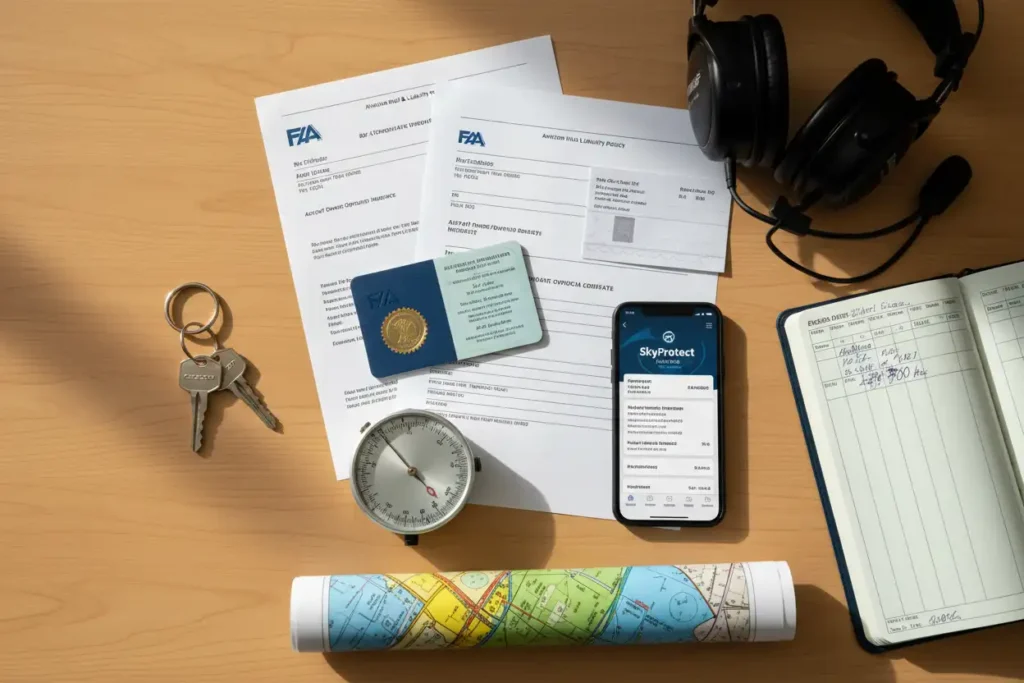
Liability Coverage: Your Financial Shield
Aircraft liability insurance protects you when you’re legally responsible for bodily injury or property damage to third parties. This is the foundation of any student pilot insurance policy. The FAA doesn’t federally mandate liability insurance for all operations, but many airports, flight schools, and aircraft rental facilities absolutely require it.
Minimum recommended coverage: $1,000,000 per occurrence Industry standard for serious students: $1,000,000-$2,000,000 per occurrence Cost range: $500-$1,500 annually for student pilots
Hull Insurance: Protecting the Aircraft
Hull insurance (also called physical damage coverage) protects the aircraft itself against damage from accidents, weather, theft, and other covered perils. As a student pilot, you’ll typically need hull insurance in two scenarios:
- When renting aircraft: Many flight schools require renters to carry “renters insurance” that includes hull coverage
- When flying aircraft you own or partially own: If you’re part of a flying club or own your training aircraft
Hull insurance comes in two forms:
- “In-flight” coverage: Protects the aircraft only while airborne
- “Ground and in-flight” coverage: Comprehensive protection including ground operations, taxiing, and storage
Cost factors: Aircraft value, your experience level, training location, and deductible amount Typical annual premium for student pilots: 2-5% of aircraft hull value
Medical Payments Coverage
This coverage pays for medical expenses resulting from an aviation accident, regardless of fault. While your health insurance may cover some expenses, aviation-specific medical coverage often provides benefits without the typical exclusions found in standard health policies.
Typical coverage amounts: $5,000-$10,000 per person Annual cost: $50-$200 (often included as an add-on to liability policies)
Personal Accident Insurance
Personal accident insurance provides benefits for injury or death resulting from an aviation accident. This is particularly important because many standard life insurance and disability policies contain aviation exclusions for student pilots—something every aspiring pilot should understand when planning their aviation career path.
Coverage typically includes:
- Accidental death benefits
- Dismemberment benefits
- Permanent total disability benefits
- Weekly disability payments
Annual cost: $200-$800 depending on coverage limits and age
The Real Cost of Aviation Insurance: What Student Pilots Actually Pay
Let’s break down real-world numbers. Based on 2026 market rates from major providers like AIG Aerospace, Starr Aviation, and Travers Aviation, here’s what you can expect to pay:

| Coverage Type | Minimum Protection Package | Standard Protection Package | Premium Protection Package |
|---|---|---|---|
| Liability Coverage | $1,000,000 per occurrence | $1,000,000 per occurrence | $2,000,000 per occurrence |
| Hull Coverage (Renter) | $50,000 limit | $100,000 limit | $250,000 limit |
| Medical Payments | $5,000 per person | $10,000 per person | $10,000 per person |
| Personal Accident | Not included | $100,000 | $250,000 |
| Annual Premium | $800-$1,200 | $1,500-$2,500 | $3,000-$4,500 |
| Best For | Budget-conscious students at schools with good master policies | Most student pilots seeking comprehensive protection | Students training in high-value aircraft or complex aircraft |
These figures assume a student pilot with zero flight hours training in a single-engine piston aircraft (like a Cessna 172 or Piper Warrior) at a reputable flight school. Your actual rates will vary based on several factors I’ll discuss shortly.
Key Factors That Affect Your Aviation Insurance Premiums
Insurance underwriters evaluate multiple risk factors when calculating your premium. Understanding these can help you potentially reduce costs:
1. Flight Experience and Certifications
- Zero hours to first solo: Highest risk category, highest premiums
- After first solo to 50 hours: Premiums begin to decrease
- Private Pilot Certificate earned: Significant reduction (20-40%)
- Instrument Rating added: Additional reduction (10-15%)
2. Training Location and Airport Environment
Premiums vary significantly by state and even by specific airport. Training at a busy Class Charlie airport like Chicago Midway (KMDW) or Phoenix Sky Harbor (KPHX) typically results in higher premiums than training at a quiet rural Class Delta airport.
Highest insurance cost states for student pilots (2026):
- California (particularly Southern California)
- New York
- New Jersey
- Florida
- Illinois
More affordable states:
- North Dakota
- South Dakota
- Montana
- Wyoming
- Nebraska
3. Type of Aircraft
The aircraft you’re training in dramatically affects insurance costs. A modern Cirrus SR20 with a glass cockpit and ballistic parachute system carries different risk profiles than a 1975 Cessna 172. Learn more about choosing the right training aircraft for your needs.
Annual hull insurance as percentage of aircraft value:
- Cessna 172/Piper Warrior: 2-3%
- Cirrus SR20/SR22: 3-5%
- High-performance singles (Bonanza, Mooney): 4-6%
- Light twins: 5-8%
4. Deductible Amount
Choosing a higher deductible can significantly reduce your premium. Common deductible options range from $1,000 to $10,000. Increasing your deductible from $1,000 to $5,000 might reduce your premium by 15-25%.
5. Claims History
Even as a student pilot, if you’ve had previous claims or incidents (even in rental cars or with homeowner’s insurance), underwriters may consider this. A clean record is valuable.
Navigating FAA Requirements and Legal Obligations
Let’s clear up a common misconception: the FAA does not require student pilots to carry personal aviation insurance for training purposes. However, this doesn’t mean you should fly without it.
What the FAA Actually Requires
Under 14 CFR Part 61, student pilots must meet specific prerequisites and limitations, but personal insurance isn’t among them. The FAA’s concern is primarily safety and operational standards, not financial liability.
What Flight Schools and Aircraft Owners Require
Here’s where it gets real: approximately 90% of flight schools and aircraft rental facilities in the United States require renters to carry their own insurance or purchase the school’s renter policy. This requirement is typically spelled out in your rental agreement or training contract.
Common requirements:
- Minimum $1,000,000 liability coverage
- Hull coverage matching or exceeding aircraft deductible
- Proof of medical payments coverage
- Named additional insured status for the flight school
State-Specific Considerations
While aviation falls under federal jurisdiction, some states have enacted additional requirements:
- California: Some municipalities require additional liability coverage for operations at public airports
- New York: Certain airports require proof of insurance before granting ramp access
- Florida: Popular training destination with higher insurance requirements due to claims history
Finding the Best Aviation Insurance Providers for Student Pilots
Not all aviation insurance companies are created equal. The aviation insurance market is specialized, with only a handful of carriers truly understanding the unique needs of student pilots. Here are the top providers in 2026:
AIG Aerospace (Formerly Chartis)
Market position: Industry leader with approximately 40% market share Website: www.aig.com/business/insurance/aerospace
Strengths:
- Excellent financial stability (A+ rated by A.M. Best)
- Competitive rates for student pilots with clean records
- Strong claims-paying history
- Flexible coverage options
Ideal for: Student pilots seeking comprehensive coverage with a reputable carrier
Starr Aviation Insurance
Market position: Strong competitor with growing market share Website: www.starrcompanies.com
Strengths:
- Competitive pricing, especially for newer pilots
- Quick quote turnaround
- Good customer service
- Innovative coverage options
Ideal for: Budget-conscious students wanting quality coverage
Travers Aviation Insurance
Market position: Boutique provider specializing in general aviation Website: www.traversaviation.com
Strengths:
- Personalized service
- Flexible underwriting for unique situations
- Experience with flight training operations
- Strong broker relationships
Ideal for: Students with non-standard situations (international students, older student pilots, etc.)
AOPA Insurance Services
Market position: Serving the Aircraft Owners and Pilots Association membership Website: www.aopa.org/insurance
Strengths:
- AOPA member discounts (typically 5-10%)
- Bundled coverage options
- Educational resources
- Advocacy and support
Ideal for: AOPA members seeking convenience and member benefits
Avemco Insurance Company
Market position: Direct writer (no broker required) Website: www.avemco.com
Strengths:
- Simple online quote process
- No broker fees
- Established carrier since 1960
- Straightforward policies
Ideal for: DIY students comfortable managing their own insurance
The Smart Way to Shop for Aviation Insurance
Don’t make the mistake of simply choosing the cheapest policy. Here’s my proven eight-step process for finding the best aviation insurance:
Step 1: Determine Your Actual Coverage Needs
Start by answering these questions:
- What are your flight school’s minimum insurance requirements?
- What aircraft will you be flying (make, model, year, value)?
- How many hours will you fly annually?
- Do you plan to fly at multiple locations?
- Will you be flying solo or with passengers during training?
Understanding the complete path to becoming a pilot helps you anticipate your insurance needs throughout training.
Step 2: Get Multiple Quotes (Minimum of Three)
Aviation insurance pricing can vary by 30-50% between carriers for identical coverage. Work with an aviation insurance broker who represents multiple carriers. Unlike captive agents who work for one company, brokers can shop your risk to multiple insurers.
Recommended brokers:
- BWI Aviation Insurance (National)
- Sutton James (Midwest focus)
- Falcon Insurance (West Coast specialty)
- Aviation Insurance Resources (National)
Step 3: Review More Than Just the Premium
Compare these critical elements:
- Coverage limits: Are they truly identical?
- Deductibles: What’s your out-of-pocket exposure?
- Exclusions: What scenarios aren’t covered?
- Territory: Where are you covered to fly?
- Additional insureds: Is your flight school properly listed?
- Claims process: How do they handle claims?
Step 4: Verify Financial Strength
Only consider insurance companies with an A.M. Best rating of “A-” or higher. An insurance policy is only as good as the company’s ability to pay claims. Check ratings at www.ambest.com.
Step 5: Read the Policy Declarations Page Carefully
This is where the rubber meets the runway. Verify:
- Named insured (your name spelled correctly)
- Aircraft descriptions match what you’ll fly
- Coverage effective dates
- Premium payment schedule
- Endorsements and exclusions
Step 6: Understand the Claims Process
Ask your broker or agent:
- What’s the typical claims turnaround time?
- Do they have 24/7 claims reporting?
- Will they provide rental aircraft reimbursement during repairs?
- What documentation is required for claims?
Step 7: Review Annually
Your insurance needs change as you progress. After earning your Private Pilot Certificate, your premiums should decrease. After accumulating 100-200 hours, you’ll see additional reductions. Shop your coverage every year.
Step 8: Document Everything
Keep copies of:
- Your insurance policy
- Proof of insurance cards
- Claims correspondence
- Premium payment receipts
- Communication with your broker
Carry proof of insurance in your flight bag at all times. Many FBOs and airport managers will request to see it before allowing you to fly their aircraft.
Money-Saving Strategies for Student Pilots
Aviation insurance is expensive, but there are legitimate ways to reduce your costs without sacrificing necessary coverage:
Strategy #1: Bundle Your Coverage
Many insurers offer discounts when you bundle multiple policies. If you have auto, home, or other insurance needs, ask about multi-policy discounts. AOPA members can save 5-10% by bundling through AOPA Insurance Services.
Strategy #2: Join AOPA and EAA
Both the Aircraft Owners and Pilots Association (AOPA) and Experimental Aircraft Association (EAA) negotiate group rates with insurance providers. Annual membership costs ($69-$99) are often recovered through insurance savings alone.
Strategy #3: Choose a Higher Deductible
If you have emergency savings, opting for a $5,000 deductible instead of $1,000 can reduce your premium by $200-$400 annually. Just ensure you actually have that amount available if needed—part of your overall flight training budget planning.
Strategy #4: Complete Formal Safety Training
Some insurers offer discounts for completing recognized safety programs:
- AOPA Air Safety Institute courses: 2-5% discount
- FAA WINGS program participation: 5-10% discount
- Mountain flying courses: Discounts for mountain operations
- Upset recovery training: Reduces risk profile
Strategy #5: Train at Lower-Cost Locations
If you have flexibility in where you train, consider states with lower insurance costs. Training in rural Wyoming versus Los Angeles could save you $500+ annually on insurance alone. Check out our guide to best states for flight training for more insights.
Strategy #6: Pay Annually Instead of Monthly
Most insurers charge 5-10% more for monthly payment plans due to administrative costs and increased lapse risk. If possible, pay your annual premium upfront.

What Happens If You Fly Without Insurance?
Let me paint you a clear picture of the financial catastrophe that can occur when student pilots fly without adequate coverage:
Case Study: The $380,000 Mistake
In 2024, a student pilot in Texas was on a solo cross-country flight when he experienced engine trouble. During the forced landing in a field, the aircraft clipped a power line, causing a small wildfire and knocking out power to a rural subdivision. The incident resulted in:
- $85,000 in aircraft damage
- $45,000 in power company repairs
- $180,000 in fire suppression costs
- $70,000 in property damage claims from affected homeowners
Total liability: $380,000
The student pilot had assumed his flight school’s insurance covered him during solo flights. It didn’t. He’s now on a payment plan that will consume 25% of his income for the next 15 years.
Your personal assets are at risk, including:
- Savings accounts
- Home equity
- Future wages (through garnishment)
- Inheritance
- Retirement accounts (in some states)
Beyond financial consequences, flying without required insurance can result in:
- Inability to rent aircraft at other facilities
- Difficulty obtaining insurance in the future (being labeled “high risk”)
- Potential impact on future aviation career opportunities
- Stress and anxiety that affects your training performance
Special Considerations for International Student Pilots
If you’re an international student training in the United States, your insurance needs are more complex. Standard policies may not provide adequate coverage for non-US citizens.
Key considerations:
- TSA requirements: You’ll need TSA approval before starting training
- Visa status: Ensure your insurance aligns with your visa type (typically M-1)
- International coverage: Do you need coverage that extends to your home country?
- Medical evacuation: Consider adding this if family is overseas
- Language: Ensure policy documents are available in a language you understand completely
Recommended insurers for international students:
- AIG Aerospace (extensive international experience)
- Global Aerospace (specializes in international risks)
- Starr Aviation (flexible underwriting for international students)
Red Flags: Insurance Policies to Avoid
Not every insurance offer is legitimate or adequate. Watch out for these warning signs:
Red Flag #1: “Unusually Low” Premiums
If a quote is 40%+ below market rates, something is wrong. Common issues:
- Inadequate coverage limits
- Excessive exclusions
- Poor financial stability of the carrier
- Misrepresentation of your experience or aircraft type
Red Flag #2: Pressure to Buy Immediately
Legitimate insurance brokers give you time to review policies and compare options. High-pressure tactics suggest the deal isn’t as good as claimed.
Red Flag #3: Unlicensed Brokers or Agents
Verify your broker is properly licensed. Check your state’s Department of Insurance website to confirm licensing status.
Red Flag #4: Policies Without Clear Exclusions
Every policy has exclusions. If you can’t find them or they’re vaguely worded, walk away. Legitimate policies clearly state what’s not covered.
Red Flag #5: No A.M. Best Rating Available
If an insurer doesn’t have an A.M. Best rating or refuses to provide financial strength information, don’t risk your future with them.
Frequently Asked Questions About Aviation Insurance for Student Pilots
How much does aviation insurance cost for student pilots in 2026?
Student pilot aviation insurance typically costs between $800 and $2,500 annually for basic liability and renters hull coverage. The exact amount depends on your location, the aircraft you’re training in, coverage limits, and your deductible. Students training in high-value aircraft like Cirrus SR20s or training in expensive insurance states like California will pay toward the higher end. Budget-conscious students at rural flight schools flying older Cessna 172s may pay closer to the lower end. This is an important consideration when calculating total flight training costs.
Do I need my own aviation insurance if my flight school has a policy?
Yes, in most cases you do. While your flight school carries its own insurance policy, it typically only protects the school’s interests, not yours. When you’re flying their aircraft—especially during solo flights—you can be held personally liable for damage to the aircraft (hull damage) and any third-party liability claims. Most flight schools explicitly require students to carry their own renters insurance policy or purchase the school’s policy as a condition of training. Always read your training contract carefully to understand your insurance obligations.
When should I purchase aviation insurance as a student pilot?
You should purchase aviation insurance before your first lesson or at minimum before your first solo flight. Here’s why: even during dual instruction with a CFI, accidents can occur, and determining liability can be complex. Once you begin solo operations, you’re personally liable for any damage or injuries that occur. Don’t wait until you’re ready to solo—the application and approval process can take 1-2 weeks. Get covered from day one of training to avoid any coverage gaps. This should be part of your pre-flight training preparation checklist.
Will my aviation insurance rates decrease after I earn my Private Pilot Certificate?
Absolutely. Earning your Private Pilot Certificate typically results in a 20-40% reduction in insurance premiums because you’re no longer in the highest risk category. As you accumulate more flight hours, premiums continue to decrease. Expect additional reductions at these milestones: 100 hours (10-15% reduction), 250 hours (10-15% reduction), and upon earning your Instrument Rating (10-15% reduction). By the time you reach 500 hours with an Instrument Rating, your premiums could be 60-70% lower than your initial student pilot rates.
The 2026 Flight Training Insurance Checklist
Before you write that first check for flying lessons, make sure you’ve completed these essential insurance tasks:
30 Days Before First Flight:
- ☐ Contact 3-4 aviation insurance brokers for quotes
- ☐ Review your flight school’s insurance requirements in your training contract
- ☐ Determine the aircraft make/model you’ll be training in
- ☐ Verify insurance company A.M. Best ratings
- ☐ Join AOPA or EAA for potential discounts
2 Weeks Before First Flight:
- ☐ Select your insurance provider and coverage levels
- ☐ Complete the insurance application accurately
- ☐ Provide any requested documentation (pilot certificates, medical certificate, etc.)
- ☐ Review the policy declaration page when received
- ☐ Request insurance ID cards (digital and physical)
Before First Flight:
- ☐ Provide proof of insurance to your flight school
- ☐ Ensure you’re listed as named insured on the policy
- ☐ Verify your flight school is listed as additional insured
- ☐ Understand your policy’s coverage territory
- ☐ Know your deductible amount and claims reporting process
- ☐ Store insurance documents in your flight bag
Quarterly During Training:
- ☐ Review your coverage to ensure it still meets your needs
- ☐ Update your insurer if you change aircraft or flight schools
- ☐ Document any incidents or near-misses (even if no claim is filed)
Annually:
- ☐ Shop your insurance at renewal time
- ☐ Update your flight hours and certificates with your insurer
- ☐ Review coverage limits as aircraft values change
- ☐ Consider increasing liability limits as your net worth grows
Take Action: Your Next Steps to Secure Proper Coverage
You now have the comprehensive knowledge needed to make an informed decision about aviation insurance. Here’s exactly what you should do today:
Immediate Action (Next 24 Hours): Contact at least three aviation insurance brokers and request quotes based on your specific training situation. Provide them with accurate information about your flight school, the aircraft you’ll fly, and your training timeline. Be completely honest about your experience level—misrepresentation can void your coverage when you need it most.
Short-Term Action (This Week): Review the quotes carefully, comparing not just premiums but coverage limits, exclusions, and carrier financial strength. Call the brokers back with questions. Don’t be shy—this is your financial future on the line. If you’re already in training without insurance, prioritize this immediately. You’re taking an unnecessary risk with every flight.
Long-Term Action (Throughout Your Training): Build a relationship with your insurance broker. As you progress through training and earn certificates and ratings, keep them informed. They can help you optimize coverage and reduce costs as your risk profile improves. Make insurance review a regular part of your aviation career development.
The Bottom Line: Aviation insurance for student pilots isn’t a luxury—it’s a necessity that protects your financial future and allows you to focus on what matters most: becoming a safe, competent pilot. The $1,000-$2,500 you invest annually in proper coverage is minuscule compared to the hundreds of thousands of dollars in potential liability you face without it.
The sky is calling, but before you answer, make sure you’re properly insured. Your future self—and your family—will thank you for making this smart investment in your aviation career.
Ready to get started? Contact a reputable aviation insurance broker today and mention you’re a student pilot seeking comprehensive coverage. In the time it takes to complete one cross-country flight, you could have quotes in hand and be on your way to proper protection.
For more resources on beginning your aviation journey, check out our comprehensive guides:
Blue skies and tailwinds—but always with proper insurance coverage.
Disclaimer: This article provides general information about aviation insurance and should not be considered legal or financial advice. Insurance requirements, costs, and coverage options vary by location, carrier, and individual circumstances. Always consult with a licensed aviation insurance professional and review policy documents carefully before purchasing coverage.

Senior NDT Controller with over 20 years of experience in aviation (FAA, EASA, and NRCAN certified). Expert in aircraft maintenance, non-destructive testing (NDT), and pilot training. I share practical, up-to-date 2026 guides for pilots and aviation maintenance technicians.