Reading time: approximately 20 minutes
You want to learn to fly. Maybe you have been riding in the right seat with a friend who holds a certificate, or you have spent too many hours watching cockpit footage of Cessnas banking over the Florida Keys at sunset. Either way, the thought has crystallized: it is time to make this real.
Florida is the right state to do it in. There is no serious debate. More than 300 days of flyable weather per year, over 100 FAA-certified flight schools, a fiercely competitive pricing market, and some of the most experienced Certified Flight Instructors in the country make the Sunshine State the dominant pilot-training destination in North America.
Here is the problem: most of what you will find online about the cost of a Private Pilot License in Florida is either dangerously outdated or deliberately misleading. School websites advertise $8,000 packages last updated in 2021. Discovery flight promotions bury the $11,000 you still owe afterward in fine print.
This guide gives you something different — a line-by-line breakdown of every dollar, verified data on the best flight schools in Florida across all price tiers, legitimate strategies to cut thousands off your bill, and honest answers to the questions most schools will not answer on a phone call.
1. What Is a Private Pilot License — and What Does It Allow You to Do? {#what-is-a-ppl}
A Private Pilot License — officially the FAA Private Pilot Certificate, Airplane Single-Engine Land (ASEL) — is the foundational flying credential in the United States and the first major milestone in any pilot’s career. According to the FAA’s official pilot certification page, it is also the prerequisite for every advanced rating that follows.
With a PPL in hand, you can:
- Fly as Pilot in Command (PIC) of any single-engine aircraft you are rated for
- Carry passengers for personal or recreational purposes
- Fly during the day and at night with a night endorsement
- File cross-country flight plans across state lines
- Build the flight hours that count toward a Commercial Pilot Certificate
What you cannot do with a PPL:
- Accept payment or compensation from passengers
- Fly in IMC (instrument meteorological conditions) without an Instrument Rating
- Operate in Class A airspace without an IFR clearance
For the vast majority of aspiring pilots in Florida — whether chasing an airline career or simply the freedom of personal flight — the PPL is Step One. Everything else builds on it. If you are also considering where the PPL sits within the broader landscape of aviation career paths and training programs, it is worth understanding the full progression before you commit.
2. Why Florida Is the Smartest Choice for PPL Training in 2026 {#why-florida}
Pilots travel from Western Europe, Latin America, the Middle East, and all across the United States to train in Florida. This is not marketing — it is a logistical reality driven by four measurable advantages.
The Weather Advantage
Florida averages 260 to 280 VFR days per year depending on the region. Compare that to 180 to 200 in the Pacific Northwest, or fewer than 150 in parts of the Midwest during winter months. More flyable days means your training does not stall, your skills do not decay between lessons, and you do not pay instructor ground rates while waiting for ceilings to lift.
Weather cancellations are the silent killer of PPL budgets. Every scrubbed lesson potentially resets learning progress and adds to your total hour count. Florida minimizes this more consistently than any other state.
The Price Advantage
Florida’s flight training market is extraordinarily competitive. With 100+ schools competing for students at hundreds of airports statewide, aircraft rental rates and CFI fees have remained measurably lower than markets like Southern California, the New York metro area, or the Pacific Northwest. In 2026, you can realistically expect to pay 10 to 20 percent less per Hobbs hour in central or south Florida than at comparable schools in California or New England.
The Infrastructure Advantage
Florida’s aviation training infrastructure is mature, dense, and deeply competitive. Embry-Riddle Aeronautical University anchors Daytona Beach. ATP Flight School operates ten or more Florida locations. Epic Flight Academy, Dynasty Aviation, Pelican Flight Training, and dozens of respected FBOs fight aggressively for students across the state. That competition produces better-maintained aircraft, sharper instructor quality standards, and more transparent pricing than you will find in thinner markets. For a ranked comparison of these schools, see our dedicated guide to the best flight schools in Florida in 2026 and the broader best aviation schools in the USA.
The Airspace Advantage
Florida delivers an extraordinary variety of airspace environments within short distances. Class B surrounds Miami and Tampa. Class C wraps Jacksonville and Orlando. Dozens of Class D towered airports dot the coastlines. Open Class G fills rural central Florida. Coastal VFR corridors and overwater navigation add dimensions unavailable in landlocked states. Training in this environment produces more complete, more adaptable pilots than training in simpler airspace — and that adaptability matters the moment you start flying destinations you actually care about.
3. FAA Requirements for a Private Pilot License in 2026 {#faa-requirements}
The FAA’s requirements under 14 CFR Part 61 remain the controlling standard for PPL certification in 2026. No meaningful changes have been enacted since the most recent Airman Certification Standards revision.
Age and Eligibility
- Minimum age to solo: 16 years old
- Minimum age to receive the PPL certificate: 17 years old
- English language proficiency: Required for all FAA certificates
- FAA 3rd Class Medical Certificate: Required before first solo flight
Flight Hour Requirements Under Part 61
| Requirement | Minimum Hours |
|---|---|
| Total flight time | 40 hours |
| Dual instruction (with CFI) | 20 hours |
| Solo flight time | 10 hours |
| Dual cross-country | 3 hours |
| Night flying (including 10 takeoffs and landings) | 3 hours |
| Instrument flight training (under the hood) | 3 hours |
| Solo cross-country (one leg of 150+ nautical miles) | 1 flight |
Knowledge Test
A computer-based FAA written exam of 60 multiple-choice questions with a 2.5-hour time limit. Minimum passing score is 70 percent (42 of 60 correct). It covers aerodynamics, weather theory, regulations, navigation, weight and balance, aircraft systems, and emergency procedures.
Practical Test (Checkride)
An oral examination followed by a flight evaluation conducted by an FAA Designated Pilot Examiner (DPE), aligned to the published Airman Certification Standards.
The Honest Reality Check on Hours
The FAA minimum is 40 hours. The national average to checkride readiness is 60 to 75 hours, per consistent AOPA flight training research. In Florida, thanks to weather consistency and experienced instructors, the average is somewhat lower at 50 to 65 hours. That is still significantly above the minimum.
Do not build your financial plan around 40 hours. Budget for 60. Be pleasantly surprised if you finish at 50.
4. The Real, Honest Cost of a PPL in Florida in 2026 {#real-cost}
A Private Pilot License in Florida in 2026 realistically costs between $12,000 and $18,000 for the average student. That range reflects variance in hours flown, school pricing tiers, regional differences within the state, and equipment choices.
| Scenario | Total Cost | Total Flight Hours | Who It Fits |
|---|---|---|---|
| Best case — exceptional learner, Part 141, daily consistency | $10,000 – $12,500 | 45–50 hours | Fast learners, zero scheduling disruptions |
| Most likely — average student, 2 to 3 flights per week | $13,000 – $16,000 | 55–65 hours | The majority of readers |
| Slower progress — part-time, irregular schedule | $16,000 – $22,000+ | 70–90+ hours | Working professionals, busy schedules |
How Florida Compares to the Rest of the US in 2026
| State / Region | Typical PPL Cost 2026 | Notes |
|---|---|---|
| Florida | $12,000 – $18,000 | Best consistent value |
| Texas | $13,000 – $19,000 | Good weather, competitive |
| California (SoCal) | $16,000 – $24,000 | Higher hourly rates |
| New York / Northeast | $18,000 – $28,000 | High costs across the board |
| Midwest | $12,000 – $17,000 | Good value, winter weather unpredictable |
| Pacific Northwest | $15,000 – $22,000 | Rain delays raise total cost substantially |
5. Every Single Cost, Explained Line by Line {#cost-breakdown}
Here is precisely where your PPL budget goes. No categories rolled into each other, no fees hidden in vague line items.
Aircraft Rental — Your Single Largest Expense (50–60% of Total)
The aircraft is non-negotiable and unavoidable. The most common training aircraft in Florida and their 2026 wet rates (fuel included):
| Aircraft | Wet Rate Per Hour | Notes |
|---|---|---|
| Cessna 172 Skyhawk | $165 – $200 | Most common; reliable, forgiving |
| Cessna 152 | $130 – $160 | Cheapest option; increasingly rare at schools |
| Piper PA-28 Cherokee | $155 – $185 | Solid alternative to the 172 |
| Diamond DA20 | $145 – $175 | Modern and efficient |
| Cirrus SR20 | $220 – $280 | Premium aircraft, premium pricing |
Most Florida schools bill aircraft rental on a Hobbs meter basis (engine-running time). Block-time discounts of 5 to 10 percent are often available when you prepay 10 to 20 hours in advance.
Example cost — 55 hours on a Cessna 172 at $180/hr:
- 35 hours dual: $6,300
- 20 hours solo: $3,600
- Aircraft subtotal: $9,900
Certified Flight Instructor (CFI) — Second Largest Expense
Most Florida schools charge the instructor rate separately from the aircraft. 2026 CFI rates:
- Independent CFIs (not school-employed): $45 – $65 per hour
- School-employed CFIs at small FBOs: $55 – $75 per hour
- School-employed CFIs at large academies: $65 – $85 per hour
Example cost — 35 hours of dual instruction at $65/hr: $2,275
You pay instructor rates only during dual (together in the aircraft) lessons and formal ground briefings.
Ground School and Study Materials
Ground school covers the theory you need to pass the FAA Knowledge Test and the checkride oral exam. Your options in 2026:
| Option | Cost | Best For |
|---|---|---|
| Sporty’s Pilot Training (online) | $299 – $379 | Self-paced, modern interface, highly rated |
| King Schools (online) | $299 – $349 | Comprehensive, humor-driven, trusted brand |
| Gleim Aviation | $199 – $249 | Budget option, text-heavy |
| School-integrated ground school (Part 141) | $400 – $800 | Included in structured program packages |
Physical study materials:
- FAR/AIM (Federal Aviation Regulations / Aeronautical Information Manual): $22 – $26
- Sectional charts (required for cross-country planning): $10 – $15 each
- E6B flight computer: $15 – $35 (or a $3 app)
- Navigation plotter: $10 – $15
- POH (Pilot’s Operating Handbook) for your training aircraft: typically provided by school
Total ground school plus materials: $450 – $900
Electronic Flight Bag — ForeFlight Subscription
ForeFlight has become the industry standard EFB app in US general aviation, used by roughly 85 percent of GA pilots. Your CFI will expect you to know how to operate it before your cross-country phase begins.
- ForeFlight Basic Plus subscription: approximately $180 per year
- iPad (minimum 9th generation Wi-Fi model): $329 – $499 new, $150 – $200 refurbished
- RAM mount or kneeboard: $25 – $65
Total initial EFB setup: $500 – $750 (iPad amortizes over years of use)
Aviation Headset
Your headset is both a safety item and a daily-use tool. Ranges in 2026:
| Headset | Price | Category |
|---|---|---|
| David Clark H10-13.4 | $300 – $350 | Industry workhorse, passive noise reduction |
| Lightspeed Zulu 3 | $850 – $950 | Excellent ANR, very comfortable |
| Bose A30 | $1,100 – $1,200 | Best active noise reduction currently available |
| Faro G2 | $199 – $249 | Entry-level, acceptable for early lessons |
Recommendation for new students: Start with a David Clark H10-13.4 or rent from your school at $10 to $20 per hour while you decide whether you are committed to the full training. Upgrade later.
FAA 3rd Class Medical Certificate
You need an FAA medical examination from an Aviation Medical Examiner (AME) before your first solo flight. Use FAA MedXPress to complete your application in advance.
- Cost: $125 – $200 depending on examiner and region
- Validity: 60 months if you are under 40 at time of exam; 24 months if over 40
- What is evaluated: Vision, hearing, cardiovascular health, neurological function, medications, and medical history
If you have any pre-existing conditions — diabetes, cardiac history, mental health medication history, or a DUI on your record — consult an AME before spending any money on flight training. Discovering a potentially disqualifying condition after 30 hours is financially catastrophic.
FAA Knowledge Test (Written Exam)
The FAA PPL written exam is 60 multiple-choice questions with a 2.5-hour time limit. You need at least 70 percent to pass.
- Testing fee: $175 (PSI Exams, with registration here)
- Preparation time for a well-prepared student: 20 to 40 hours of study
- First-attempt pass rate for students using structured ground school: 85 to 90 percent
Practical Test (Checkride)
The checkride is the final evaluation — an oral exam followed by a flight evaluation with an FAA Designated Pilot Examiner. This is where you demonstrate that you can fly safely and competently as PIC.
- DPE fees in Florida in 2026: $750 – $950
- Average scheduling wait time in Florida: 1 to 3 weeks (examiner demand is high)
- Pre-checkride confidence flight with your CFI: typically 1 hour, approximately $245
Failed checkride costs: another full DPE fee plus 2 to 5 additional training hours. Budget $1,500 to $2,500 per unsuccessful attempt. Take your preparation seriously.
Complete Cost Summary for a 55-Hour Student in Florida (2026)
| Item | Low Estimate | High Estimate |
|---|---|---|
| Aircraft rental (55 hours, Cessna 172) | $8,250 | $10,450 |
| CFI instruction (35 hours dual) | $1,925 | $2,975 |
| Ground school and materials | $450 | $900 |
| ForeFlight and iPad | $500 | $750 |
| FAA Knowledge Test | $175 | $175 |
| Checkride — DPE fee | $750 | $950 |
| FAA Medical Certificate | $125 | $200 |
| Headset | $300 | $1,200 |
| Miscellaneous (landing fees, cross-country incidentals, etc.) | $200 | $500 |
| TOTAL | $12,675 | $18,100 |
6. Part 61 vs. Part 141: Which Regulatory Path Saves You Money? {#61-vs-141}
This is one of the most consequential decisions you will make as a student pilot, and it deserves more than the one-paragraph treatment most sites give it.
Part 61 — Flexible, Self-Directed
Under 14 CFR Part 61, your training follows no mandated syllabus. You and your instructor design the program around your needs, pace, and schedule. The statutory minimum is 40 flight hours, with no structured course approval required.
Advantages:
- Maximum scheduling flexibility
- Customizable to individual learning style
- Often lower hourly rates at smaller FBOs
- No mandatory stage checks or rigid pacing
Disadvantages:
- Higher minimum hours (40 vs. 35 under Part 141)
- No structural framework means undisciplined students often take far longer
- No institutional financial aid or formal job placement assistance
Best for: Recreational pilots, part-time students, and those who cannot commit to a fixed training schedule.
Part 141 — Structured, FAA-Approved
Part 141 schools operate under FAA-approved training course outlines with documented syllabi, mandatory stage checks, and standardized progress benchmarks. The critical benefit is lower minimum requirements.
Part 141 minimum hours:
- Private Pilot Certificate: 35 hours (vs. 40 under Part 61)
- This 5-hour reduction is worth approximately $1,225 at combined Florida rental and instruction rates
Advantages:
- Lower statutory minimums
- Structured syllabi mean fewer wasted lessons
- Eligible for VA GI Bill benefits
- Qualifies for Restricted ATP at 1,000 hours (vs. 1,500 under Part 61 for career-track students)
- Formal financing relationships with Meritize and Sallie Mae
Disadvantages:
- Stricter progress requirements
- Less scheduling flexibility
- Slightly higher administrative overhead at some schools
Best for: Career-track pilots, international students on M-1 visas, and anyone who benefits from external structure.
The honest verdict: If your goal is a flying career, Part 141 is the clear choice — the R-ATP hour reduction alone saves tens of thousands of dollars at the commercial level. For pure recreational flying with no timeline pressure, a well-organized Part 61 program with a consistent independent CFI delivers equivalent results.
For a detailed side-by-side of how Florida schools structure these programs, see our full Florida flight school comparison.
7. The Best Flight Schools in Florida 2026 — Full Ranked Comparison {#best-schools}
The table below reflects verified pricing data as of May 2026. For full school profiles, student reviews, and fleet details, see our complete Best Flight Schools in Florida 2026 guide.
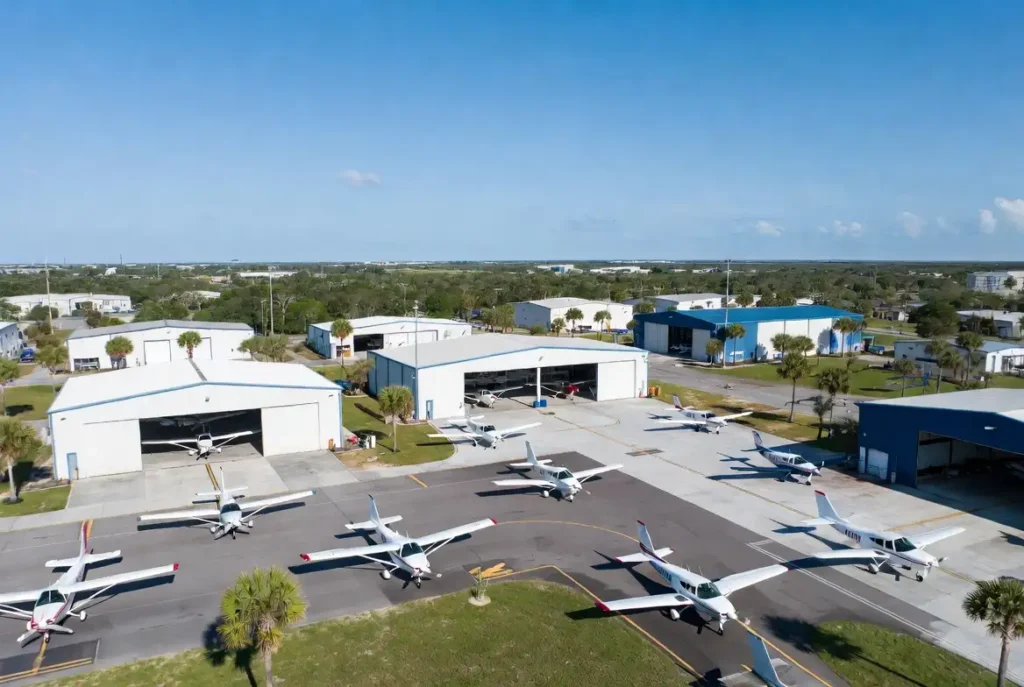
| Rank | School | Location | Estimated PPL Cost | Average Hours | Part 141 | Primary Strength |
|---|---|---|---|---|---|---|
| 1 | Pelican Flight Training | Sanford (KSFB) | $12,500 – $15,500 | 50–60 | Yes | Modern fleet, low instructor turnover |
| 2 | Epic Flight Academy | New Smyrna Beach (KEVB) | $14,000 – $17,000 | 45–55 | Yes | Rigorous structure, career pathway |
| 3 | Dynasty Aviation | Fort Lauderdale, Orlando | $10,500 – $14,500 | 55–65 | Yes | Competitive pricing, international support |
| 4 | ATP Flight School | 10+ FL locations | $15,000 – $19,000 | 45–55 | Yes | Fastest track to airline career |
| 5 | Aeroservice AFT | Opa-locka (KOPF) | $13,500 – $16,500 | 50–62 | Yes | South Florida’s strongest option |
| 6 | Florida Flyers | St. Augustine (KSGJ) | $12,000 – $15,000 | 52–65 | Yes | Lower costs outside major metros |
| 7 | Sundance Air | Boca Raton (KBCT) | $13,000 – $16,000 | 50–60 | No (Pt.61) | Flexible, experienced long-term CFIs |
| 8 | Embry-Riddle (ERAU) | Daytona Beach | $16,000 – $22,000 | 45–55 | Yes | Aviation degree + ratings, prestige |
What to Evaluate Beyond Price
Five criteria matter more than the hourly rate when choosing a school:
- Fleet age and maintenance standards — Ask for average airframe hours and the most recent annual inspection dates. Aging, poorly maintained aircraft break down more often, which disrupts scheduling and training momentum.
- CFI turnover rate — High turnover means you will likely switch instructors mid-training. That changeover costs re-familiarization time and money every time it happens.
- First-attempt checkride pass rate — Schools that exceed 80 percent are meaningfully better than those hovering at 60 percent. Ask directly, and ask for documentation.
- Aircraft booking wait times — Some popular schools have 2 to 3 week waits for peak-demand aircraft. Confirm availability aligns with your target training schedule before signing anything.
- Financing relationships — Does the school work with Meritize or Sallie Mae? Do they offer in-house payment plans? This matters immediately if you need to finance.
8. Regional Breakdown: Which Part of Florida Should You Train In? {#regional}
Florida is a large state, and where you train within it affects your hourly costs, airspace exposure, and quality-of-life during training.
Orlando / Central Florida — Best Overall Value
Sanford (KSFB), Orlando Executive (KORL), and Kissimmee (KISM) anchor the state’s largest and most competitive training market. Costs are moderate, weather is excellent, and students get exposure to Class C and D airspace while having access to open Class G airspace to the south and west for uninterrupted maneuver practice.
Typical Cessna 172 rate: $165 – $185 per hour
South Florida — Miami, Fort Lauderdale, Boca Raton
Excellent infrastructure, premium pricing. Training in and around Class B airspace at Miami International is genuinely valuable experience, but aircraft rates and CFI fees run $15 to $25 per hour above central Florida averages. ATC complexity and congestion are high. Worth the cost if you live nearby — not worth the relocation expense if you are coming from elsewhere in the state.
Typical Cessna 172 rate: $180 – $205 per hour
Tampa Bay Area — Underrated Option
St. Pete-Clearwater (KPIE) and Tampa Executive (KVDF) offer solid training environments at costs that fall between Orlando and Miami. Less competitive school density than Orlando means fewer options, but the quality operations that exist here are genuinely strong.
Typical Cessna 172 rate: $165 – $190 per hour
Northeast Florida — Jacksonville, St. Augustine, Daytona Beach
Daytona Beach hosts Embry-Riddle, which anchors a deep talent pool of experienced aviation educators. Costs are slightly below the Orlando average and simpler airspace means faster early-stage skill-building. A cross-country into Jacksonville’s Class C adds appropriate complexity at the right stage of training.
Typical Cessna 172 rate: $155 – $180 per hour
Northwest Florida — Pensacola, Tallahassee
Lowest costs in the state, least training school density, and significant military airspace complexity around NAS Pensacola that requires careful cross-country planning. Appropriate for students already based in the Panhandle; not worth the relocation from elsewhere in the state.
Typical Cessna 172 rate: $150 – $175 per hour
9. How to Save $2,000 to $5,000 on Your PPL Without Cutting Corners {#save-money}
These are not tips to compromise on safety. They are proven strategies that disciplined students use to finish faster and spend less — both of which go together.
✅ Fly at minimum three times per week. This is the single most impactful variable in your total cost. Flight skills decay measurably between lessons, especially in the first 20 hours. Students who fly once a week spend 20 to 30 percent of the early lessons re-establishing what they had at the end of the previous lesson. Three sessions per week eliminates most of that waste.
✅ Become a ground student first. Every minute you spend on the ground understanding a concept before a lesson means fewer in-aircraft minutes working through it. Watch MzeroA, Sporty’s, and Paul Hamilton’s YouTube channels. Read your aircraft’s POH cover to cover before you ever touch the throttle. This translates directly to lower total hour counts.
✅ Choose a Part 141 school if you can commit to the pace. The lower minimums (35 vs. 40 hours) and enforced syllabus structure save real money. At combined Florida rates, 5 fewer hours is approximately $1,225 in direct savings — and the structure often prevents the wandering, unfocused lessons that push total hours above 70.
✅ Use a Cessna 152 for solo time. If your school maintains 152s, use them for your 10-plus solo hours. At $130 to $160 per hour versus $165 to $200 for a 172, the savings on solo time alone can reach $400 to $700.
✅ Negotiate block-time pricing. Many Florida schools offer 5 to 10 percent discounts on aircraft rental when you prepay 10 or 20 hours. On a $180-per-hour aircraft, 10 percent off 20 hours saves $360. Stack with instructor block pricing where available.
✅ Pass your written test early. The FAA Knowledge Test result is valid for 24 months. Passing it in the first 4 to 6 weeks means your ground briefings are shorter — you already understand the regulatory and theory material — and every subsequent dual lesson goes further per hour.
✅ Book morning slots in Florida. Morning flights are statistically smoother (lower thermal turbulence), clearer (better visibility before afternoon convective activity builds), and faster (less ATC traffic). Smoother air means faster skill acquisition. Fewer delays mean more lessons per week.
✅ Never rush the checkride. Failing costs you the full DPE fee again ($750 to $950), plus 2 to 5 additional training flights to address deficiencies (approximately $490 to $1,225). A perfectly prepared first attempt is the cheapest path every single time.
10. Financing Your PPL: Every Option Ranked Honestly {#financing}
PPL training is a significant investment. Here are the viable financing options in 2026, ranked by total cost of money.
For a detailed side-by-side analysis of the two dominant private lenders, see our dedicated guide: Meritize vs. Sallie Mae for Florida Flight Students (2026).
Option 1 — VA GI Bill Benefits (Best Available, Veterans Only)
Post-9/11 GI Bill covers full tuition at Part 141 schools plus monthly housing allowances of $1,500 to $2,500 depending on location. This can cover $80,000 to $100,000 in total training costs for career-track students. If you are a veteran, this is the only answer that matters. Contact your school’s veterans’ affairs office before anything else.
Option 2 — Meritize Flight Training Loans
Meritize specializes in aviation training financing and uses a merit-based underwriting model that considers academic and professional history alongside credit score — qualifying students that traditional lenders reject. 2026 terms:
- Loan amounts: $1,000 to $150,000
- APR range: 7.99 to 22.99 percent (credit-dependent)
- No prepayment penalty
- Aviation-specific underwriters who understand flight training cost structures
Option 3 — Sallie Mae Career Training Loans
Long-established, widely accepted at Part 141 schools throughout Florida.
- Loan amounts: Up to $100,000+
- Fixed and variable rate options
- Repayment grace period of 6 months post-program
- Requires creditworthy co-signer for most students under 25
Option 4 — Flight School In-House Payment Plans
Many Florida Part 141 schools offer 0 percent interest monthly installment plans for 6 to 12 months with a deposit. This is the cheapest form of financing if you can manage the monthly payment — no lender fees, no interest, no credit inquiry. Ask every school you evaluate whether this exists before applying to external lenders.
Option 5 — AOPA Financial Services
The Aircraft Owners and Pilots Association partners with lenders to offer flight training financing for members. AOPA membership is $74 per year and may be worth it for the benefits, insurance resources, and training support alone — separate from the financing.
Option 6 — Credit Union Personal Loan
If you have an established relationship with a credit union and good credit, personal loans often come in at 8 to 12 percent APR — competitive with private aviation lenders and with simpler terms.
What to Avoid
High-interest revolving credit card debt on a $15,000 training program at 20 to 29 percent APR is financially destructive. Avoid it unconditionally.
11. The Hidden Costs Most Students Don’t Anticipate {#hidden-costs}
Beyond the main line items, several costs reliably blindside students who did not ask the right questions upfront.
Rescheduling and Cancellation Fees
Most Florida schools charge a late cancellation fee of $50 to $100 if you cancel with less than 24 hours notice. Over a 5-month training program — with life inevitably getting in the way — this can add $200 to $500 in avoidable cost.
Non-Owned Aircraft Insurance (Renters Insurance)
Training aircraft insurance policies typically carry per-incident deductibles of $1,000 to $5,000. If you are PIC during an incident — a prop strike, a gear-up landing, a runway excursion — you are personally liable for that deductible in most school contracts. Non-owned aircraft insurance (commonly called renters insurance) costs $200 to $400 annually and covers this exposure.
This is one of the most important and most under-discussed financial protections in flight training. For a full overview of what coverage student pilots need, see our guide: Best Aviation Insurance for Student Pilots in the USA. Once you hold your certificate and begin flying as a private pilot, the question of private plane insurance in the USA becomes even more important.
Approved Simulator Time
Many Part 141 programs include FAA-approved flight training device (FTD) time in their syllabus. Under Part 141, up to 2.5 hours of approved simulator time can count toward instrument training requirements. Simulator rates when billed separately: $75 to $175 per hour. Still cheaper than the aircraft, but it needs to be in your budget.
Cross-Country Incidental Costs
Solo cross-countries and dual cross-countries involve landing fees at towered airports ($5 to $25 per landing), premium fuel at unfamiliar FBOs, and occasional overnight accommodation costs. Budget $150 to $300 for the total cross-country phase.
The Plateau Tax
Nearly every student hits at least one training plateau — a period where skill acquisition stalls and extra lessons are required to work through a specific deficiency. The most common plateaus occur during the pre-solo landing phase and during instrument work. Budget an additional 5 hours ($1,000 to $1,500) as a contingency reserve for the inevitable plateau.
12. Step-by-Step: How to Get Your PPL in Florida From Start to Finish {#step-by-step}
Here is the complete chronological process, from zero experience to certificate in hand.
🕒 Step 1 — Research Your Medical Eligibility Before Spending Anything
This is Step Zero, not Step One. Visit FAA MedXPress, review the 3rd Class medical standards, and if you have any condition in your medical history that might be relevant — cardiovascular, neurological, mental health medications, substance use history, DUI records — consult an AME before committing to flight training. Discovering a disqualifying condition after 25 hours of paid training is one of the most preventable financial mistakes in aviation.
🕒 Step 2 — Apply for Your FAA Student Pilot Certificate
Apply through IACRA (Integrated Airman Certification and Rating Application). This is free and takes approximately 3 weeks to process. Your CFI will validate it once you have established a training relationship.
🕒 Step 3 — Choose and Visit Your Flight School
Use the criteria in Section 7 of this guide. Visit at minimum two to three schools in person. Speak with current students — not just school representatives. Inspect the aircraft on the ramp. Take a discovery flight (typically $150 to $200 and often credited toward your training) at your top choice before signing anything.
🕒 Step 4 — Get Your FAA 3rd Class Medical
Book with an FAA AME, complete your MedXPress application in advance, attend the examination. Cost: $125 to $200. Schedule this at the same time you begin ground school — no need to wait.
🕒 Step 5 — Begin Ground School Immediately
Start your ground school curriculum — Sporty’s, King Schools, or your Part 141 integrated program — on the first day you commit to training. Do not wait until you are already flying. Ideally, pass your Knowledge Test within the first 6 to 8 weeks of flight training.
🕒 Step 6 — Begin Flight Training
Your first 8 to 12 hours focus on basic aircraft control: straight-and-level flight, climbs, descents, coordinated turns, and becoming comfortable with radio communication. Everything is new; everything is learnable.
🕒 Step 7 — Master Takeoffs, Landings, and Pre-Solo Maneuvers
The pre-solo phase covers the full maneuver set: stalls, slow flight, steep turns, ground reference maneuvers, power-off emergency procedures, and pattern work. Most students solo between 10 and 20 flight hours, with the Florida average near the lower end of that range.
🕒 Step 8 — First Solo Flight
Your CFI steps out of the aircraft. You taxi to the runway, take off, fly three circuits around the pattern, and land — alone. It is one of the most significant and memorable moments of your life, and it is the milestone that confirms you are on the right path.
🕒 Step 9 — Post-Solo and Cross-Country Training
After soloing, you focus on cross-country navigation, night flying with landings, instrument flight under the hood, and refining all maneuvers to ACS standards. This phase typically takes 20 to 30 hours.
🕒 Step 10 — Pass the FAA Knowledge Test
Book at a PSI testing center, take the exam, and secure your 24-month validity stamp. This needs to be complete before your checkride date is confirmed.
🕒 Step 11 — Checkride Preparation
Your CFI conducts mock orals and practice checkrides against the FAA’s published Airman Certification Standards. When your CFI provides a written endorsement confirming you are ready, schedule your practical test with a DPE.
🕒 Step 12 — Pass Your Checkride and Receive Your Certificate
The oral examination (typically 1.5 to 2.5 hours) followed by the flight evaluation (1 to 2 hours). Pass, and your temporary certificate is issued on the spot by the DPE. Your permanent plastic certificate arrives by mail within 3 to 4 weeks. You are now a Private Pilot.
13. Frequently Asked Questions {#faq}
Can I get my PPL for under $10,000 in Florida in 2026?
Technically possible, but almost no one achieves it. It requires finishing at exactly 40 hours (the FAA minimum), flying exclusively the cheapest available aircraft, using a budget independent CFI, and passing the checkride on the first attempt on the first try. This combination demands exceptional natural aptitude, zero schedule disruptions, and consistently good weather. Budget $13,000 to $15,000 and be pleasantly surprised if you come in under that.
What is the fastest realistic timeline for a PPL in Florida?
With intensive daily training — two flights per day, five days per week — some students have completed their PPL in 4 to 6 weeks. ATP Flight School’s accelerated model operates on this approach. It is aggressive and front-heavy in cost, but can actually produce lower total hour counts because skills don’t decay between lessons.
Should I choose Part 141 or Part 61?
For a career in aviation: Part 141, without debate — the R-ATP reduction at 1,000 hours versus 1,500 under Part 61 is worth tens of thousands of dollars at the commercial level. For pure recreational flying with maximum flexibility: Part 61 with a disciplined, structured independent CFI works equally well. See our full Florida flight school comparison for school-specific recommendations.
What happens if I fail the checkride?
A failed checkride requires additional instruction in the deficient areas, a new CFI endorsement, and a re-test with the same or a different DPE. You pay the full DPE fee again ($750 to $950) plus whatever additional training you need — typically 2 to 5 hours and $1,500 to $2,500 total. Prepare thoroughly. The first-attempt pass rate is the most important quality metric a flight school can give you.
Do I need a college degree to earn a PPL?
No. There are zero educational prerequisites for a Private Pilot Certificate beyond basic English language proficiency.
Can I use my US PPL to fly in other countries?
Yes. The United States has bilateral aviation agreements with most of North America, Western Europe, Australia, and many other regions. The FAA’s international pilot certification page outlines which countries recognize FAA credentials directly. Most others require a validation process using your FAA certificate as the basis.
How much does it cost to maintain my PPL after I earn it?
You need a Biennial Flight Review (BFR) every 24 months with a CFI — typically 1 to 2 hours of flight time costing $250 to $450. To carry passengers, you must also maintain currency with 3 takeoffs and landings in the preceding 90 days. Aircraft rental for ongoing flying runs $160 to $200 per hour. Once you begin flying 50+ hours per year, fractional ownership or a flying club membership often becomes more economical than straight rental. For additional coverage requirements once you own or rent regularly, see our guide to private plane insurance in the USA.
What comes after the PPL?
The standard career progression from a PPL is: Instrument Rating (IR) → Commercial Pilot Certificate (CPL) → Multi-Engine Rating → Certified Flight Instructor (CFI) → CFI-I → Airline Transport Pilot (ATP). A recreational pilot might stop at the Instrument Rating. A career-track pilot needs the full progression plus a type rating for jet operations. For the full career landscape — including adjacent aviation careers in maintenance and NDT — see our aviation career and training hub.
Is flight training affected by the broader aviation industry situation in 2026?
The airline pilot shortage that has driven aggressive hiring and dramatically improved starting salaries remains a real structural factor in 2026. For context on the current state of US airline operations and safety oversight that shapes this environment, see our analysis: US Airline Safety: 2026 Crisis Explained. The short answer is that career demand for pilots remains exceptionally high.
How does a PPL compare to other aviation careers that don’t require flying?
Not everyone who loves aviation wants to fly professionally. For comparison: an Aviation Maintenance Technician (AMT) earns $55,000 to $85,000+ with significantly lower training investment and strong job security. An A&P Mechanic career requires approximately 18 months of technical training rather than years of flight hour accumulation. These paths suit different aptitudes and financial situations equally well.
14. Is the PPL Worth It in 2026? Final Verdict {#final}
Let us be precise about what you are purchasing for $13,000 to $16,000.
You are acquiring the certified, FAA-documented ability to operate a powered aircraft as Pilot in Command — to plan routes, manage weather, communicate with Air Traffic Control across the full US airspace structure, handle emergencies, and transport passengers safely from origin to destination. This is not a simulation. Every hour you log is real consequence, real responsibility, and real skill acquisition.
In Florida, you are acquiring it at the best combination of price, weather, and training infrastructure available anywhere in the United States.
The investment also compounds. Every rating that follows — Instrument, Commercial, CFI, ATP — builds directly on the PPL. The career economics are compelling: according to AOPA’s training and safety research, regional airline first officers in 2026 are earning $70,000 to $90,000 in their first year, with captains and major airline first officers earning $120,000 to $300,000+ at seniority. Most pilots recover their full training investment within 5 to 7 years of starting at a regional airline.
Even for purely recreational pilots with no career ambitions, the economics work differently than most people assume. Flying yourself from Orlando to Key West costs approximately $150 in fuel and a few hours of your time. The same route on a commercial carrier costs $400 to $600, requires airport overhead, and puts you in a middle seat. Over a decade of regular flying, the license pays for itself in saved commercial airfare and avoided ground transportation costs — before accounting for the irreplaceable experience of navigating through Florida skies on your own terms.
The honest answer is yes — for the right person, in the right state, with an accurate budget and a realistic training schedule, a PPL in Florida in 2026 is one of the best investments you can make in yourself.
Your Action List for the Next Seven Days
- Visit FAA MedXPress and review the 3rd Class medical standards for anything in your history worth flagging before you spend money.
- Research three flight schools using the ranked comparison in Section 7, and book discovery flights at your top two choices.
- Begin your ground school curriculum today — Sporty’s and King Schools both offer free trial access.
- If you need financing, read our detailed comparison of Meritize vs. Sallie Mae for Florida flight students before applying anywhere.
- Set your realistic budget using the complete cost tables in this guide.
The hardest part of learning to fly is starting. Do that first.
AviationTitans.com covers private aviation, pilot training, aircraft ownership, and the commercial aviation industry. All cost figures reflect May 2026 market rates sourced from Florida flight schools and independent CFIs. Prices are subject to change.
Related Reading on Aviation Titans
- Best Flight Schools in Florida: 2026 Cost Comparison Guide
- Best Aviation Schools in the USA — 2026 Full Guide
- Meritize vs. Sallie Mae for Florida Flight Students (2026)
- Best Aviation Insurance for Student Pilots in the USA
- Best Private Plane Insurance in the USA (2026)
- A&P Mechanic Career: Training, Certification & Salary
- 2026 USA AMT Salary Guide
- US Airline Safety: 2026 Crisis Explained

Senior NDT Controller with over 20 years of experience in aviation (FAA, EASA, and NRCAN certified). Expert in aircraft maintenance, non-destructive testing (NDT), and pilot training. I share practical, up-to-date 2026 guides for pilots and aviation maintenance technicians.


![Why Private Plane Insurance in the USA Matters More Than Ever ? If you own or fly a private aircraft in the United States, aviation insurance is not optional — it is the financial foundation that protects everything you have worked for. A single mid-air incident without adequate private plane insurance in the USA can trigger lawsuits exceeding $5 million, destroy hangar equipment worth hundreds of thousands of dollars, and leave you personally liable for medical bills, property damage, and legal fees that no savings account could absorb. Yet a surprising number of private pilots and aircraft owners remain dangerously underinsured. Some carry outdated policies that no longer reflect their aircraft's market value. Others rely on FBO coverage that evaporates the moment they leave the ramp. And many first-time aircraft owners simply don't know where to start — especially those who are still in training. If you're logging your first hours, our dedicated guide to aviation insurance for student pilots covers everything you need before your first solo cross-country. This guide cuts through the confusion. Whether you fly a Cessna 172, a Piper Cherokee, a Beechcraft Bonanza, or a light sport aircraft, you'll find everything you need to understand aviation insurance costs, compare the top providers, and ultimately choose the best private plane insurance in the USA for your specific situation. What You'll Learn in This Guide What private plane insurance in the USA actually covers (and what it doesn't) The 5 main types of aviation coverage explained in plain English Average aircraft insurance costs in 2026 by aircraft type Top 5 best aviation insurance companies in the USA compared Key factors that affect your premium — and how to reduce them A complete FAQ section with the most-searched aviation insurance questions Section 1: What Is Private Plane Insurance in the USA? Private plane insurance in the USA is a specialized form of aviation insurance designed to protect individual aircraft owners, private pilots, and non-commercial operators from financial losses arising from accidents, damage, theft, liability claims, and more. Unlike auto insurance — which is standardized and mandatory in all 50 states — aviation insurance for private planes is not federally required in the US. However, most lenders require it if you financed your aircraft, most airports and FBOs require proof of liability coverage before letting you tie down or hangar your plane, and most flight instructors require it before getting in the right seat with you. According to the FAA's General Aviation Activity Survey, there are over 200,000 active general aviation aircraft registered in the United States — yet a significant portion of private owners carry insufficient coverage or none at all. This is a serious financial risk that no pilot should ignore. Private plane insurance is underwritten by a small group of specialized insurers who understand aircraft values, pilot risk profiles, and aviation operations in ways that general insurance companies simply don't. The market is niche but highly competitive — which is good news for savvy buyers. If you're also weighing the financial side of a career in aviation, our full 2026 AMT Salary Guide breaks down what aviation maintenance technicians earn across the USA and which specializations pay the most. Section 2: The 5 Types of Aviation Insurance Coverage Explained Hull Insurance (Physical Damage Coverage) Hull insurance covers physical damage to your aircraft — think of it like comprehensive and collision coverage for your car. There are two sub-types you need to know: In-flight hull coverage: Pays for damage that occurs while the aircraft is in motion — taxiing, taking off, flying, and landing. This is the most expensive part of hull coverage because accidents in motion tend to cause total losses. Ground/not-in-motion hull coverage: Covers damage while the aircraft is parked, hangared, or being towed. This includes hail, fire, theft, and hangar rash. It's cheaper than in-flight coverage, and some owners on tight budgets choose ground-only to save money. Hull coverage is typically written as agreed value (the insurer pays the full agreed amount in a total loss with no depreciation) or actual cash value (pays current market value minus depreciation). Always push for agreed value — it's worth the slightly higher premium. Liability Insurance Liability coverage is the most critical part of any private plane insurance policy in the USA. It protects you financially if your aircraft injures someone or damages third-party property. It has two components: Bodily injury liability: Covers medical expenses, lost wages, and legal claims from people injured by your aircraft (other than passengers, who are covered separately). Property damage liability: Covers damage your aircraft causes to cars, structures, fences, other aircraft, or anything else you might hit. Most aviation attorneys recommend a minimum of $1 million per occurrence in liability coverage. Many experienced pilots carry $5 million or more, especially if they fly over densely populated areas. The AOPA Insurance Resource Center is one of the most trusted references in general aviation for understanding how much liability coverage you actually need. Passenger Liability (Passenger Legal Liability) Standard liability insurance typically excludes passengers aboard your aircraft. Passenger Legal Liability (PLL) coverage fills that gap — it pays for injuries sustained by people flying with you, whether family members, friends, or business associates. In an era of increasingly litigious aviation accidents, carrying at least $100,000 per passenger seat in PLL coverage is considered the baseline. Many insurers offer per-seat limits from $25,000 up to $1 million or more. Medical Payments Coverage Medical payments coverage pays for immediate medical expenses for the pilot and passengers regardless of fault. It's a no-fault coverage designed to cover emergency costs quickly, without waiting for liability disputes to resolve. Limits typically range from $1,000 to $10,000 per person. Non-Owned Aircraft Liability If you regularly rent aircraft or fly club planes, non-owned aircraft liability insurance covers your personal liability exposure when flying aircraft you don't own. This is essential for student pilots and renters — because the aircraft owner's policy may not protect you personally. If you're currently training, our guide to the best flight schools in Florida explains exactly what insurance coverage is typically required before your first solo. Section 3: How Much Does Private Plane Insurance Cost in the USA? (2026 Data) Aviation insurance costs in 2026 vary widely based on aircraft type, pilot experience, usage, and coverage limits. The NTSB's aviation accident statistics consistently show that accident rates vary significantly by aircraft category and pilot experience level — and these statistics directly influence how underwriters price your premium. Below is a realistic breakdown of average annual premiums for the most popular general aviation aircraft in the USA: Cessna 150/152 — Hull value: $25,000–$40,000 — Premium: $900–$1,800/yr — Liability: $1M per occurrence Cessna 172 Skyhawk — Hull value: $50,000–$120,000 — Premium: $1,200–$2,500/yr — Liability: $1M per occurrence Piper Cherokee 140/180 — Hull value: $35,000–$65,000 — Premium: $1,000–$2,200/yr — Liability: $1M per occurrence Beechcraft Bonanza A36 — Hull value: $180,000–$350,000 — Premium: $3,500–$7,000/yr — Liability: $1M per occurrence Cirrus SR22 — Hull value: $300,000–$500,000 — Premium: $4,000–$9,000/yr — Liability: $1M per occurrence Piper Seneca (Twin) — Hull value: $150,000–$350,000 — Premium: $5,000–$12,000/yr — Liability: $1M per occurrence Light Sport Aircraft (LSA) — Hull value: $25,000–$80,000 — Premium: $700–$1,500/yr — Liability: $1M per occurrence Experimental/Homebuilt — Hull value: $30,000–$150,000 — Premium: $800–$3,000/yr — Liability: $1M per occurrence Note: These figures represent averages for pilots with 200+ total hours and a clean accident record. New and student pilots typically see premiums 30–70% higher. The single biggest lever on your annual premium is your pilot certificate level and logged flight hours. A student pilot insuring a Cessna 172 might pay $3,000–$4,500 per year for the same policy that a 1,000-hour instrument-rated pilot would pay $1,200–$1,800 for. Section 4: Top 5 Best Aviation Insurance Companies in the USA (2026) Choosing the right provider is just as important as choosing the right coverage. The best private plane insurance companies in the USA combine competitive pricing with genuine aviation expertise, fast claims handling, and pilot-friendly underwriting. Here are the top five based on market reputation, coverage breadth, and pilot community feedback in 2026. AOPA Aviation Insurance (Administered by Falcon Insurance) The Aircraft Owners and Pilots Association is the largest general aviation advocacy organization in the US. Their insurance program — underwritten through Falcon Insurance Agency — is consistently one of the first recommendations in the aviation community. The AOPA Air Safety Institute is also one of the best free safety education resources available to any private pilot, and completing their courses can translate directly into premium discounts with several carriers. Best for: AOPA members, student pilots, and first-time aircraft owners. Strengths: Competitive rates for low-time pilots, strong customer service, and educational resources that help you understand your coverage. Worth noting: You don't need to be an AOPA member to get a quote, but members often receive preferential rates. Global Aerospace Global Aerospace is one of the world's largest aviation insurance specialists. They underwrite everything from student pilots to complex piston twins and turboprops, and their financial strength ratings are among the highest in the sector. Best for: Owners of high-value aircraft (Cirrus SR22, Beechcraft Baron, turboprops) who need robust agreed-value hull coverage. Strengths: Broad policy customization and deep experience across commercial, corporate, and private aviation. If you want to understand why insured aircraft value matters so much at the maintenance level, our piece on [what happens inside a $100M aircraft maintenance check is a fascinating read. Avemco Insurance Company Avemco has been a fixture in general aviation insurance since 1961 and is well known for writing directly — meaning no agents or brokers, which keeps costs lower. Best for: Pilots who prefer a direct-to-insurer experience and want transparent pricing without broker commissions. Strengths: Simple online quoting, direct writer (no middleman), solid claims reputation. Worth noting: Their sweet spot is certificated private pilots with 200+ hours. More conservative with student pilots. Starr Aviation Starr Aviation is a significant player in the aviation insurance space, offering broad coverage options for private aircraft, homebuilts, and light sport aircraft. Best for: Experimental aircraft owners and homebuilders with non-standard aircraft that some carriers won't touch. Strengths: Willing to write policies for experimental and homebuilt aircraft, competitive on light sport aircraft. AssuredPartners Aerospace AssuredPartners Aerospace is one of the largest aviation insurance brokers in the country, giving clients access to multiple underwriters simultaneously. Best for: Pilots who want a broker to advocate on their behalf — especially useful for complex situations or high-value aircraft. Strengths: Access to multiple markets, expert advisors, and strong claims advocacy. Quick Comparison — Top 5 Aviation Insurance Companies USA AOPA / Falcon | Broker/Program | All GA pilots | Student pilots: Yes | Online quotes: Yes Global Aerospace | Underwriter | High-value aircraft | Student pilots: Limited | Online quotes: No Avemco | Direct Writer | Certified pilots 200hr+ | Student pilots: Limited | Online quotes: Yes Starr Aviation | Underwriter | Experimental / LSA | Student pilots: Yes | Online quotes: Via broker AssuredPartners | Broker | Complex situations | Student pilots: Yes | Online quotes: Yes Section 5: 8 Key Factors That Affect Your Aviation Insurance Premium Understanding what drives your private plane insurance cost in the USA puts you in a much stronger position when shopping for coverage. Total Flight Hours: More hours = lower risk = lower premium. The biggest pricing jumps happen at the 0–50, 50–100, 100–200, and 200–500 hour milestones. Certificate Level: IFR-rated pilots typically pay 15–25% less than VFR-only pilots. If you haven't chosen a flight school yet, our guide to the best aviation schools in the USA will help you find a program that builds your hours efficiently. Aircraft Make and Model: A Cirrus SR22 with a CAPS parachute system attracts lower premiums than comparable aircraft because of its safety record. High-performance aircraft — retractable gear, variable prop, turbocharged — cost more to insure. Agreed vs. Actual Cash Value: Agreed value costs 8–15% more but pays your full stated value in a total loss. Always negotiate for agreed value. Liability Limits: Going from $1M to $5M in liability coverage typically adds only $200–$500 per year to your premium. The marginal cost of extra liability protection is excellent value. Annual Hours Flown: Lower usage = lower premium. Declare your expected annual hours accurately — insurers price in brackets of under 50, 50–100, 100–200, and 200+ hours. Accident and Incident History: A single at-fault accident can increase your premium 40–80% for 3–5 years. The NTSB accident database is a sobering but essential read for any pilot who wants to understand the real cost of complacency in the cockpit. Geographic Operations: Flying near congested Class B airspace carries higher liability exposure. If you operate near Florida's busy corridors, our [2026 US airline safety analysis → https://www.aviationtitans.com/us-airline-safety-scrutiny-2026-analysis/] shows how regulatory pressure is reshaping risk assessment across the entire industry — including how it trickles down to private aviation premiums. Section 6: How to Get the Best Deal on Private Plane Insurance in the USA Step 1: Build Your Pilot Resume Before You Quote Before shopping for private plane insurance, get a current flight review (BFR), a current IPC if you're instrument rated, and a recent checkout in the specific aircraft you're insuring. The FAA Wings Pilot Proficiency Program is one of the most recognized safety initiatives in general aviation, and completing Wings activities can translate directly into premium discounts with several carriers. Step 2: Get At Least 3 Quotes Prices between carriers can vary by 20–40% for identical coverage. Always get quotes from at least one direct writer (Avemco), one dedicated aviation broker (AssuredPartners or similar), and the AOPA program. If you're still weighing where to train before buying your own aircraft, our comparison of Meritize vs. Sallie Mae for flight school financing gives a useful picture of how to manage the full cost of becoming a pilot. Step 3: Understand Your Deductible Options For hull coverage on a $100,000 aircraft, moving from a $0 deductible to a $5,000 deductible might save $300–$600 per year. If your aircraft is well maintained, a higher deductible may pay off over time. Step 4: Bundle When Possible Ask about package discounts for multiple aircraft, combining aviation liability with a personal umbrella policy, or insuring through the same carrier as your hangar coverage. Step 5: Review Annually Review your private plane insurance policy every year at renewal and reshop every 2–3 years. Your aircraft's value changes, your credentials improve, and your flight patterns evolve. Section 7: FAQ — Private Plane Insurance in the USA Is private plane insurance required by law in the USA? No federal law mandates aviation insurance for private aircraft in the United States. However, most lenders require it as a condition of financing, and most airports and FBOs require minimum liability coverage to operate on their property. The FAA's official pilot and aircraft regulations confirm that while certification requirements are strict, insurance is left to the discretion of owners and lenders. Flying without coverage is technically legal in most states, but a single accident can cost you everything. How much does it cost to insure a small plane per year? For a basic single-engine aircraft like a Cessna 172, private plane insurance in the USA typically costs between $1,200 and $2,500 per year for a certificated pilot with 200+ hours and $1 million in liability. Student pilots typically pay $3,000–$5,000 or more for the same aircraft. Our student pilot insurance guide covers the lower end of the market in detail. What is the difference between hull and liability coverage? Hull coverage protects the physical aircraft from damage, destruction, or theft. Liability coverage protects you from claims made by third parties injured or whose property is damaged by your aircraft. Both are essential — without hull coverage a total loss comes entirely out of pocket, and without liability coverage a single lawsuit can exceed everything you own. Can a student pilot get aircraft insurance? Yes, but it is more expensive and some carriers are more restrictive. AOPA and specialty programs cater specifically to student pilots. Completing a structured training program and maintaining thorough logbook records helps considerably. Read our full aviation insurance guide for student pilots for a complete breakdown of your options. Does homeowner's insurance cover my aircraft? No. Standard homeowner's insurance policies explicitly exclude aircraft. Even an ultralight sitting in your garage is generally not covered for aviation-related claims. Your aircraft requires its own dedicated aviation insurance policy — no exceptions. What happens if I lend my plane to another pilot? This depends on your policy's open pilot warranty clause. Most policies cover named pilots or qualified pilots meeting minimum experience requirements. Always review this clause and confirm coverage before lending your aircraft. If the borrowing pilot causes an accident and is not covered under your policy, you may bear full personal liability. How do I file an aviation insurance claim? Contact your insurer's claims department immediately after any incident. Document everything with photographs, written statements, and ATC recordings if available. File your FAA incident report if required under NTSB reporting regulations. Do not authorize repairs before insurer approval — unauthorized repairs can void your claim. Can I get a discount for flying fewer hours? Yes. Most aviation insurers price policies in annual flight-hour brackets. Pilots who fly under 50 hours per year typically pay less than those flying 100–200 hours. Accurately declare your expected annual hours — overstating hours to appear more current often backfires by placing you in a higher premium bracket. What coverage do I need if I fly out of Florida? Florida is the most active general aviation state in the US with over 700 public-use airports. Most Florida-based pilots should carry at minimum $1 million in liability, and ideally $2–$5 million near Miami, Tampa, or Orlando Class B airspace. For a full picture of the Florida aviation ecosystem, see our detailed guide to the best flight schools in Florida in 2026. Does aviation insurance cover medical costs if I'm injured in my own plane? Standard liability coverage does not cover the pilot's own medical expenses. To protect yourself as pilot-in-command you need medical payments coverage (typically $1,000–$10,000, included in most policies) or a separate personal accident policy. For long-term career protection in aviation, our 2026 USA AMT Salary Guide provides useful context on how aviation professionals structure their financial protection. Final Thoughts: Choosing the Best Private Plane Insurance in the USA Finding the best private plane insurance in the USA in 2026 isn't about choosing the cheapest policy — it's about finding the right balance of coverage, provider reputation, and value for your specific pilot profile and aircraft type. Start by understanding your actual exposure: what your aircraft is worth, what liability limits make sense for where and how you fly, and what your financial tolerance is for out-of-pocket risk. Then get competitive quotes from at least three sources and compare them line by line. The five providers covered in this guide — AOPA/Falcon, Global Aerospace, Avemco, Starr Aviation, and AssuredPartners Aerospace — represent the strongest options in the US general aviation insurance market today. And as we covered in our 2026 airline safety crisis analysis, the regulatory landscape is shifting fast — staying properly insured has never been more important. One thing is certain: the cost of proper aviation insurance is trivial compared to the cost of flying without it. In aviation, protection isn't optional — it's part of airmanship. Fly safe, fly smart, and fly insured.](https://www.aviationtitans.com/wp-content/uploads/2026/05/gFRGC-150x150.webp "Best Private Plane Insurance in the USA (2026): Costs, Coverage & How to Choose 9")

